
Most people who discover a great Japanese restaurant find themselves returning not just for the food, but for something harder to name. The broth feels different. The staff seem to know what you need before you ask. The meal has a shape to it, a beginning and an end marked by small rituals that slow everything down in the best possible way. That feeling is not accidental. The Japanese dining experience is built on a set of cultural principles so specific and deeply held that no other cuisine tradition quite replicates them. Understanding what those principles are, and why they matter, is the first step toward truly appreciating every bowl of ramen and every piece of sushi you eat.
Table of Contents
- Quick Takeaways
- What Is Omotenashi and Why Does It Define the Meal
- The Philosophy Behind Japanese Food Culture
- The Rituals That Frame Every Japanese Meal
- Ramen and Sushi as Cultural Expressions, Not Just Dishes
- How Japanese Restaurant Culture Differs From Everything Else
- Comparing Japanese Dining to Other Cuisine Cultures
- Frequently Asked Questions
- References
Quick Takeaways
| Key Insight | Explanation |
|---|---|
| Omotenashi goes beyond service | Japanese hospitality anticipates a guest’s needs before they are voiced, rather than simply responding to requests. It is a cultural philosophy, not a service script. |
| Seasonality is a core principle | The concept of shun means every dish should feature ingredients at their seasonal peak. This drives flavor, nutrition, and a sense of connection to the natural world. |
| Umami is Japan’s gift to global cooking | The fifth taste, discovered in Japan, underpins everything from miso broth to soy-cured fish. It explains the deep, lingering savoriness that makes Japanese food feel complete. |
| Rituals at the table carry real meaning | Saying “itadakimasu” before eating and “gochisosama deshita” after expresses gratitude to everyone involved in producing the meal, from farmer to chef. |
| Presentation is part of the dish | Japanese food is arranged to engage sight, smell, texture, and sound, not just taste. The visual composition of a bowl or plate is considered inseparable from the eating experience. |
| Silence and simplicity are features, not gaps | A Japanese restaurant is often quieter and more minimal than its Western counterparts. That restraint is intentional, designed to help diners focus on the food itself. |
| Ramen and sushi are cultural documents | Both dishes encode centuries of craft, regional identity, and seasonal thinking. Eating them well means engaging with that context, not just the flavor. |
What Is Omotenashi and Why Does It Define the Meal
No concept explains the Japanese dining experience more precisely than omotenashi. The word is often translated as “hospitality,” but that translation loses almost everything important. Omotenashi encapsulates selfless service and authentic care for others without expecting anything in return. It is not performed for tips. It is not a checklist of service steps. It operates from a different premise entirely.
Unlike service focused on transactions, omotenashi places empathy at the center. Hosts anticipate needs rather than wait to be asked. In practice, this means a server refills your water glass before you glance at it. It means the temperature of the room is considered alongside the temperature of the food. It means that if you are a first-time visitor, someone will quietly explain what is in front of you without making you ask.
The word omotenashi means far more than just “hospitality.” It is often broken down into two key parts: omote, meaning “public face,” and nashi, which translates to “without” or “nothing.” Together, these components suggest a kind of wholehearted hospitality, where there is “nothing hidden” and every action is genuine and sincere.
True hospitality is invisible to the guest because it removes every obstacle before the guest notices it exists.
This is what separates a Japanese dining room from even the most attentive Western fine dining. In most Western service models, excellent hospitality is responsive: it reacts quickly and warmly to what you ask for. Omotenashi is proactive: it removes the need to ask in the first place. Moreover, omotenashi is not about gaining rewards or recognition. It is about offering kindness with sincerity.
When you sit down at a quality Japanese restaurant, including spots like Zen Ramen and Sushi, that spirit should be visible in small gestures: the care taken with your oshibori towel, the timing of each course, the way a question about your dish is answered with patience rather than efficiency.
Pro tip: When you visit a Japanese restaurant, pay attention to what does not happen: you are rarely interrupted mid-bite, you are rarely made to wait visibly for a refill, and your plate is never cleared while others at the table are still eating. These absences are the signature of omotenashi in action.
The Philosophy Behind Japanese Food Culture
Japanese food culture is not simply a collection of recipes. It is a coherent worldview about what food is for, where it comes from, and how it should be treated. Three ideas run through it with particular force: seasonality, balance, and the recognition of umami.
Shun: Eating With the Seasons
Every dish within Japanese cuisine flows from its shun culinary philosophy, which emphasizes fresh, high-quality ingredients that change with the seasons, ensuring peak flavor and nutrition in every dish. This is not a trend borrowed from the farm-to-table movement. It predates that movement by centuries. Spring features items like bamboo shoots, and summer highlights fresh seafood. A Japanese chef who ignores shun is not simply making a culinary compromise. They are violating a foundational cultural commitment.
For the diner, shun means that a menu is genuinely different across the year. The broth changes. The garnishes shift. What you eat in February reflects a different set of truths about the natural world than what you eat in August. The farm-to-table movement and focus on seasonal ingredients in global cuisine have been inspired by Japanese food culture’s emphasis on freshness.
Umami: The Fifth Taste
One of Japan’s most significant contributions to global cuisine is the introduction of umami, often described as the “fifth taste” after sweet, salty, sour, and bitter. Discovered in Japan in the early 20th century, umami refers to a savory taste found in foods like soy sauce, miso, seaweed, and fish.
Umami is the reason a properly made ramen broth feels like it coats your palate in a satisfying, almost round way. It is the reason a piece of sushi, without any sauce, already tastes complete. Japanese cuisine is famous for unlocking the savory fifth taste known as umami, which is derived from ingredients like kombu seaweed and bonito flakes, providing depth without overwhelming. Recognizing umami when you taste it changes how you understand Japanese cooking from the ground up.
Harmony as a Core Value
At the core of Japanese cuisine is the concept of harmony, known as “wa” in Japanese. This shapes everything from how flavors are combined to how a table is laid. No single element of a Japanese meal is meant to dominate. The rice does not overwhelm the fish. The broth does not drown the noodle. Each component earns its place by contributing to the whole.
Japanese dining culture values respect for nature, balance, and seasonality. Chefs design every meal to harmonise with the seasons, placing great emphasis on the freshness and quality of ingredients.
The Rituals That Frame Every Japanese Meal
One of the most disorienting things for first-time visitors to a Japanese restaurant is the presence of rituals that feel almost ceremonial. These are not theater. They are deeply embedded expressions of Japanese food culture that have been practiced continuously for centuries.
Itadakimasu and Gochisosama Deshita
Japanese people say “itadakimasu” before they start eating, whether at home or in a restaurant, and say “gochisousama deshita” with their hands together after finishing their meal. “Itadakimasu” is said to express gratitude to God and the person who prepared the meal.
The phrase “itadakimasu” literally translates as “I humbly receive.” It’s a tradition that stems from Buddhism, which views food as not just something yummy to eat, but as a vital source of life. Rather than being a word of gratitude to a higher power, it is more geared toward the people who prepared the food and the ingredients themselves. The closing phrase, gochisosama deshita, mirrors this: it thanks everyone involved in bringing the meal to the table, from the people who grew the ingredients to the hands that prepared it.
If you say both phrases at a Japanese restaurant, you are immediately communicating respect. If you use both of these phrases when dining out in Japan, you will already be showing a respect for and understanding of the food culture there.
Chopstick Etiquette
Chopsticks in Japanese dining culture carry their own set of unspoken rules. In Japanese culture, chopsticks are laid horizontally in front of the diner, with the tips pointing to the left. There are specific actions to avoid: never stab food, never pass food chopstick to chopstick (a gesture associated with funeral rites), and never rest your chopsticks upright in a bowl of rice.
These rules exist not to intimidate newcomers but because the chopstick, in Japanese culture, is treated as an extension of the diner’s respect for the meal itself. The care you take with your chopsticks signals the care with which you approach the food.
Pro tip: At most Japanese restaurants outside of Japan, staff will never judge you for asking for a fork. What matters is the spirit you bring to the table, not the instrument you use. But trying chopsticks, even imperfectly, is a gesture that almost every Japanese host appreciates.
Ramen and Sushi as Cultural Expressions, Not Just Dishes
Ramen and sushi are the two dishes most people think of first when they think of Japanese food. That familiarity can obscure how much depth is packed into each one. Both are the product of centuries of refinement, regional variation, and a relentless focus on technique.
Ramen: Craft in a Bowl
At its most basic, ramen soups are wheat noodles of various textures in umami-rich broths. The most common types of ramen broth are shoyu, miso, and tonkotsu. Ramen is hearty, customizable, and meant for slurping. The instruction to slurp is worth dwelling on. In Japanese dining culture, slurping noodles is not rude. It aerates the broth, cools the noodle, and signals to the cook that the food is being enjoyed. It is a form of compliment built directly into the act of eating.
A tonkotsu broth, properly made, requires many hours of simmering to achieve its characteristic milky richness. A shoyu broth balances the sharpness of soy with the depth of dashi. Getting either of these right is a craft, not a recipe. The chef at a serious ramen restaurant devotes the same level of attention to the broth that a winemaker devotes to a barrel. The toppings, the noodle texture, the timing of the soft-boiled egg: all of these are deliberate decisions, not afterthoughts.
At Zen Ramen and Sushi, the ramen menu reflects exactly this kind of deliberate thinking, with broths and toppings chosen to complement rather than compete.
Sushi: Restraint as Mastery
At its most basic, sushi is vinegared rice combined with ingredients such as raw or cooked seafood, edible seaweed, and vegetables. While many Americans are most familiar with sushi rolls, the most traditional form is nigiri: a slice of raw, sushi-grade fish atop a mound of hand-pressed sushi rice.
What makes great sushi is not the most expensive fish. It is the balance between fish and rice, the temperature of the rice (which should be close to body temperature when served), and the restraint of the chef who knows when to add seasoning and when to leave well enough alone. Sushi is the clearest expression of the Japanese principle that mastery looks like simplicity.
A typical Japanese meal features a balance of sweet, salty, sour, and umami flavors. In a sushi context, this plays out across a meal: the clean brightness of white fish, the rich depth of tuna, the slight sweetness of tamago, the sharp punctuation of pickled ginger between pieces. The sequence is not arbitrary. It is composed.
How Japanese Restaurant Culture Differs From Everything Else
Walk into a French bistro, an Italian trattoria, or a Mexican cantina, and you will encounter warmth, noise, abundance. These are cuisines built on generosity and conviviality expressed through volume: of food, of conversation, of visual richness. Japanese restaurant culture operates on a fundamentally different axis.
Minimalism Is Not Absence
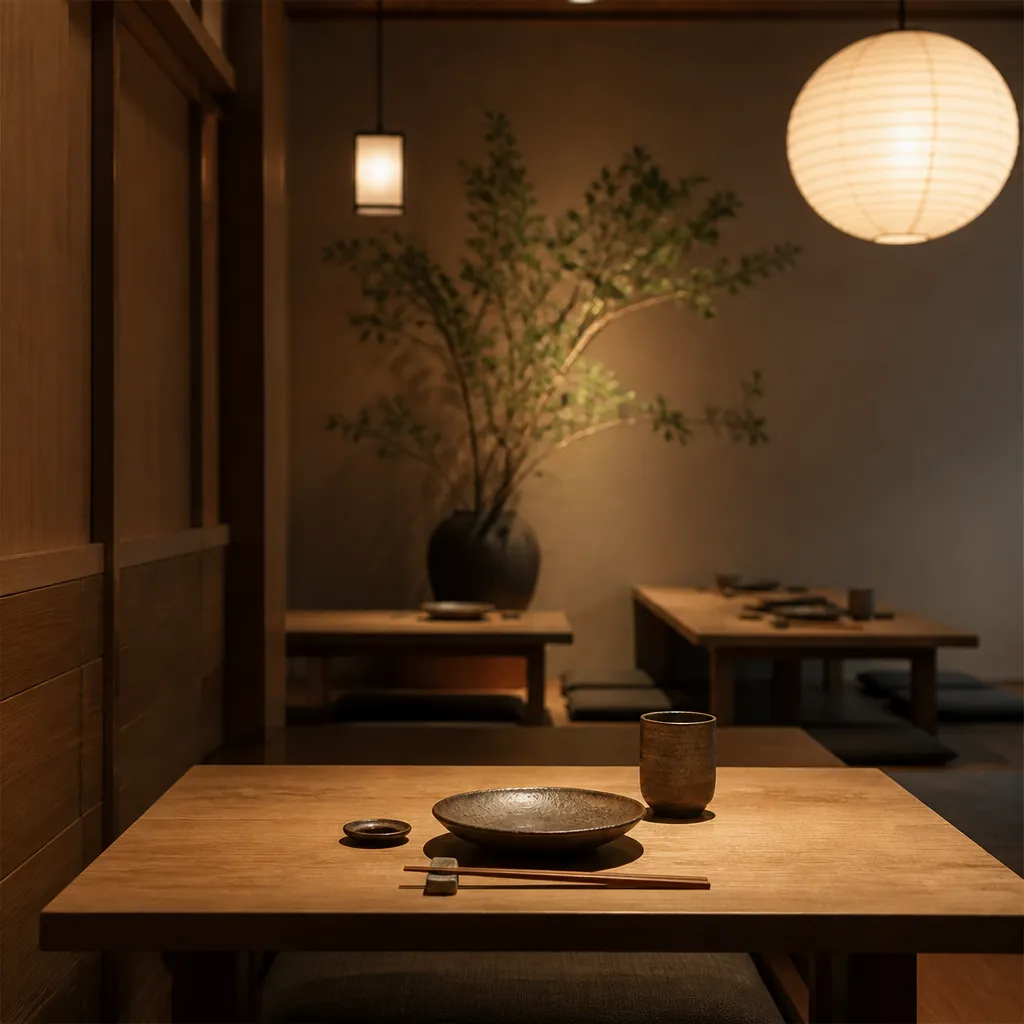
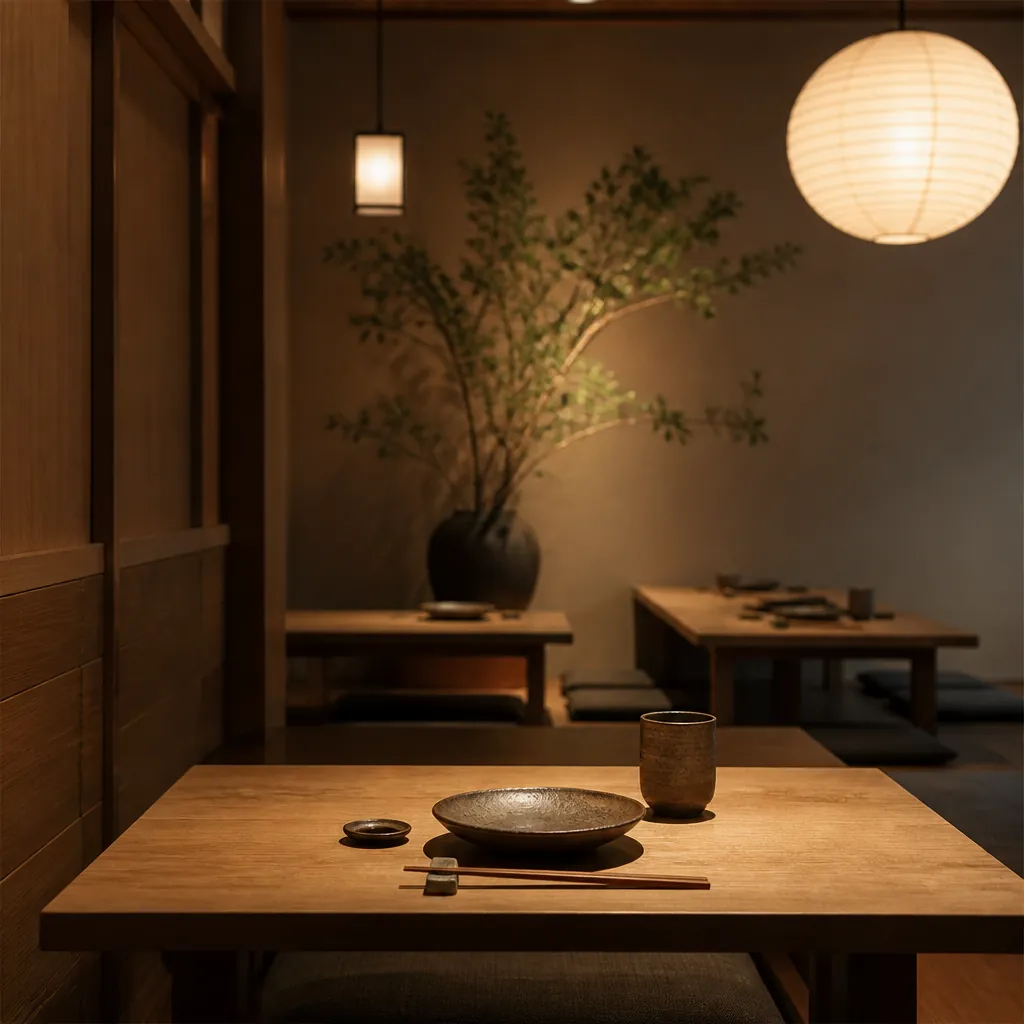
The spare, clean aesthetic of a Japanese dining room is not a budget decision. It is a philosophical one. When the room is quiet and uncluttered, the diner’s attention goes to the food. When the tableware is simple and carefully chosen, it frames the dish without competing with it. Presentation is a hallmark of Japanese cuisine, with meals arranged like art to engage all senses: sight, smell, texture, and sound.
This extends to portion sizing. Japanese meals are not small because the culture is austere. They are sized so that you finish each dish fully, appreciating every bite, rather than eating past the point of genuine attention. The goal is to be satisfied, not overwhelmed.
The Role of the Individual Diner
In many Western restaurant traditions, the table is the unit. You order as a group, share dishes, pass plates. In Japanese dining culture, each person receives their own precisely composed set of dishes. Even in a shared context, the individual’s experience is treated as complete in itself. This is not antisocial. It is a form of respect for the diner as an individual rather than simply a number at a table.
Omotenashi hospitality focuses on anticipating needs before they are spoken, a key factor in building loyalty. Whether the detail is the temperature of the tea, the smoothness of the chopsticks, or the timing of the first dish, each element is thought through with the individual guest in mind.
Silence Has Value
Many first-time visitors to a Japanese restaurant misread the quieter atmosphere as coldness. It is the opposite. The restraint is designed to give the food space. A Japanese chef who has spent ten hours building a broth would rather that broth be tasted in focused silence than talked over. The silence is an invitation to pay attention, not an absence of welcome.
Comparing Japanese Dining to Other Cuisine Cultures
To understand what makes the Japanese dining experience genuinely distinct, it helps to place it alongside other great global dining traditions. The differences are not about which cuisine is better. They are about what each cuisine is fundamentally for.
| Aspect | Japanese Dining | Italian/French Fine Dining | American Casual Dining |
|---|---|---|---|
| Hospitality model | Omotenashi: proactive, anticipatory, silent care | Warm and expressive, responsive to guest cues | Friendly and efficient, centered on fast responsiveness |
| Portion philosophy | Precise and complete: each dish sized for full appreciation | Generous, sometimes abundant, meant for lingering | Large portions as a primary value signal |
| Seasonality | Central principle (shun): menus shift with the natural calendar | Important in fine dining but not universally practiced | Variable; often secondary to consistency and cost |
| Table ritual | Itadakimasu, gochisosama deshita, specific chopstick etiquette | Toasting customs, bread service, wine pairing rituals | Minimal ritual; informality is the standard |
| Presentation | Integral to the dish: visual composition is part of the food experience | Increasingly important in fine dining; less so in casual settings | Functional, with occasional theatrical flair |
| Ambient philosophy | Minimalism and quiet that direct attention to the food | Convivial noise, warmth, and visual richness | High energy, background music, social atmosphere |
None of these approaches is inferior to the others on their own terms. But the Japanese model is the most internally consistent. Every element of the experience, from the room’s silence to the broth’s depth to the words spoken before and after the meal, serves the same goal: to make the diner fully present for the food in front of them.
This is why diners who have experienced it tend to describe it as something more than a meal. Japanese dining hospitality goes beyond food, embracing omotenashi, the timeless spirit of care, respect, and selfless anticipation. The food is the reason you sat down. The experience is why you come back.
Frequently Asked Questions
What does omotenashi mean in a Japanese restaurant context?
Omotenashi is the Japanese philosophy of wholehearted hospitality. In a restaurant, it means staff anticipate what you need before you ask for it, every detail of your experience is considered in advance, and the service is offered with genuine care rather than transactional efficiency. It is the reason a well-run Japanese restaurant feels effortless to be in, even when the kitchen is working at full capacity.
Is it rude to slurp ramen in a Japanese restaurant?
Not at all. Slurping ramen is considered a natural and even complimentary way to eat noodle dishes in Japanese food culture. It aerates the broth as it enters your mouth, which enhances the flavor, and it signals to the chef that you are genuinely enjoying the dish. You should feel entirely comfortable slurping at any Japanese ramen restaurant.
What should I say before and after eating at a Japanese restaurant?
“Itadakimasu” is said before the meal begins. It translates roughly as “I humbly receive” and expresses gratitude to everyone who had a hand in bringing the food to your table, including the farmers, the cooks, and the restaurant staff. After finishing, “gochisosama deshita” closes the meal with the same spirit of thanks. Neither phrase requires perfect pronunciation to be appreciated. The intention carries the meaning.
Why does Japanese food presentation look so different from other cuisines?
Japanese food culture treats presentation as inseparable from the eating experience. A bowl of ramen or a plate of sushi is composed to engage sight, smell, and texture before the first bite. The philosophy is that how food looks communicates the care that went into making it. A beautifully arranged dish is not decoration. It is information about the quality of what you are about to eat.
What is the difference between shoyu, miso, and tonkotsu ramen?
These are three of the most common ramen broth styles, each built on a different flavor base. Shoyu ramen uses soy sauce as its seasoning agent, producing a clear, brown broth with a savory, slightly tangy depth. Miso ramen is seasoned with fermented soybean paste, giving it a richer, earthier character that carries umami especially well. Tonkotsu ramen is made from pork bones simmered at high heat for an extended period, resulting in a thick, milky, deeply savory broth. Each style reflects a different regional tradition and pairs with different toppings and noodle textures.
How is the Japanese dining experience different at a casual ramen restaurant versus fine dining?
The food philosophy and the spirit of omotenashi are consistent across both. What changes is the format and the degree of ritual. A casual ramen shop is focused, fast, and intimate: the craft is in the bowl, the service is attentive but direct, and the experience is built around the food without ceremony. A kaiseki or omakase setting is more structured, with courses timed deliberately and presentation elevated to a formal art. Both are authentically Japanese. The underlying values of seasonality, precision, and genuine care for the guest run through both equally.
Why do Japanese restaurants often feel quieter and more minimal than other restaurants?
The minimalism is intentional and rooted in the same values as the food itself. A quiet, uncluttered environment directs your attention to what is in the bowl or on the plate. The design of a Japanese dining space is meant to serve the food, not compete with it. This is the same principle that makes a beautifully simple piece of sashimi more powerful than a heavily garnished plate: restraint is a skill, not a limitation.
If you have dined at Zen Ramen and Sushi or another Japanese restaurant recently, we would love to hear which aspect of the experience stood out most to you.
References
- How omotenashi shapes the philosophy of Japanese dining hospitality
- A practical guide to Japanese dining etiquette, chopstick use, and table customs
- An overview of Japanese cuisine, including ramen, sushi, and the shun philosophy
- The meaning of omotenashi and how Japan redefines the concept of hospitality
- How Japanese food culture, umami, and seasonality influence global cuisine