
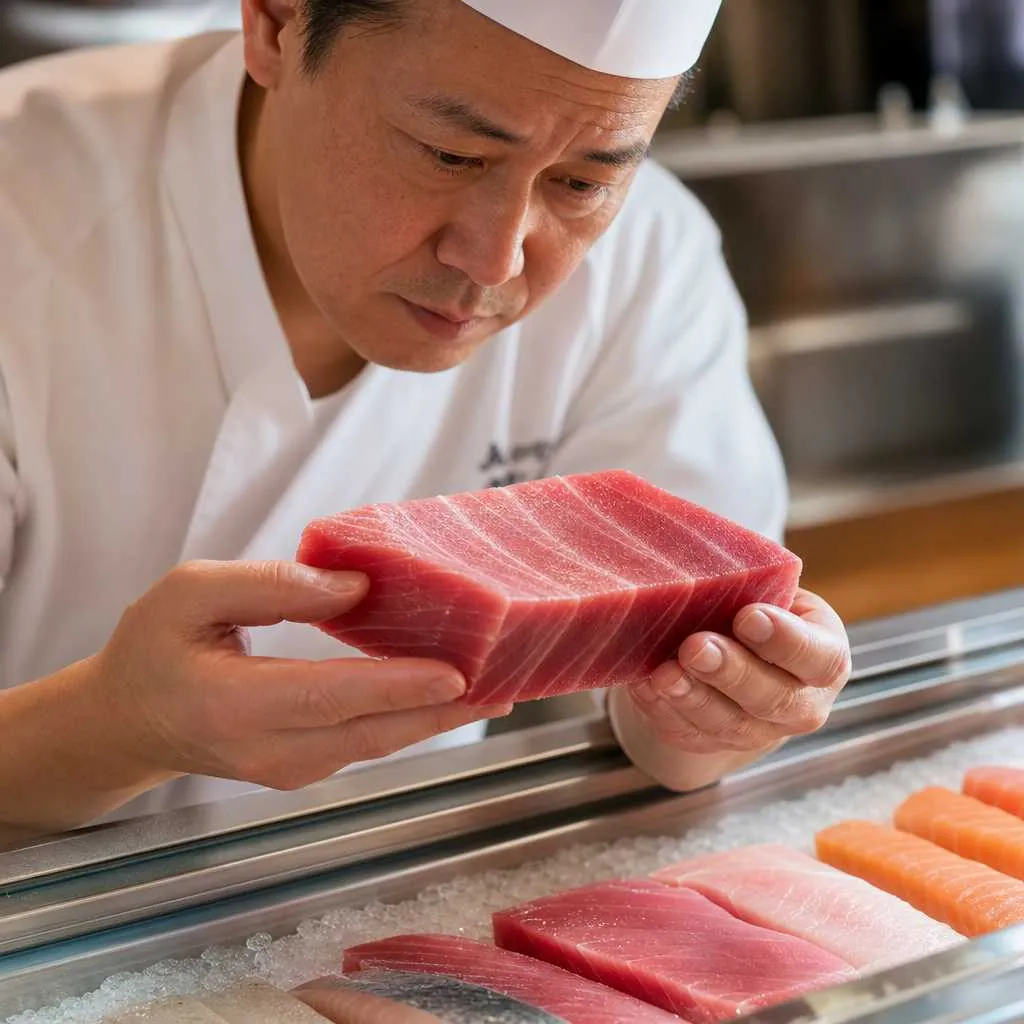
Most diners assume that “fresh” automatically means safer and better-tasting sushi. That assumption is wrong, and it costs people both money and safety. The term sushi grade fish is not a regulated FDA certification. It is a marketing label that any restaurant or fish counter can apply to any product. Understanding what actually separates a genuinely high-quality sushi experience from a mediocre one requires looking past the buzzwords and into the supply chain, the freezing science, and the sourcing decisions that restaurants rarely discuss openly.
Table of Contents
- Quick Takeaways
- What Sushi Grade Actually Means
- The Fresh vs Frozen Debate
- Parasites, Freezing, and Food Safety
- How Top Sushi Restaurants Source Fish
- Comparison of Fish Handling Approaches
- Red Flags When Choosing a Sushi Restaurant
- What Zen Ramen and Sushi Does Differently
- Frequently Asked Questions
- References
Quick Takeaways
| Key Insight | Explanation |
|---|---|
| “Sushi grade” is not FDA-regulated | Any seller can use the label. It signals intent, not a certified standard. Ask about sourcing instead. |
| Properly frozen fish is often safer than “fresh” | FDA guidelines require freezing to -4°F (-20°C) for 7 days to kill parasites in most raw fish species. |
| Farmed salmon is the exception to freezing rules | FDA allows farmed Atlantic salmon served raw without prior freezing, due to controlled feed that eliminates parasite risk. |
| Fish quality degrades fastest at the supply chain level | A fish that sat two extra days at a distributor is never recovered by even the best sushi chef. |
| Smell is the least reliable quality indicator | Well-rested fish stored at proper temperature can smell neutral even when past peak texture quality for sushi use. |
| Bluefin tuna labeled “fresh” is almost always previously frozen | Most bluefin tuna imported from Japan is frozen at sea for transport. Restaurants calling it “fresh” are technically misrepresenting it. |
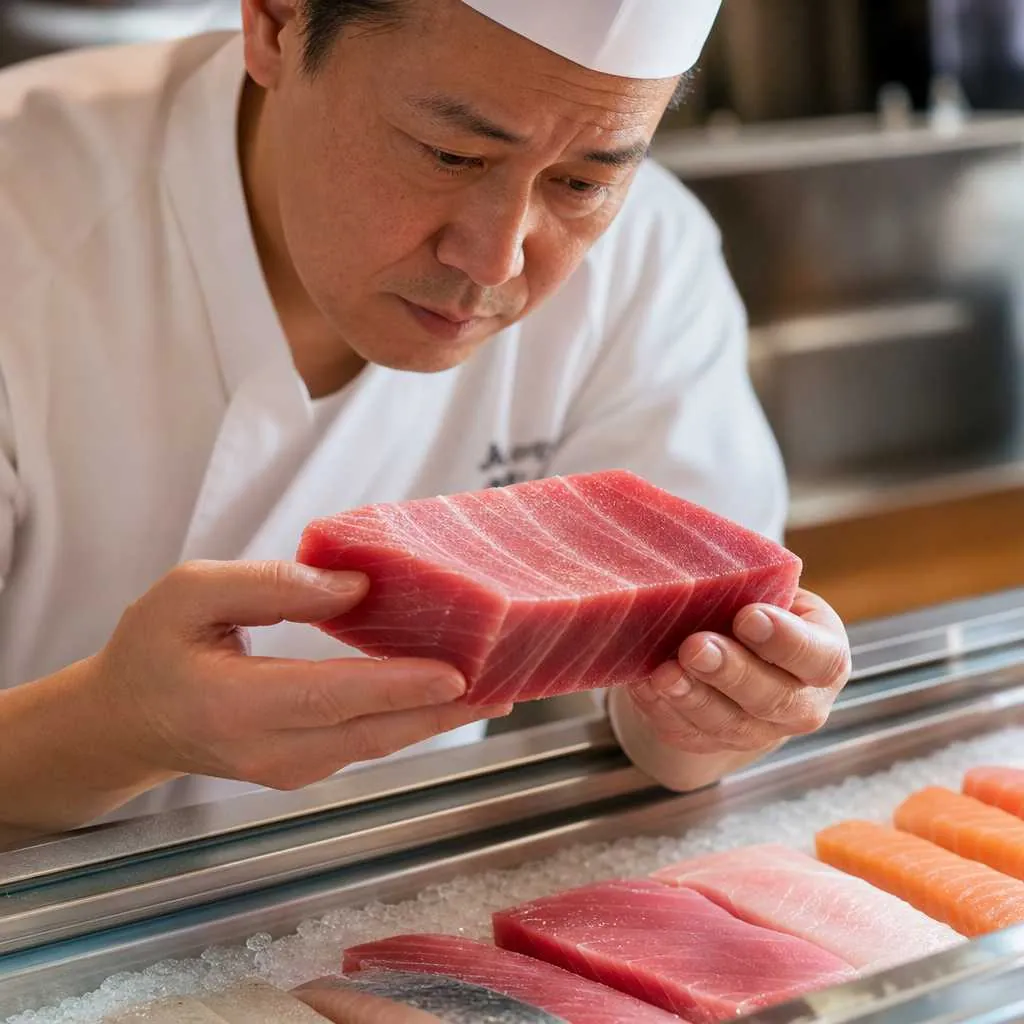
| Texture and color tell more than freshness claims | A vibrant, firm cut with clean marbling signals quality far more reliably than any menu label. |
What Sushi Grade Actually Means
Walk into almost any grocery store and you will see fish labeled “sushi grade” or “sashimi grade” priced at a premium. The uncomfortable truth is that the U.S. Food and Drug Administration does not define or regulate these terms. There is no certification process, no government inspection that grants the label, and no legal standard a fish must meet before a vendor can print those words on a package.
What the FDA does regulate is a set of parasite destruction guidelines outlined in the FDA Food Code. These guidelines specify time and temperature combinations for freezing fish intended to be served raw. The label “sushi grade” is simply the seafood industry’s informal shorthand for fish that has met those freezing requirements, or for fish from species considered low-parasite-risk. But there is no enforcement mechanism ensuring that a seller actually followed through.
In practice, the term functions more as a trust signal than a safety guarantee. A reputable fishmonger or restaurant using the label will back it up with documented supplier relationships and proper cold-chain handling. A less scrupulous operation uses it purely to justify a higher price point. The distinction matters enormously when you are eating raw fish.
Pro tip: When you visit a sushi restaurant, ask where they source their fish and whether their supplier provides parasite destruction documentation. A confident, specific answer is a green flag. Vague responses like “from a trusted supplier” tell you nothing useful.
The Fresh vs Frozen Debate
The cultural preference for “never frozen” fish in sushi has deep roots in Japanese culinary tradition. In Japan, the concept of ikijime, the immediate and precise killing of fish to preserve texture, and same-day transport from coastal waters to restaurant, made truly fresh raw fish a realistic standard. That supply chain does not exist in most of the United States. Pretending it does is where American sushi marketing misleads diners most aggressively.
When fresh is genuinely better
Fresh, never-frozen fish is superior in texture for certain species when the supply chain is genuinely fast and tight. Local fish markets in coastal cities with direct relationships with day-boat fishermen can sometimes deliver fish to restaurants within 24 to 36 hours of harvest. In those specific cases, the fish has better cellular integrity, meaning the flesh has not gone through the freeze-thaw cycle that breaks down muscle fibers slightly.
For a restaurant located near a reliable fresh seafood source, species like local flounder, fluke, or certain shellfish can be served raw without freezing under specific FDA conditions. The nuance is that not all species qualify, and the window for safe, peak-quality fresh service is narrow.
When frozen is genuinely better
For the vast majority of sushi fish served in American restaurants, properly frozen fish is actually the safer and often equally delicious option. Japanese sushi culture itself recognizes this. High-end tuna destined for top sushi bars in Tokyo is routinely frozen at sea to preserve peak quality during transport. The process, called super-freezing or flash-freezing, uses temperatures as low as -76°F (-60°C) and locks the fish at its moment of peak freshness.
A fish that was flash-frozen hours after harvest and properly thawed by a skilled kitchen team will consistently outperform a “fresh” fish that spent four days working its way through a distribution network. The freezing issue in sushi is not whether fish was frozen. The issue is whether it was frozen correctly and thawed correctly.
“The future of sushi in America depends on transparency in sourcing, not theatrical freshness claims. Diners deserve to know what they are actually eating.” – Nobu Matsuhisa, chef and restaurateur, as cited in industry coverage on raw fish safety practices.
Parasites, Freezing, and Food Safety
The FDA’s parasite destruction requirements exist for a very specific reason: raw fish can harbor parasites including Anisakis, a roundworm found in marine fish that causes anisakiasis in humans. Symptoms range from severe abdominal pain to vomiting, and the parasite can embed in the stomach or intestinal lining. It is not a minor food safety footnote.
According to the FDA Food Code, fish intended for raw consumption must be frozen at -4°F (-20°C) or below for a minimum of 7 days, or at -31°F (-35°C) until solid and stored at -31°F for 15 hours, or at -31°F until solid and stored at -4°F for 24 hours. These are not suggestions. They are the baseline standard for responsible raw fish service.
Species that require freezing before raw service
Wild salmon carries a high parasite risk and must always be frozen before raw service. Wild tuna, particularly yellowfin and certain cuts of bluefin, also fall under the freezing requirement. Mackerel, herring, and amberjack are additional high-risk species. If a restaurant is serving wild salmon nigiri and claims it was never frozen, either they are misrepresenting their product or they are serving it outside FDA guidelines.
Species exempt from the freezing requirement
Certain species are considered exempt because their biology or farming conditions make parasite transmission essentially impossible. Farmed Atlantic salmon raised on controlled pelleted feed is the most commercially significant exemption. Farm-raised striped bass, tilapia, and catfish also qualify. These exemptions are not loopholes. They reflect documented science showing that controlled aquaculture eliminates the parasite risk pathway.
Pro tip: If a sushi restaurant offers wild king salmon and claims it is “fresh and never frozen,” that is a warning sign, not a selling point. Proper flash-freezing does not meaningfully degrade quality, but it does protect your health.
How Top Sushi Restaurants Source Fish
The sourcing decisions a restaurant makes determine quality before any knife touches the fish. A chef’s skill matters enormously at the cutting and seasoning stage, but it cannot rescue fish that arrived in poor condition. This is the piece of the equation that most diners never see and that restaurants rarely choose to advertise in detail.
Trusted fish distributor relationships
High-performing sushi restaurants build long-term relationships with specific distributors who specialize in sushi-quality fish. In the New York area, distributors like True World Foods supply many Japanese-owned restaurants with fish sourced directly from Japanese fish markets including Toyosu. These relationships come with accountability. A distributor whose restaurant client keeps getting subpar fish loses the account.
The frequency of deliveries also matters. A restaurant receiving fish five days a week has a much tighter freshness window than one receiving it twice weekly. The best sushi operations time their delivery schedule to match their busiest service days, ensuring that the fish served on Friday night was not received on Tuesday morning.
The role of the head sushi chef in sourcing
In authentic Japanese sushi culture, the head chef often participates directly in fish selection. In large American cities, this sometimes means the chef visits the distributor’s facility or communicates daily with a fish buyer who knows the chef’s specific standards. This is not ceremonial. A chef who has personally inspected the belly fat on a piece of bluefin is operating with information that a line cook pulling pre-portioned fish from a walk-in cooler simply does not have.
Comparison of Fish Handling Approaches
Not all sushi operations handle fish the same way. The approach a restaurant takes reflects both its priorities and its operational investment. Understanding the differences helps diners make informed choices about where to spend their money.
| Approach | How It Works | What It Means for Quality and Safety |
|---|---|---|
| Flash-Frozen at Sea, Properly Thawed | Fish is frozen to -31°F or lower within hours of harvest, transported frozen, and thawed slowly in refrigeration before service. | Eliminates parasite risk, preserves peak-harvest quality. Used by most high-end restaurants importing Japanese fish. |
| Fresh Local Supply Chain (Under 48 Hours) | Fish is harvested and delivered to the restaurant within 48 hours via direct relationships with day-boat fishermen or coastal distributors. | Excellent texture for low-risk exempt species. Requires rigorous FDA compliance for non-exempt species and a genuinely fast supply chain. |
| Standard Distributor Fresh (3 to 5 Days Old) | Fish moves through a standard wholesale distribution network and arrives at the restaurant 3 to 5 days post-harvest. | Acceptable for cooked dishes. For raw sushi service, texture and safety margins are significantly reduced. Common in lower-price sushi operations. |
Red Flags When Choosing a Sushi Restaurant
Knowing how to evaluate a sushi restaurant before your first bite is a practical skill worth developing. The signals are not always obvious, but they are consistent once you know what to look for.
The first red flag is a menu that is too large. A sushi restaurant offering 120 different items cannot possibly source and turn over that many varieties of fish with the frequency required to maintain quality. The best sushi restaurants keep menus tight because sourcing a smaller number of fish varieties well is far more manageable than sourcing dozens of them adequately.
The second red flag is price points that do not reflect the cost of quality fish. Bluefin tuna, uni (sea urchin), live scallop, and certain cuts of yellowfin have real market costs. If a restaurant is offering them at prices that seem too low, something in the equation has been cut. Often, it is either the quality of the fish, the sourcing rigor, or both.
The third red flag is evasive or uninformed staff responses to basic sourcing questions. A well-trained front-of-house team at a serious sushi restaurant can tell you what species of salmon they are serving, whether it is farmed or wild, and where it comes from. If the server cannot answer and does not know who to ask, the kitchen’s sourcing culture is likely not one built on transparency.
A fourth red flag specific to high-volume casual sushi chains is uniformly perfect-looking fish portions. Real, hand-cut sushi fish has natural variation in marbling and shape. Suspiciously uniform, machine-cut-looking portions at low price points often signal pre-portioned frozen commodity fish, not a thoughtfully sourced product.
What Zen Ramen and Sushi Does Differently
At Zen Ramen and Sushi, the commitment to sourcing quality fish for raw preparation is not a marketing claim. It is built into how the kitchen operates. The restaurant understands that diners who have been referred by a friend are not walking in blind. They come with expectations set by a real person’s real experience, and meeting those expectations consistently requires getting the sourcing decisions right before service begins.
Unlike high-volume sushi chains that compete primarily on price and novelty, Zen Ramen and Sushi focuses on a tighter menu where every protein, whether it appears in a steaming bowl of tonkotsu ramen or on a sushi plate, is treated with the same sourcing discipline. The fish quality standards applied to sushi preparations reflect an understanding that raw fish service is the most demanding test of a restaurant’s supply chain integrity.
The restaurant’s approach also acknowledges what honest communication looks like. If a fish is not available at the quality level that meets standards on a given week, it comes off the menu or is offered as a cooked preparation instead. That kind of discipline is rare in a market where the temptation to keep popular items on the menu regardless of source quality is significant.
For diners comparing options in the New York Japanese restaurant market, including well-established names like Ichiran, Yasubee, and Kamen, the differentiator at Zen Ramen and Sushi is the combination of genuine ramen craft alongside sushi preparation held to real sourcing standards. These are not easy disciplines to run in parallel, and restaurants that execute both well earn their reputation through consistency rather than through marketing language.
Frequently Asked Questions
Is sushi grade fish actually regulated by the FDA?
No. The FDA does not regulate the terms “sushi grade” or “sashimi grade.” The FDA does provide parasite destruction guidelines for fish served raw, but the label “sushi grade” is applied voluntarily by sellers and carries no legal certification or inspection requirement. Ask your restaurant about their specific sourcing and whether their fish supplier follows FDA parasite destruction protocols.
Is fresh sushi fish always safer than frozen?
No, and in many cases the opposite is true. Properly flash-frozen fish has gone through a verified parasite destruction process that “fresh” fish has not necessarily undergone. For species like wild salmon, which carry significant parasite risk, fresh and never-frozen fish served raw is actually less safe than fish that has been correctly frozen and thawed. Fresh is safer only when the species is on the FDA exemption list or when the supply chain is verifiably under 48 hours from harvest to plate.
How can I tell if a sushi restaurant is using quality fish without being an expert?
Look at the texture and color of cuts when your plate arrives. Quality sushi fish is firm, has clean color without browning at the edges, and does not smell strongly of the sea. A faint, clean ocean scent is normal. A strong fishy or ammonia odor is not. Also pay attention to how the staff answers sourcing questions. Knowledgeable, confident answers signal a kitchen that takes sourcing seriously.
Why does bluefin tuna at most restaurants come frozen even when menus say fresh?
Almost all premium bluefin tuna imported to the United States from Japan is frozen at sea during transport, typically to temperatures of -76°F or lower. This is standard practice even among the most prestigious tuna importers. When a restaurant menu says the bluefin is “fresh,” they most commonly mean it has been thawed and is being served the same day, not that it was never frozen. This is not necessarily deceptive, but it demonstrates why the word “fresh” in sushi contexts requires clarification.
Does freezing significantly change the taste or texture of sushi fish?
High-quality flash-freezing at very low temperatures does cause minimal cellular disruption, but the difference in texture compared to properly sourced fresh fish is subtle enough that most diners cannot detect it. The bigger quality factor is how the fish is thawed. Slow thawing in refrigeration over 12 to 24 hours produces a dramatically better result than rapid thawing at room temperature or in water. A restaurant that flash-freezes correctly and thaws correctly will serve you better fish than one that receives “fresh” fish through a slow distribution chain.
What species are safest to order raw at a sushi restaurant?
Farmed Atlantic salmon, farm-raised scallop, and yellowfin tuna that has been properly frozen carry among the lowest risk profiles for raw consumption. Mackerel, herring, and wild-caught freshwater fish carry higher parasite risk and should only be ordered at restaurants you trust to follow FDA freezing protocols. When in doubt, asking specifically whether a species was frozen before service is a completely reasonable question.
Have you ever asked a restaurant about their fish sourcing and been surprised by their answer? Share your experience in the comments below.
References
- U.S. Food and Drug Administration official guidance on raw fish parasite destruction requirements and seafood safety regulations
- Statista data and statistics on the U.S. sushi restaurant market, seafood consumption trends, and food safety compliance
- Forbes reporting on the American sushi industry, restaurant transparency standards, and consumer expectations around seafood quality
- Centers for Disease Control and Prevention information on foodborne illnesses associated with raw fish consumption including anisakiasis and related parasitic infections
- Seafood Health Facts resource covering omega-3 benefits, raw fish safety, and evidence-based guidance on seafood consumption for health professionals and consumers