
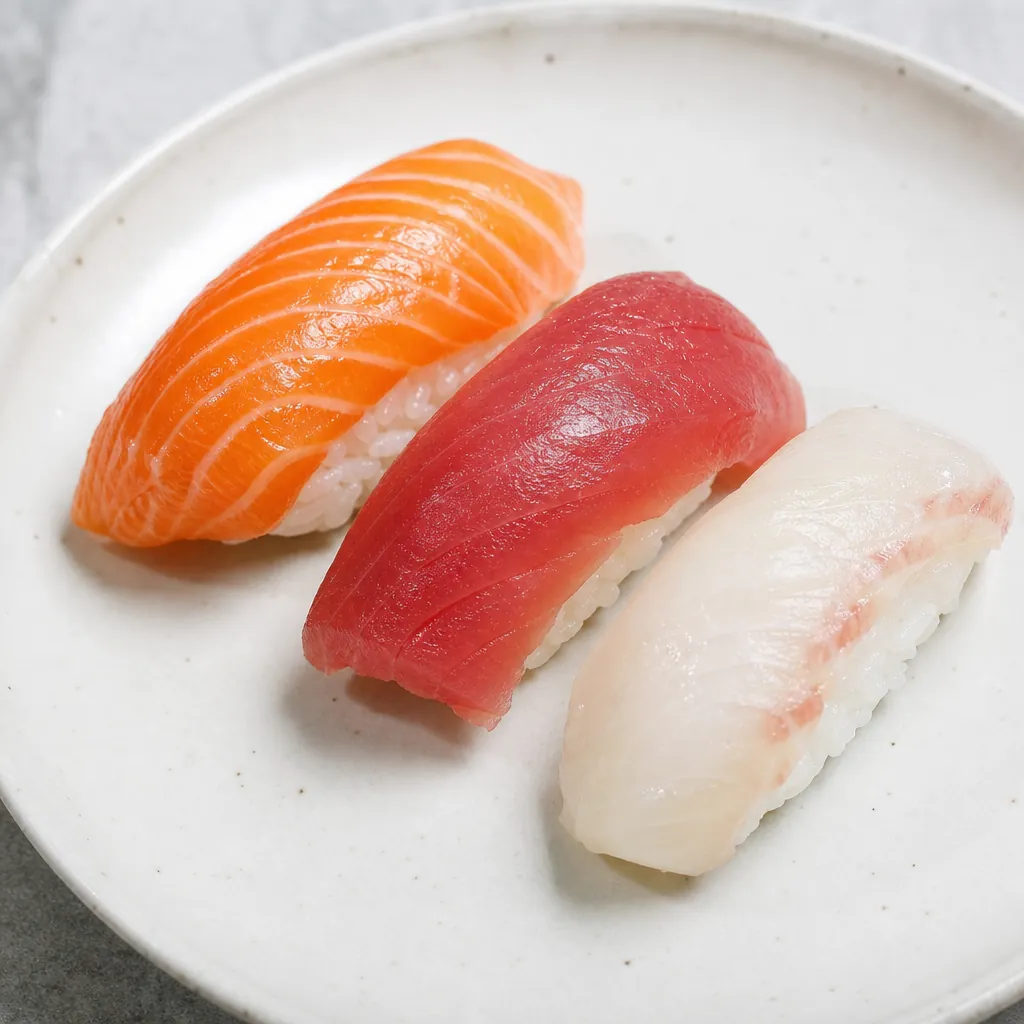
“Just get me some sushi” is a perfectly reasonable order — until you’re standing in front of a menu with a dozen unfamiliar words on it. Nigiri, sashimi, maki, temaki — they all fall under the sushi umbrella, but they’re different enough that knowing the difference will genuinely change what you order (and whether you’re happy with it).
Here’s the breakdown, no textbook jargon required.
Sashimi: Just the Fish, No Rice
Let’s start with the simplest one, because it’s the easiest to get wrong. Sashimi is not sushi in the technical sense — it’s simply thin slices of raw fish, served on their own with no rice at all.
If you order sashimi expecting rice underneath, you’ll be surprised. It’s meant to be a pure showcase of the fish itself: freshness, texture, and quality are everything, since there’s nowhere for a mediocre cut to hide. Sashimi is often served with a small amount of soy sauce, wasabi, and pickled ginger on the side — used sparingly, not as a dip to drown the fish in.
Order sashimi if: you want to taste the fish itself, you’re trying a new type of fish for the first time, or you’re pairing it as a starter alongside other dishes.
Nigiri: Fish Over a Small Mound of Rice
Nigiri is the classic image most people picture when they think “sushi.” It’s a hand-pressed mound of vinegared rice topped with a single slice of fish (or occasionally another topping, like egg or eel), sometimes with a small strip of nori holding it together.
The rice matters just as much as the fish here — it should be seasoned, slightly warm or room temperature, and hold together without being sticky or mushy. A good nigiri is meant to be eaten in one bite, fish-side down against your tongue, not dunked upside-down into a pool of soy sauce.
Order nigiri if: you want the classic sushi experience — a balance of rice and fish in a single, clean bite.
Maki: The Rolled-Up Version
Maki is what most people mean when they casually say “a sushi roll.” It’s rice and fillings rolled inside a sheet of nori (seaweed), then sliced into bite-sized pieces. Fillings can be raw fish, cooked seafood, vegetables, or combinations of all three — this is where you’ll find the most variety and creativity on a sushi menu.
Maki ranges from simple (a cucumber roll) to elaborate (specialty rolls with multiple ingredients, sauces, and toppings). If you’re newer to sushi or dining with someone who’s hesitant about raw fish, maki is usually the easiest entry point, since so many rolls use cooked ingredients.
Order maki if: you want variety, you’re sharing at the table, or you (or someone you’re with) are easing into sushi for the first time.
A Quick Cheat Sheet
| Type | Rice? | Raw Fish? | Best For |
|---|---|---|---|
| Sashimi | No | Usually yes | Tasting fish quality directly |
| Nigiri | Yes (hand-pressed) | Usually yes | Classic, balanced bite |
| Maki | Yes (rolled) | Sometimes | Variety, sharing, beginners |
Building a Balanced Order
Most guests don’t order just one type — a well-rounded sushi meal usually mixes all three. A common approach: start with a couple of maki rolls to share, add a few pieces of nigiri for the classic experience, and try a small sashimi plate if you’re curious about a specific fish on its own.
Come Practice What You’ve Learned
Now that you know your nigiri from your maki, put it to the test. Our menu at Zen Ramen & Sushi has a full range of rolls, nigiri, and sashimi to help you build the order that’s right for you — whether you’re a first-timer or just want a refresher.
View our sushi menu or order online for pickup and delivery.
150 W 36th St, New York, NY 10018
(646) 870-7509