
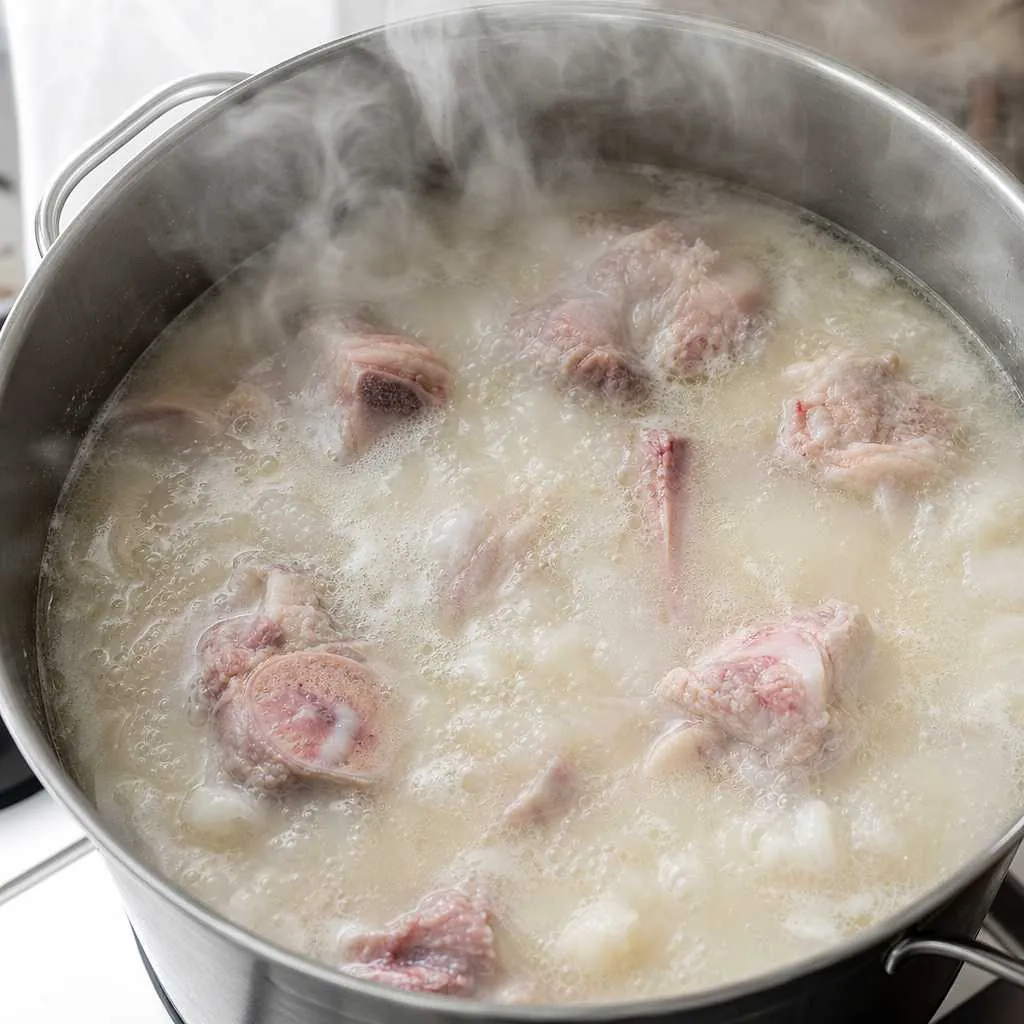
Most people have never tasted a truly authentic ramen broth, and that is not an accident. The difference between a bowl that stops conversation and one that is merely warm and filling comes down to hours of deliberate work that most restaurants skip entirely. At Zen Ramen and Sushi, our authentic ramen broth is built from raw bones, whole aromatics, and timed temperature control, not from concentrate or powder. If a friend recommended us to you, this is exactly what they experienced, and this article breaks down every step of how we get there.
Table of Contents
- Quick Takeaways
- Why the Broth Defines the Entire Bowl
- The Bones We Use and Why It Matters
- The Blanching Step Most Restaurants Skip
- Time, Temperature, and the Long Simmer
- Tare: The Seasoning Concentrate That Finishes the Bowl
- Broth Style Comparison: Tonkotsu vs. Shoyu vs. Miso
- How Our Approach Differs from Fast-Casual Ramen
- Frequently Asked Questions
- References
Quick Takeaways
| Key Insight | Explanation |
|---|---|
| Blanching bones first removes blood and impurities | Skipping this step results in a cloudy, bitter broth. We blanch every batch before the main simmer begins. |
| Tonkotsu broth requires a rolling boil, not a gentle simmer | A high boil emulsifies collagen and fat into a creamy white stock. Low heat produces a clear but thin result. |
| Tare and broth are built and stored separately | The seasoning concentrate (tare) is added per bowl at service, allowing precise salt control and freshness. |
| Aromatic charring adds depth without bitterness | Ginger and green onion are charred directly over flame before entering the pot, creating a smoky undertone. |
| Minimum simmer time for pork bone broth is 12 hours | Under 10 hours, collagen has not fully broken down. The body and mouthfeel are noticeably thin. |
| A traditional ramen recipe uses at least two protein sources | Combining pork bones with chicken carcasses builds a more complex, layered flavor than single-protein broths. |
| How ramen is made determines its regional identity | Hakata, Sapporo, and Tokyo ramen are defined by broth technique, not just toppings. Technique is the style. |
Why the Broth Defines the Entire Bowl
Every component of ramen, from noodles to toppings, is secondary to the broth. The noodles carry texture and the chashu adds richness, but neither can save a weak stock. A flat broth signals a rushed kitchen, and experienced ramen eaters identify it within the first sip.
In practice, the broth accounts for roughly 60 to 70 percent of the total flavor experience of a ramen bowl. This is not opinion. It is the reason ramen masters in Japan train specifically on broth technique for years before graduating to any other station. At Zen Ramen and Sushi, we treat broth-making as its own craft, separate from everything else happening in the kitchen.
The pursuit of a perfect authentic ramen broth is also why a bowl of serious ramen costs more than casual noodle soup. The raw ingredient cost and labor hours invested in the broth alone exceed what most diners assume.
The Bones We Use and Why It Matters
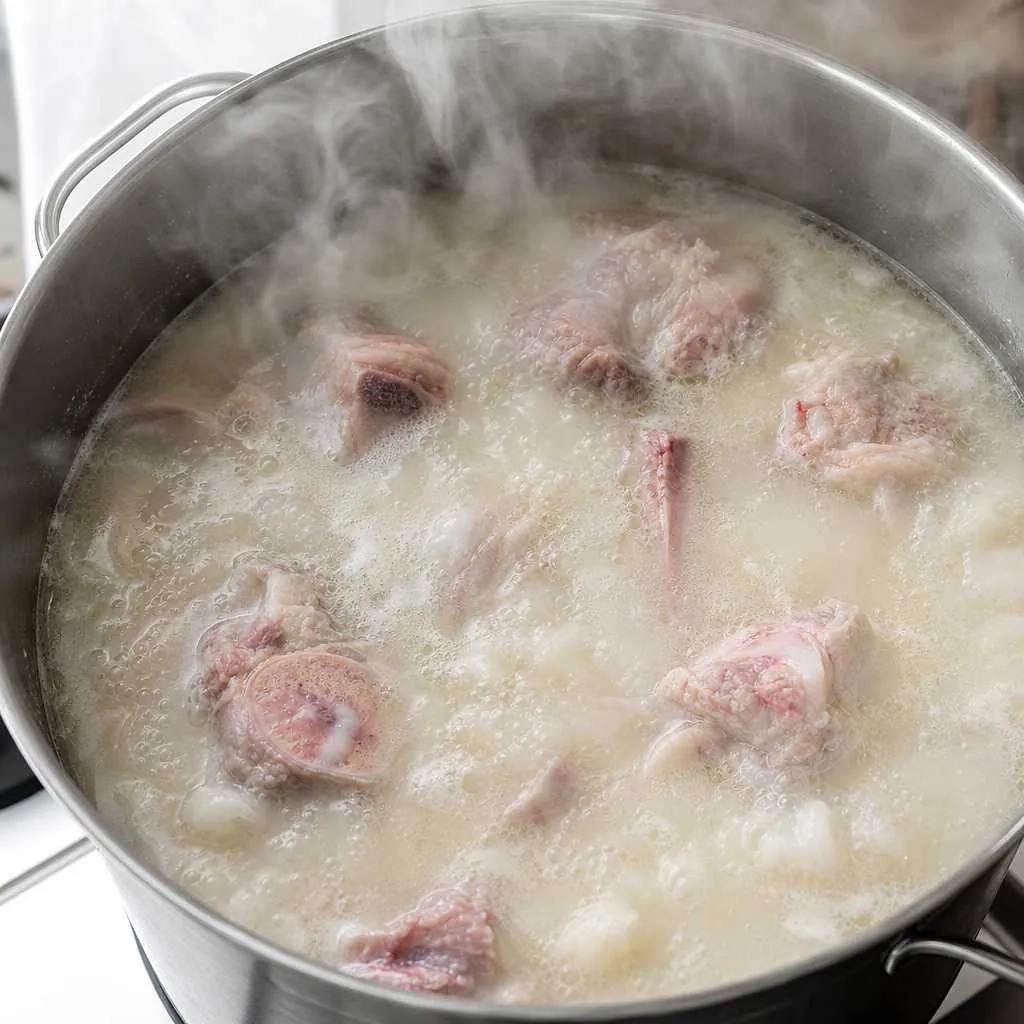
The foundation of our broth is pork femur bones, specifically chosen for their high marrow content. Marrow dissolves into the broth during extended simmering and is the primary source of the creamy, unctuous mouthfeel that defines a proper tonkotsu. We supplement with pork knuckles for collagen and chicken backs for their naturally higher glutamate content, which adds savory depth without added seasoning.
Why Pork Femur Over Spine or Neck Bones
Spine and neck bones are cheaper and easier to source, and many ramen shops use them exclusively. The problem is surface area and marrow yield. Femur bones have dense marrow channels that release slowly over a long boil, contributing fat and body that spine bones cannot match. A common mistake is using too many neck bones as a cost-saving measure, producing a broth that tastes thin and overly porky without the round, milky character that signals quality.
The Role of Chicken in a Pork-Based Broth
Chicken carcasses carry naturally occurring glutamic acid, the compound responsible for umami. When combined with pork bones, the chicken amplifies the savory dimension of the broth without changing its color or making it taste like chicken soup. We use a ratio of roughly three parts pork to one part chicken for our core broth.
Pro tip: Ask your butcher to cut femur bones lengthwise rather than crosswise. This exposes more marrow surface area to the boiling water, accelerating the emulsification that creates a creamy broth.
The Blanching Step Most Restaurants Skip
Before any long simmering begins, every batch of bones at Zen Ramen and Sushi goes through a cold-water blanch. Bones are submerged in cold water, brought to a hard boil for 10 to 12 minutes, then drained and rinsed under cold running water. This step removes blood, impurities, and bone fragments that would otherwise cloud the broth and introduce off-flavors.
A common mistake is starting bones directly in hot water or skipping blanching entirely when using frozen product. Both produce a noticeably bitter, murky broth. The rinse after blanching is just as important as the blanch itself. Residual grey foam and blood clots cling to the bone surface and must be physically removed by hand under cold water before the main pot starts.
“Ramen broth is one of the most labor-intensive stocks in professional cooking. Every shortcut you take shows up in the bowl.” – Ivan Orkin, ramen chef and author of Ivan Ramen
This is the step that separates a restaurant serious about its craft from one that views ramen as a simple noodle dish. It adds 20 to 30 minutes to the process and requires handling cold bones in volume, which is uncomfortable kitchen work. We do it on every batch without exception.
Time, Temperature, and the Long Simmer
Temperature management is where most home attempts at a traditional ramen recipe break down. Tonkotsu broth is the one major stock in professional cooking that requires a sustained rolling boil rather than a gentle simmer. The high heat physically forces collagen to break down faster and causes fat droplets to emulsify into the water, creating the opaque, creamy appearance.
The 12-Hour Minimum and Why Shortcuts Fail
Our tonkotsu base simmers at a hard boil for a minimum of 12 hours, and often up to 18 hours for weekend batches where volume is higher. Under 10 hours, the collagen extracted from the bones has not fully hydrolyzed into gelatin. The broth will feel watery on the palate, and when refrigerated, it will not set into a firm jelly, which is the clearest indicator of a fully developed stock.
The jelly test is a reliable quality check: refrigerate a small sample of finished broth overnight. A properly developed tonkotsu broth should set to a consistency similar to soft panna cotta. If it remains liquid, the broth needed more time.
Charring Aromatics Before They Enter the Pot
Ginger and green onion are held directly over an open gas flame until blackened on the exterior, then added to the boiling broth. The charring creates Maillard reaction compounds on the surface that contribute a subtle smokiness and complexity. This is a standard technique in traditional ramen production but is frequently omitted in high-volume operations because it requires individual attention per batch.
Pro tip: Add kombu (dried kelp) to the broth during the final two hours of simmering rather than at the start. Kombu releases glutamates that boost umami, but extended boiling of kombu produces a slimy texture and bitter aftertaste. Two hours is the functional window for maximum benefit without degradation.
Tare: The Seasoning Concentrate That Finishes the Bowl
Tare is the seasoning paste or liquid that is added to the bowl at service, just before the broth is poured over it. The distinction between broth and tare is fundamental to understanding how ramen is made at a serious level. The unseasoned broth is called shiro-dashi or base stock. The tare provides salt, umami, and the regional flavor identity of the bowl.
Our shoyu tare combines aged soy sauce with mirin, sake, and dried sardines (niboshi) simmered together and reduced. Our shio tare uses sea salt dissolved with kombu-infused water and dried scallop. The miso tare is built from a blend of white and red miso with sesame paste and a small amount of rendered chicken fat (schmaltz) for richness.
Why Tare and Broth Are Never Combined in Advance
Mixing tare into the broth in bulk ahead of service is operationally tempting but destroys flexibility. Salt level, sodium concentration, and flavor intensity all shift depending on how the broth has reduced over a service period. Keeping them separate allows each bowl to be seasoned precisely. A standard bowl receives 25 to 30 milliliters of tare, but this is adjusted by our kitchen team based on how concentrated that day’s broth has become.
Broth Style Comparison: Tonkotsu vs. Shoyu vs. Miso
| Broth Style | Primary Characteristic | Key Technique Requirement |
|---|---|---|
| Tonkotsu | Creamy, opaque, rich mouthfeel from emulsified pork collagen and fat | Sustained rolling boil for 12 to 18 hours using femur and knuckle bones |
| Shoyu (Soy Sauce) | Clear, amber broth with a savory, slightly sweet profile | Gentle simmer of chicken or combined bones, finished with shoyu tare at service |
| Miso | Thick, hearty, deeply savory with a fermented earthiness | Chicken or pork base broth, tare built from blended fermented miso paste added per bowl |
Each style requires a fundamentally different technique, not just a different seasoning. Applying shoyu tare to a tonkotsu base produces a hybrid that lacks the clean identity of either style. Authentic execution means matching technique, bone selection, and tare type as a single system.
How Our Approach Differs from Fast-Casual Ramen
The ramen market in New York has grown significantly, with well-funded chains operating multiple locations and achieving high consistency through standardized production. That consistency often comes at a cost to the broth itself. Ramen operations built for scale frequently use pre-made broth bases, commercially produced tare, and accelerated bone extraction using pressure cookers to reduce simmer time from 12 hours to under two.
Pressure cooking does extract collagen faster, but the resulting broth lacks the depth that comes from prolonged exposure to charred aromatics and the gradual Maillard compounds that develop in an open pot. The data consistently shows that pressure-extracted tonkotsu broth gels less firmly when refrigerated, indicating lower total collagen conversion, which directly affects mouthfeel in the bowl.
At Zen Ramen and Sushi, we run a smaller-volume kitchen compared to multi-location chains. That is a deliberate choice. It allows us to manage broth quality at the batch level, adjust aromatics seasonally, and apply the kind of attention that does not scale into a 200-seat operation. Customers who find us through personal recommendations are often specifically reacting to the broth quality, and that is not something we are willing to trade for faster production cycles.
Frequently Asked Questions
What makes an authentic ramen broth different from regular soup stock?
Authentic ramen broth uses specific bone types selected for collagen and marrow yield, undergoes a blanching step to remove impurities, and is simmered at controlled temperatures for a minimum of 12 hours. Regular soup stock is typically made over two to four hours at a gentle simmer with a broader mix of vegetables and bones. The collagen content, mouthfeel, and flavor depth are not comparable.
How long does it actually take to make ramen broth from scratch?
A tonkotsu broth requires between 12 and 18 hours of active simmering after a 30-minute blanching and prep phase. Shoyu and shio broths can be done in six to eight hours, but the tare components still require separate preparation time. Total elapsed time from raw bones to finished broth ready for service is rarely under 14 hours for a serious production.
Can you make authentic ramen broth at home?
Yes, but you need a heavy stockpot, access to pork femur bones from a butcher, and a full day at home. The blanching step is non-negotiable. Expect to spend about 14 hours total, including prep. The result will be dramatically better than any packaged ramen base. The biggest mistake home cooks make is using too much water relative to bones, which dilutes the collagen concentration below the threshold needed for proper body.
What is tare and why is it added separately from the broth?
Tare is a concentrated seasoning liquid, typically based on soy sauce, salt, or miso, that provides the primary salinity and regional flavor identity of a ramen bowl. It is kept separate from the base broth so that each bowl can be seasoned individually. This allows adjustments for concentration changes in the broth as it reduces during service, and it preserves the freshness of both components independently.
Why is tonkotsu broth white and creamy instead of clear?
The opaque white color comes from emulsification. When pork bones are boiled at a hard, rolling boil for many hours, the fat and collagen proteins are physically broken into microscopic droplets that suspend throughout the water rather than rising to the surface. This is the same principle behind a hollandaise sauce. A gentle simmer does not generate enough agitation to force this emulsification, producing a clear but thinner broth instead.
Does Zen Ramen and Sushi make its broth fresh daily?
Yes. Each batch of broth is made in-house every day before service. We do not use pre-made bases or outsource broth production. Batch size is calibrated to daily volume so that we are not over-producing and storing broth across multiple days, which degrades flavor. If a broth sells out on a high-volume evening, that bowl is no longer available, which is a direct consequence of not cutting production corners.
Have you tasted ramen broth that genuinely stopped you mid-sip? We would love to hear what made it memorable or what fell short, leave your experience in the comments or bring it up next time you visit us.
References
- Serious Eats: in-depth cooking science and professional technique guides for stocks and broths
- Food and Wine: culinary expertise and chef-driven recipes covering traditional Japanese cooking methods
- Forbes: food industry reporting on restaurant trends, ingredient sourcing, and culinary craft
- Statista: market data and consumer statistics on the Japanese restaurant industry and ramen category growth
- Epicurious: tested recipes and food science explanations including traditional ramen broth preparation