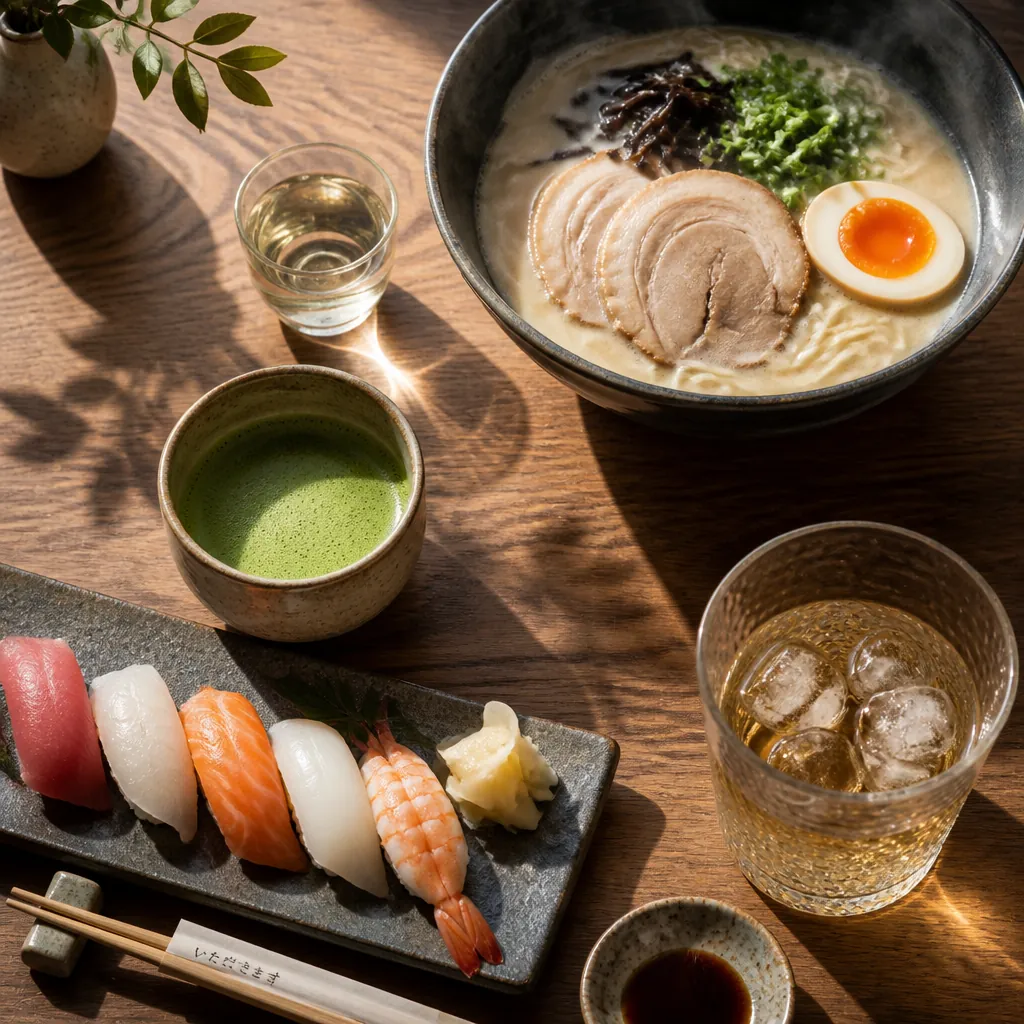
Most people who sit down for a Japanese meal spend all their energy choosing the right bowl of ramen or the freshest sushi platter, then grab whatever drink is closest without a second thought. That is a real shame, because the right beverage does not just quench thirst. It changes how the broth tastes, sharpens the fish’s clean flavors, and turns a good meal into a memorable one. Getting Japanese drink pairings right is not complicated, but it does require knowing a few principles about broth weight, flavor intensity, and what specific drinks actually do on the palate. This guide gives you those principles, plus the specific pairings that work.
Table of Contents
- Quick Takeaways
- Understanding Broth Types Before Choosing a Drink
- What to Drink With Ramen: Pairing by Broth Style
- What to Drink With Sushi: Matching the Fish, Not Just the Roll
- Sake: The Most Versatile Anchor for Both Dishes
- Non-Alcoholic Pairings That Deserve More Credit
- Drink Pairing Comparison: Ramen vs. Sushi vs. Both
- Common Pairing Mistakes to Avoid
- Frequently Asked Questions
- References
Quick Takeaways
| Key Insight | Explanation |
|---|---|
| Match drink weight to broth weight | A heavy tonkotsu broth needs a drink that can stand up to fat and salt, like whisky highball or dry sake. Light shio ramen works better with green tea or a crisp lager. |
| Carbonation dulls umami in rich broths | Beer is fine with lighter ramen and fried sides, but it flattens the perception of savory depth in tonkotsu and miso. Choose accordingly. |
| Sake pairs better with sushi than most people try | Junmai sake served at room temperature complements fish oils and rice vinegar without introducing competing sweetness or bitterness. |
| Green tea is a reliable palate cleanser between sushi pieces | Its mild bitterness resets the palate between different fish types, which is exactly what you need when moving from fatty tuna to delicate white fish. |
| Shochu on the rocks is underrated with ramen | Served with cold water or on the rocks, shochu has a subtle flavor that does not compete with bold broths the way beer sometimes does. |
| Cold barley tea (mugicha) works for the full meal | Its toasty, nutty flavor bridges both ramen and sushi without ever clashing, making it the best all-purpose non-alcoholic choice at a Japanese restaurant. |
| Avoid sweet cocktails with serious sushi | Fruity or sweetened drinks override the clean, subtle flavors of high-quality nigiri. Save those for casual rolls with heavy sauces. |
Understanding Broth Types Before Choosing a Drink
Before picking a drink, you need to know what you are eating. Ramen comes in four primary broth styles, and each one has a different fat content, salt level, and flavor intensity that directly affects what will complement or clash with it.
Shio ramen is the lightest of the four. The broth is clear or pale golden with a clean, delicate salt flavor. It is the most pairing-flexible style because it does not fight back. Shoyu ramen adds soy sauce depth and a slightly darker, richer profile. Miso ramen introduces fermented complexity and often a nutty, savory weight. Tonkotsu is the richest of all, built from pork bones cooked for hours into a creamy, fat-heavy broth.
Each of these calls for a different approach. Treating them all the same way is the most common pairing mistake at the table. A drink that works beautifully with shio can actively work against a tonkotsu bowl, making the fat feel greasy instead of luxurious.
For sushi, the pairing logic shifts from broth weight to fish fat content and preparation style. Fatty fish like salmon and tuna tolerate and even benefit from drinks with more body. White fish and shellfish demand lighter, more neutral pairings. Rolls with heavy sauces follow entirely different rules than clean nigiri.
What to Drink With Ramen: Pairing by Broth Style
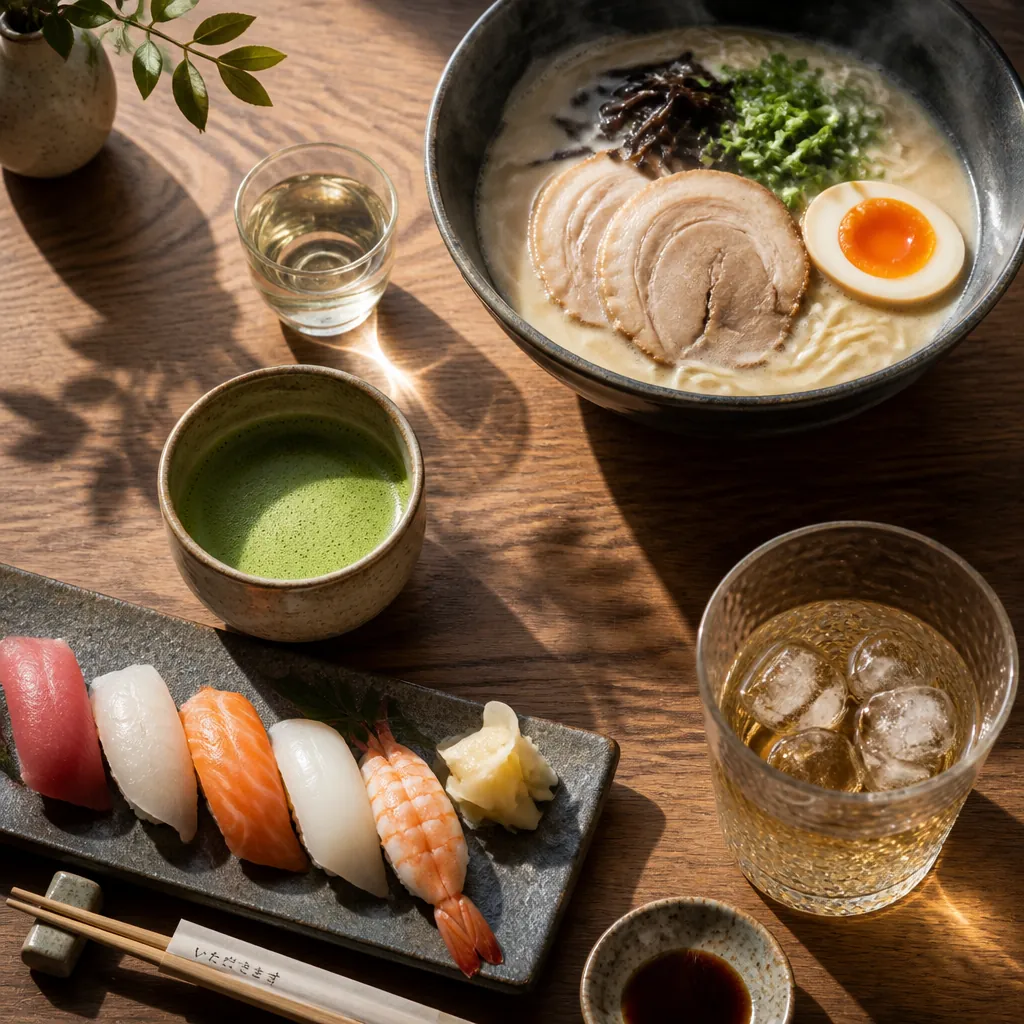
Knowing what to drink with ramen comes down to one core principle: the drink should either match the broth’s intensity or cut through it cleanly. There is no middle ground. A drink that is too light disappears next to a heavy tonkotsu, and a drink that is too bold bulldozes through a delicate shio.
Shio and Shoyu Ramen Pairings
For shio ramen, green tea is the cleanest match available. Hot or iced, its mild bitterness provides a gentle contrast to the salt without overwhelming the broth’s subtlety. A crisp Japanese lager like Asahi or Sapporo also works well because the carbonation lifts the palate without flattening the flavor. If you want something with more character, a slightly sweeter sake suits shio’s delicacy better than a dry one.
Shoyu ramen can handle a little more. A dry sake served at room temperature is an excellent call here, as the umami notes in both the sake and the soy-based broth reinforce each other rather than competing. A light Japanese beer remains a safe option for shoyu as well, particularly when the bowl includes fried toppings.
Miso and Tonkotsu Ramen Pairings
Miso ramen has fermented depth, and it pairs exceptionally well with junmai sake at room temperature. The fermentation notes in both align naturally, creating a pairing that feels intentional rather than accidental. Hojicha, a roasted green tea with a toasty, low-bitterness flavor, also works with miso because its earthiness mirrors the broth’s savory weight.
Tonkotsu is where most people make their biggest drink mistake. Beer, especially heavily carbonated beer, dulls the umami perception in a pork-bone broth. A Japanese whisky highball, which is whisky served over ice with sparkling water, cuts through tonkotsu’s fat without flattening its richness. Dry sake and shochu on the rocks are the other strong choices here. If you prefer non-alcoholic, iced barley tea (mugicha) has a toasty, nutty profile that stands up to tonkotsu without competing with it.
Pro tip: If you are ordering tonkotsu or spicy miso ramen at Zen Ramen and Sushi, ask for a whisky highball or a chilled mugicha. Both options keep the broth’s full depth intact while giving your palate a genuine rest between bites.
What to Drink With Sushi: Matching the Fish, Not Just the Roll
The conventional advice about what to drink with sushi usually stops at “drink sake.” That is true, but it leaves out half the picture. The best sushi pairing depends on the specific fish or preparation, not just the format of the dish.
Nigiri and Sashimi
For clean nigiri, especially white fish like flounder or sea bass, a light, dry sake is the gold standard. It does not compete with the fish’s subtle flavor and it mirrors the clean acidity of the sushi rice. Green tea works equally well as a non-alcoholic option, resetting the palate between pieces so each one tastes fresh. Avoid anything sweet here. A sugary cocktail will override the delicate flavors you are paying for.
Fatty fish like salmon and tuna can handle a drink with more presence. A slightly richer junmai sake, a cold glass of Asahi, or even a small pour of chilled shochu serves fatty nigiri well. The richness of the fish has enough presence to stand alongside a more assertive drink.
Rolls With Heavy Sauces
Rolls loaded with spicy mayo, eel sauce, or tempura crunch are a different category entirely. These are bold, sweet, and fatty all at once. A crisp Japanese lager is the best call because carbonation and mild bitterness cut through the sauce without getting lost in it. Sparkling water with lemon serves the same function for non-drinkers. Do not waste a quality sake on a sauce-heavy roll. The sauces will overpower the sake’s nuance completely.
Sake: The Most Versatile Anchor for Both Dishes
If you are eating both ramen and sushi in the same meal, which is one of the best ways to experience a Japanese restaurant like Zen Ramen and Sushi, sake is the one drink that can hold the whole experience together. No other beverage bridges the two as naturally.
Junmai sake, the pure rice variety with no added alcohol, is the most food-friendly style. Served at room temperature, it has enough body to match miso and shoyu ramen, and enough delicacy to complement clean nigiri. Ginjo sake, the more aromatic and refined style, is better suited to lighter sushi preparations and shio ramen, where its floral and fruity notes can be appreciated rather than buried.
The logic of sake pairing is similar to wine pairing but simpler: drier and more neutral for delicate preparations, richer and more textured for bold, fatty flavors.
Temperature matters more than most people realize. Warm sake emphasizes sweetness and rounds out the edges, making it a good match for miso ramen. Chilled sake highlights acidity and clarity, making it better suited to sushi. Room temperature is the safe middle ground for a mixed ramen-and-sushi meal.
Pro tip: When ordering sake at a Japanese restaurant for the first time, ask for junmai at room temperature. It is the most honest expression of what sake tastes like, and it pairs without conflict across nearly the entire menu.
Non-Alcoholic Pairings That Deserve More Credit
Non-alcoholic drink pairings at Japanese restaurants are frequently underserved and deserve a direct recommendation. The category is not a backup option for people avoiding alcohol. Some non-alcoholic drinks actively improve the meal in ways that beer and sake do not.
Iced mugicha is the single best all-purpose non-alcoholic pairing for a Japanese meal that includes both ramen and sushi. Its toasty, nutty flavor does not compete with salty broths or delicate fish. It is naturally caffeine-free, which means it does not interfere with the experience the way some other teas might. It is also gentle on the stomach during a rich meal.
Green tea, either hot or iced, functions as a palate cleanser throughout the meal. The mild bitterness of sencha or a house-blend ocha cuts through fat and salt, resetting your perception between bites. This is particularly valuable when moving from a heavy tonkotsu bowl to a piece of clean white fish nigiri.
Genmaicha, green tea with roasted rice, has a slightly heartier, nuttier flavor and handles heavier broths better than straight green tea. It is a good choice for anyone pairing a non-alcoholic drink specifically with miso or tonkotsu ramen. Cold water remains a perfectly valid choice throughout any meal, and Japanese restaurants typically serve it well-chilled for good reason.
Drink Pairing Comparison: Ramen vs. Sushi vs. Both
| Drink | Best Use Case | Works Across Ramen and Sushi? |
|---|---|---|
| Junmai sake (room temperature) | Miso and shoyu ramen, fatty nigiri, sashimi | Yes, the most flexible choice for a combined meal |
| Japanese lager (Asahi, Sapporo, Kirin) | Fried sides, sauce-heavy rolls, lighter ramen styles | Partially, works better with food that has textural contrast |
| Shochu on the rocks | Tonkotsu ramen, bold flavors, fatty fish | Yes, its subtlety makes it adaptable but it is best with richer preparations |
| Ginjo sake (chilled) | Delicate white fish nigiri, shio ramen | Partially, too delicate for heavy ramen styles |
| Mugicha (iced barley tea) | Full meal coverage, non-alcoholic pairing for any ramen or sushi | Yes, the best non-alcoholic all-rounder |
| Green tea or hojicha | Palate cleansing between sushi pieces, lighter ramen | Yes, works best as a companion rather than a primary pairing |
Common Pairing Mistakes to Avoid
The most frequent mistake is ordering the same drink regardless of what is in the bowl. A friend recommends a particular beer, you order it every time, and you never notice that it is working against your tonkotsu but would be excellent alongside a lighter shoyu bowl. Pay attention to the broth first.
The second most common mistake is pairing quality nigiri with sweet cocktails or fruit-forward drinks. These are not bad drinks in isolation, but they override everything delicate in a carefully prepared piece of sushi. If you are eating premium fish, give it a neutral or complementary drink so you can actually taste what you ordered.
Another mistake worth flagging: ordering a drink that is too cold for a hot, rich ramen. Ice-cold carbonated drinks served alongside a steaming tonkotsu bowl create a temperature contrast that works against your digestion and pulls your attention in two directions. A chilled drink with some body, like mugicha or a lager that has been allowed to warm slightly in the glass, sits more comfortably alongside hot soup.
Finally, ignoring non-alcoholic options entirely is a missed opportunity. At a well-run Japanese restaurant, the tea selection and non-alcoholic offerings are part of the dining experience. Mugicha, hojicha, and sencha are not consolation prizes. They are legitimate pairings that sometimes outperform the alcoholic options, particularly for heavier, fat-rich broths where you need cleansing rather than matching.
Frequently Asked Questions
What is the best drink to order with tonkotsu ramen?
A Japanese whisky highball or shochu on the rocks is the strongest choice for tonkotsu. Both cut through the fat without flattening the broth’s richness the way carbonated beer can. For a non-alcoholic option, iced mugicha handles tonkotsu’s weight better than green tea because its toasty flavor complements rather than conflicts with the pork-bone base.
Can I drink beer with sushi?
Yes, with conditions. A crisp Japanese lager works well with sauce-heavy rolls and fried preparations like tempura rolls. It does not work as well with delicate nigiri or sashimi, where the beer’s bitterness and carbonation can override the fish’s subtle flavors. For clean nigiri, sake or green tea is the better choice.
Is sake better warm or cold with ramen?
It depends on the ramen style. Warm sake emphasizes sweetness and rounds out sharp edges, making it a good match for miso ramen. Chilled sake has more acidity and brightness, which works better with shio and lighter broths. Room temperature is the most flexible option if you are ordering multiple ramen styles or combining ramen and sushi in one meal.
What non-alcoholic drink pairs best with sushi?
Green tea is the most traditional and effective non-alcoholic pairing for sushi. Its mild bitterness cleanses the palate between pieces, allowing each fish to register clearly. Iced mugicha is the better option if you are eating both sushi and ramen in the same meal, since it bridges both without conflicting with either.
Does the drink change depending on the sushi topping?
Yes, and this distinction matters more than most people think. Fatty fish like salmon and tuna can handle drinks with more body, including dry sake or a light beer. Delicate white fish and shellfish need lighter, more neutral pairings. Rolls with heavy sauces follow the same logic as fried food pairings, where carbonation and bitterness do the heavy lifting. Matching the drink to the fish rather than just to the format of sushi gives you consistently better results.
What should I drink if I want one drink for both ramen and sushi?
Junmai sake at room temperature is the answer. It has enough body for miso and shoyu ramen and enough neutrality to complement clean nigiri. If you prefer non-alcoholic, iced mugicha is the equivalent all-rounder. Both work across the full range of a Japanese restaurant menu without conflicting with any single dish.
If you have tried a Japanese drink pairing at Zen Ramen and Sushi, or have a combination that surprised you, share your experience below so others at the table can benefit from what actually worked.