
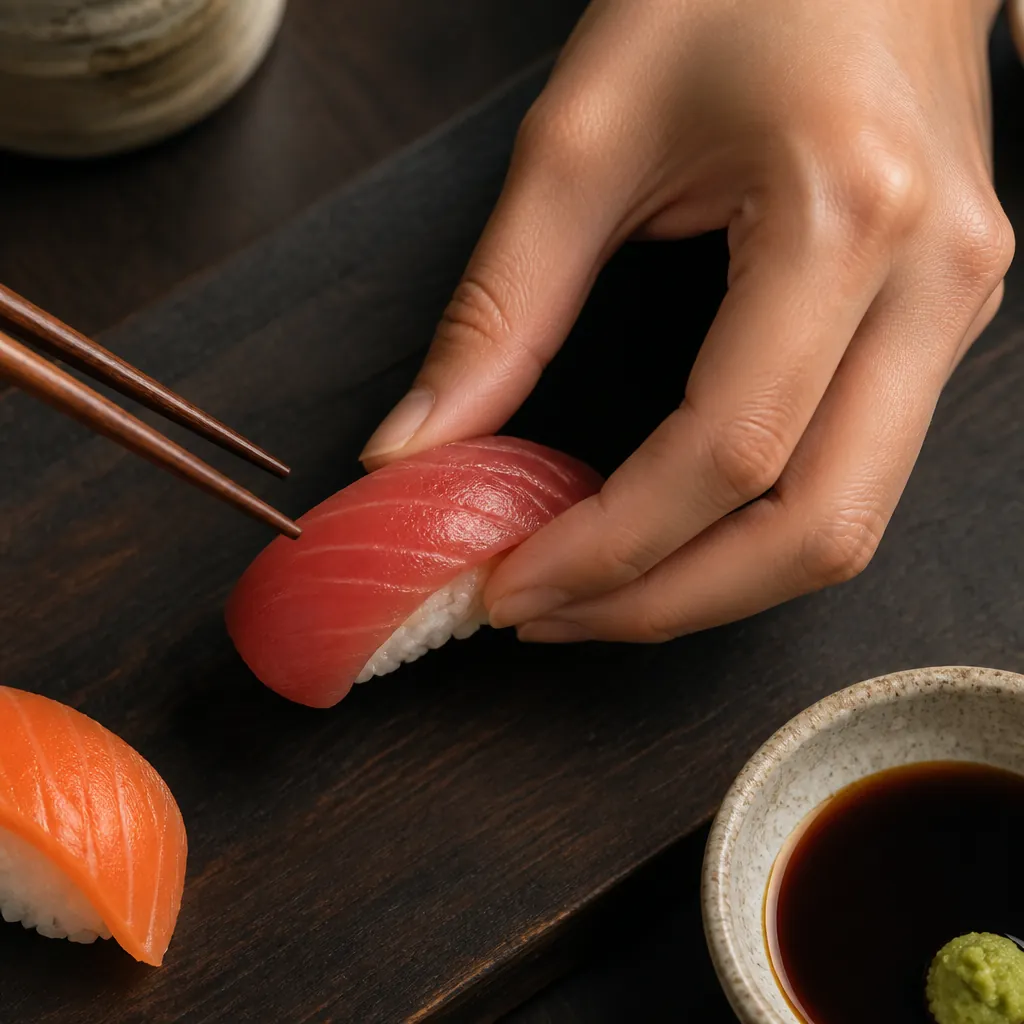
Most people who love sushi have been eating it wrong at least some of the time, and the surprising part is that the mistakes are almost always the same ones. Drowning the rice in soy sauce, mixing wasabi into the dipping bowl like it’s a condiment bar, treating pickled ginger as a topping rather than a palate cleanser. None of this is about being judged. It is about getting the most out of every piece. When you understand sushi etiquette, the food actually tastes better, the chef respects your palate, and the entire dining experience shifts from a meal into something that feels intentional. Whether a friend brought you to Zen Ramen and Sushi for the first time or you are a regular looking to refine your approach, this guide covers everything you need to know.
Table of Contents
- Quick Takeaways
- The Basics of Japanese Dining Etiquette
- How to Eat Sushi: Hands vs. Chopsticks
- Soy Sauce, Wasabi, and Ginger: The Right Way
- Sushi Bar Etiquette
- Chopstick Rules That Matter
- Sushi Etiquette: Common Approaches Compared
- Frequently Asked Questions
- References
Quick Takeaways
| Key Insight | Explanation |
|---|---|
| Eat nigiri with your fingers | Picking up nigiri with your fingers gives you better control and prevents the delicate rice from falling apart. |
| Dip fish, not rice, in soy sauce | Turn nigiri upside down and touch only the fish side to soy sauce. Rice absorbs too much and disintegrates. |
| Ginger is a palate cleanser, not a topping | Eat one small slice of pickled ginger between different pieces, never on top of or alongside a specific roll. |
| Do not mix wasabi into your soy sauce | The chef has already applied the correct amount of wasabi to nigiri. Mixing it in signals you plan to override their calibration. |
| Eat each piece in a single bite | Sushi is designed to be consumed whole. Biting it in half and setting it back down is considered disrespectful to the craft. |
| Say “itadakimasu” before eating | This phrase meaning “I humbly receive” is a standard expression of gratitude before a Japanese meal begins. |
| Never pass food chopstick to chopstick | Passing food directly between chopsticks mimics a funeral ritual in Japanese culture and is considered deeply inappropriate. |
The Basics of Japanese Dining Etiquette
Before the first piece of sushi reaches your plate, Japanese dining etiquette is already in motion. When you sit down at most authentic Japanese restaurants, you will be presented with an oshibori, a warm or cool moist towel depending on the season. Its purpose is simple: wipe your hands before eating. That is it. Do not use it on your face, your neck, or to clean the table.
The two most important phrases to know sit at the start and end of the meal. “Itadakimasu” (pronounced ee-tah-dah-kee-mah-su) means “I humbly receive” and is said before eating, a nod of appreciation to the farmers, the chef, and the food itself. At the end of the meal, “gochisousama deshita” expresses gratitude for what you have just eaten. You do not need to speak Japanese fluently to use these phrases. The attempt is what registers.
Timing matters too. In traditional Japanese dining, you wait for a signal from the host or guest of honor before you begin. At a restaurant like Zen Ramen and Sushi, this translates to waiting until everyone at the table has been served before you dig in. It is a small gesture that says a great deal about your awareness of the people around you.
“Sushi is not just food. It is an art form that requires precision, patience, and a deep respect for tradition. The diner’s role is to receive that effort with equal care.”
One more thing before we get into the mechanics of eating: do not rush. The pace of a Japanese meal is considered part of the experience. Ordering everything at once, stacking plates to signal you want to leave, or checking your phone constantly at a sushi bar are all ways to communicate that you are not really there.
How to Eat Sushi: Hands vs. Chopsticks
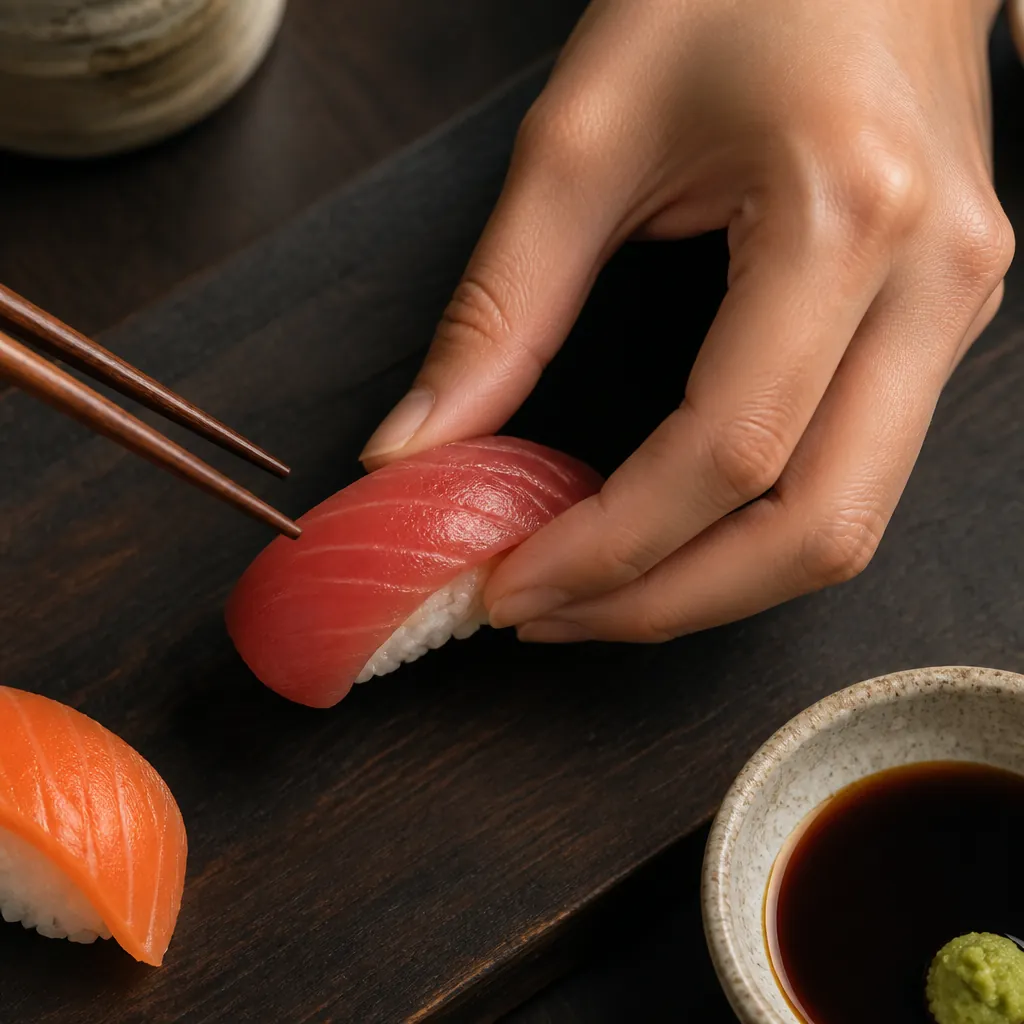
This is where most people get confused, partly because Western dining culture has conditioned us to see eating with fingers as informal. In sushi customs, the opposite is often true. Knowing when to use your hands versus chopsticks is a marker of genuine familiarity with the food.
Nigiri: Use Your Hands
Nigiri sushi, the classic pressed rice topped with fish, is traditionally and correctly eaten with your fingers. Pick it up by gently gripping the sides of the rice with your thumb and middle finger, resting your index finger lightly on the fish. Turn it upside down, and dip only the fish side briefly into the soy sauce. Then eat the whole piece in one clean bite, fish-side down on your tongue. This is how the flavor was designed to land.
The rice in nigiri is pressed to hold together for only a short time after it is made. The longer it sits once you have picked it up, the more likely it is to fall apart. Pick it up and eat it without hesitation.
Sashimi: Always Use Chopsticks
Sashimi, which is sliced fish without rice, should always be eaten with chopsticks. This is a consistent rule across Japanese dining. Trying to pick up sashimi with your fingers is considered bad form and is also simply impractical. Use chopsticks, dip the fish lightly, and eat it in one or two bites depending on the size.
Maki Rolls: Either Works
For maki rolls and hand rolls, both chopsticks and fingers are acceptable. How to eat sushi rolls correctly comes down to keeping the roll intact and consuming the piece whole. Do not bite through a roll and set the remaining half back on the plate. If the roll is too large to eat in one bite, it is perfectly fine to cut it with the edge of your chopstick or ask for a knife, but do not put half of a chewed roll back on your plate.
Pro tip: At high-end sushi restaurants, experienced diners often switch to fingers even for rolls and use chopsticks only for sashimi. The hands-on approach gives better control and is completely sanctioned by Japanese tradition.
Soy Sauce, Wasabi, and Ginger: The Right Way
These three condiments are the source of more sushi etiquette mistakes than anything else. Each one has a specific purpose, and when you use them correctly, the food tastes noticeably better.
Soy Sauce: A Touch, Not a Bath
Pour a small amount of soy sauce into your dipping bowl. Small means small. The goal is to have barely any left when you are finished. Dipping the rice side of nigiri into soy sauce is one of the most common mistakes diners make. The rice soaks up liquid immediately, causes the piece to fall apart, and sends a cloud of dissolved rice into your soy sauce. Instead, turn the piece over and touch only the fish to the soy sauce, briefly.
Do not leave rice floating in your soy sauce bowl. If you have rice in there, you poured too much soy sauce and dipped the wrong side. Pour a fresh, smaller amount and adjust.
Wasabi: Trust the Chef
In traditional Japanese sushi etiquette, the chef already applies wasabi directly to nigiri in what they consider the correct amount. When you receive a piece of nigiri at a quality restaurant, there is wasabi between the fish and the rice. It has been placed there deliberately.
Mixing additional wasabi into your soy sauce flattens the flavor and signals to the chef that you intend to season everything the same way regardless of how they prepared each individual piece. If you genuinely want more heat, it is acceptable to place a small amount of wasabi directly on top of the fish, but this should be a deliberate and considered choice, not a reflex.
It is also considered poor form to peel off the fish, scrape out the wasabi, and then put it back together. If you have a wasabi sensitivity, let the restaurant know when you order. Ordering “sabi-nuki” means you want the dish prepared without wasabi from the start.
Pickled Ginger: Between Pieces Only
Pickled ginger, called gari, is a palate cleanser. Its job is to refresh your taste buds between different pieces of sushi so that each new variety registers on a clean palate. Eat one small slice between pieces. Do not drape ginger over a roll as a topping, do not eat a large mound of it with a single piece, and do not mix it into your soy sauce. Placing ginger on top of sushi changes the flavor profile of the piece and effectively tells the chef you think their preparation needed something extra.
Pro tip: If you are eating an omakase or tasting-style meal at Zen Ramen and Sushi, use the ginger sparingly and only between genuinely different flavor profiles, not between two pieces of the same roll. Save it for when you shift from a fatty tuna to a clean white fish, or from sashimi to a lightly sauced roll.
Sushi Bar Etiquette
Sitting at the sushi bar is the best seat in the restaurant for understanding Japanese dining etiquette in real time. You watch the chef work, you receive your food at its absolute freshest, and you have access to direct conversation about the menu. That access comes with responsibilities.
How to Interact With the Chef
Greet the chef when you sit down. A simple nod, a “konnichiwa,” or a “yoroshiku onegaishimasu” (please take care of me) sets a respectful tone. At the end of the meal, make a point of expressing thanks. The phrase “gochisosama deshita” is appropriate and genuinely appreciated. You do not need to deliver it with theatrical ceremony. A sincere, direct acknowledgment is enough.
Do not reach into or across the chef’s workspace. The area directly in front of the chef belongs to them. If you want to hand something back or ask a question, wait for a natural pause. A good sushi chef is working at a deliberate pace, and interrupting mid-preparation is inconsiderate.
Ordering at the Bar
At high-end sushi bars, it is standard practice to order piece by piece rather than all at once. This approach ensures that each piece arrives to you at peak freshness, made to order rather than sitting. If you are unfamiliar with the menu or unsure what to try next, ask the chef for a recommendation. Most chefs appreciate the invitation, and their answer usually reflects what is freshest that day.
If the restaurant offers omakase, which means “I’ll leave it up to you,” consider trying it. Omakase is the chef’s invitation to showcase their expertise, and surrendering the ordering decisions is one of the most authentic ways to experience what a skilled sushi chef can do. It also requires you to eat whatever is served without visible reluctance, so think it through before committing if you have strong aversions.
Phone and Noise Etiquette
Keep your phone on silent at the sushi bar. Taking calls at the bar disrupts the chef and every other diner in earshot. If you need to take a call, step away from the bar entirely. This is not an unusual expectation. It is the same standard you would apply in a theater.
Chopstick Rules That Matter
Chopstick etiquette in Japanese culture, called o-hashi, is its own subject, but a few rules matter most in a sushi context. Getting these right removes any awkwardness from the table immediately.
Never stick chopsticks vertically into a bowl of rice. This is a gesture associated with funeral rituals and is considered highly offensive. When you are not using your chopsticks, rest them horizontally across your plate or on the chopstick rest provided.
Never pass food from chopstick to chopstick. This is the most serious chopstick rule in Japanese culture because the gesture directly mirrors a ritual at funerals where cremated bones are passed between family members. If you want to share a piece of sushi with someone at your table, place it on their plate. Do not transfer it directly from your chopsticks to theirs.
Do not point at people or things with your chopsticks, and do not use them to spear food. Sushi is designed to be picked up, not stabbed. Using chopsticks to poke or pierce the food signals that you are struggling with them, and in that case, using your fingers is the more graceful solution.
Sushi Etiquette: Common Approaches Compared
Not every restaurant operates the same way. Here is a clear look at how etiquette expectations vary across three different sushi dining formats, so you know what to expect before you arrive.
| Etiquette Aspect | Traditional Sushi Bar (Omakase Style) | Casual Sushi Restaurant | Conveyor Belt (Kaiten) Sushi |
|---|---|---|---|
| Ordering method | Piece by piece, or full omakase trust to the chef | Full order at once from the menu is acceptable | Take what you want from the belt as it passes |
| Hands vs. chopsticks | Hands for nigiri strongly preferred; chopsticks for sashimi | Either is acceptable; chopsticks more common | Either works; comfort is prioritized |
| Wasabi use | Pre-applied by chef; do not add or mix into soy sauce | May add a small amount to fish if desired | Often served on the side; mix is more common and accepted |
| Chef interaction | Direct conversation expected and appreciated | Minimal; interact with server instead | Self-service; little to no chef interaction |
| Phone use | Off or silent; no calls at the bar | Politely silenced; step away for calls | Relaxed environment; more informal norms apply |
| Pace of meal | Slow and deliberate, following the chef’s rhythm | Your own pace, but no rushing the table | Eat at will; quick turnaround is normal |
Frequently Asked Questions
Is it rude to eat sushi with your hands?
No. Eating nigiri sushi with your fingers is actually the traditional and preferred method at high-end sushi bars. It gives you better control over the piece and prevents the rice from breaking apart. The key is to wash your hands first, which is what the oshibori towel at the start of the meal is for. Using your hands for sashimi, however, is incorrect. Sashimi should always be eaten with chopsticks.
Can I mix wasabi into my soy sauce?
In casual and conveyor belt sushi settings, this is generally tolerated. At a traditional sushi restaurant or sushi bar, it is frowned upon. The chef applies wasabi directly to nigiri in the amount they believe best complements that specific piece. Mixing it into soy sauce dissolves the wasabi’s sharp compounds quickly and signals that you plan to season every piece identically, overriding the chef’s individual preparation. If you want extra heat, place a small amount directly on the fish instead.
What should I do with the pickled ginger?
Eat one small slice of pickled ginger between different pieces of sushi, not alongside a specific piece. Ginger is a palate cleanser. Its purpose is to reset your taste buds so each new variety of sushi is tasted on a neutral palate. Never place ginger on top of sushi as a topping, and never pile a large amount onto a single piece. That changes the intended flavor profile of the dish.
Do I need to say anything to the chef before or after the meal?
It is a genuine sign of respect to do so. Before eating, saying “itadakimasu” expresses gratitude for the meal. At the end, “gochisosama deshita” thanks the chef and everyone involved in preparing the food. At a sushi bar specifically, a simple nod or spoken thank-you directed at the chef when you leave makes a strong impression. It is not mandatory, but it is noticed and appreciated.
Is it acceptable to ask the sushi chef for recommendations?
Yes, and at a quality sushi bar this is actively encouraged. Chefs appreciate diners who are open to guidance because it means the recommendation will reflect what is freshest and best that day. If the restaurant offers omakase, which lets the chef decide your entire progression of dishes, that is the deepest expression of trust you can extend, and it almost always produces the best meal.
What chopstick mistakes are most offensive in Japanese culture?
Two stand out above all others. Passing food directly from chopstick to chopstick is associated with funeral rituals in Japan and should never be done at the table. Sticking chopsticks vertically into a bowl of rice is similarly connected to funeral customs and is considered disrespectful. When not in use, rest chopsticks horizontally on the chopstick rest or across your plate. Do not point with them or use them to spear food.
Should I eat each piece of sushi in one bite?
Yes, whenever physically possible. Sushi is designed to be eaten whole so that all the flavors, textures, and temperatures hit your palate simultaneously, exactly as the chef intended. Biting a piece in half and placing the remaining portion back on your plate is considered disrespectful to the craft. If a piece is genuinely too large for one bite, eat it in two quick, clean bites without setting it down between them.
If you have had a memorable sushi experience at Zen Ramen and Sushi, or if any of these etiquette tips changed the way you think about Japanese dining, we would love to hear about it in the comments below.
References
- Comprehensive guide to sushi dos and don’ts for first-time and returning diners
- Sushi etiquette rules for a respectful dining experience, including chopstick customs
- How to eat sushi and key Japanese dining etiquette practices explained
- Japanese table manners including oshibori use, itadakimasu, and gochisousama deshita
- Do’s and don’ts of eating sushi at a traditional Japanese restaurant