
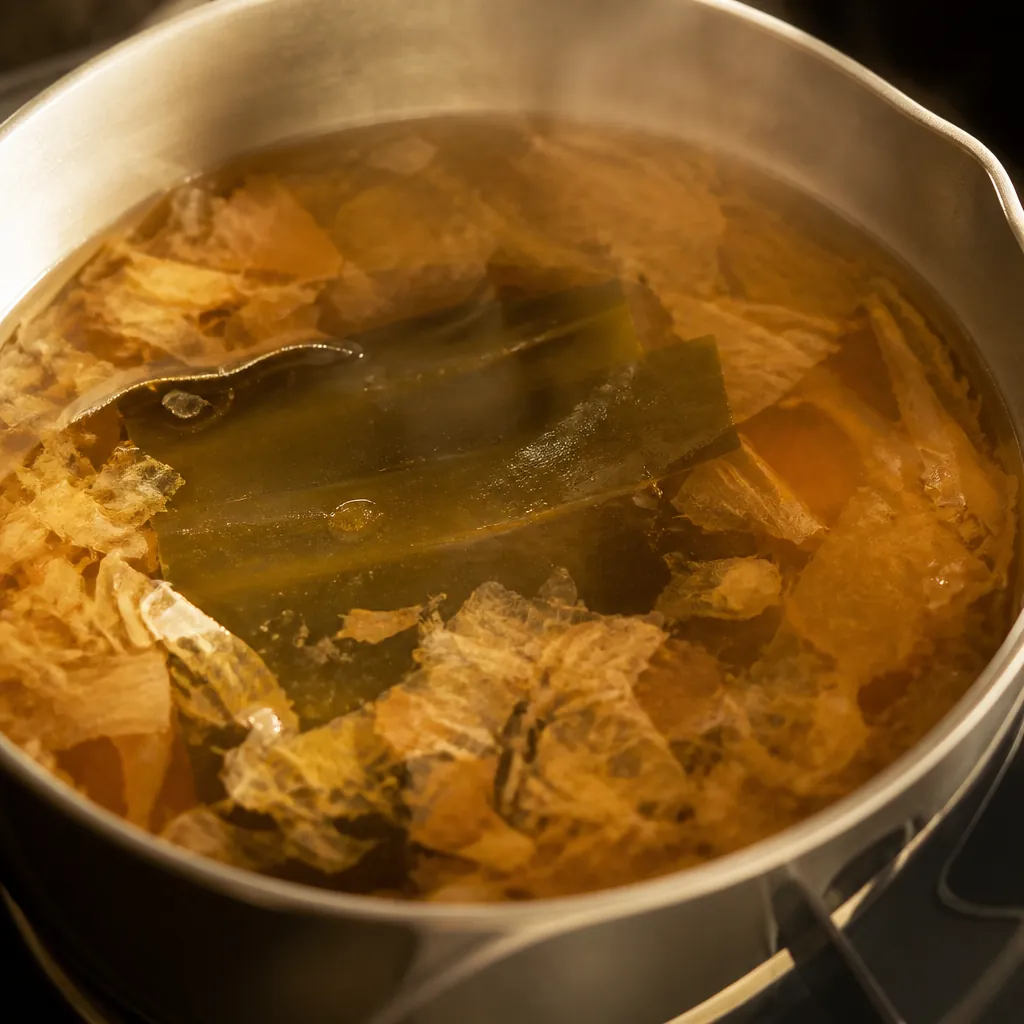
Most people who fall in love with Japanese food cannot name the single ingredient most responsible for its flavor. They notice the miso, the soy sauce, the fresh fish. What they miss entirely is dashi broth, the quiet, almost invisible stock that underlies virtually every dish on a traditional Japanese menu. Dashi is not a garnish or a finishing touch. It is the structural foundation, the thing that makes a bowl of ramen taste like it was built by someone who actually understands flavor, rather than assembled from parts. Understanding what dashi is, how it works, and why it matters changes the way you experience every bowl you order.
Table of Contents
- What Is Dashi Broth?
- Quick Takeaways
- The History of Japanese Dashi
- The Main Types of Dashi
- Dashi and Umami: The Science Behind the Flavor
- Dashi in Ramen and Other Japanese Dishes
- Dashi vs. Western Stock: A Key Distinction
- How to Read a Bowl of Ramen Through Its Dashi
- Frequently Asked Questions
- References
What Is Dashi Broth?
Quick Takeaways
| Key Insight | Explanation |
|---|---|
| Dashi is the base, not the seasoning | Dashi provides the foundational umami depth in Japanese cooking. Tare (seasoning sauce) is added separately to create distinct flavors like shio, shoyu, or miso ramen. |
| Kombu and katsuobushi create a flavor synergy | Combining glutamate from kombu with inosinate from dried bonito produces an umami effect far greater than either ingredient alone. |
| Ichiban dashi is for delicate dishes, niban for everyday cooking | First-brew dashi carries a clean, sweet umami suited to clear soups. Second-brew dashi is stronger-smelling and better suited to heartier preparations like miso soup and simmered dishes. |
| Vegetarian dashi is fully legitimate and deeply flavorful | Kombu-only and shiitake dashi deliver genuine umami without any animal products, making them ideal for plant-based guests. |
| Dashi is extracted quickly, not simmered for hours | Unlike Western stocks that require long boiling, dashi uses briefly soaked or gently heated ingredients to preserve a clean, precise flavor profile. |
| Temperature control matters enormously | Boiling kombu releases bitter compounds. Bringing water just to the point before boiling, then removing the kombu, is what separates good dashi from great dashi. |
| Dashi appears in dishes you might not expect | Beyond soups, dashi is used in chawanmushi (savory egg custard), okonomiyaki batter, nimono (simmered vegetables), and even certain rice preparations. |
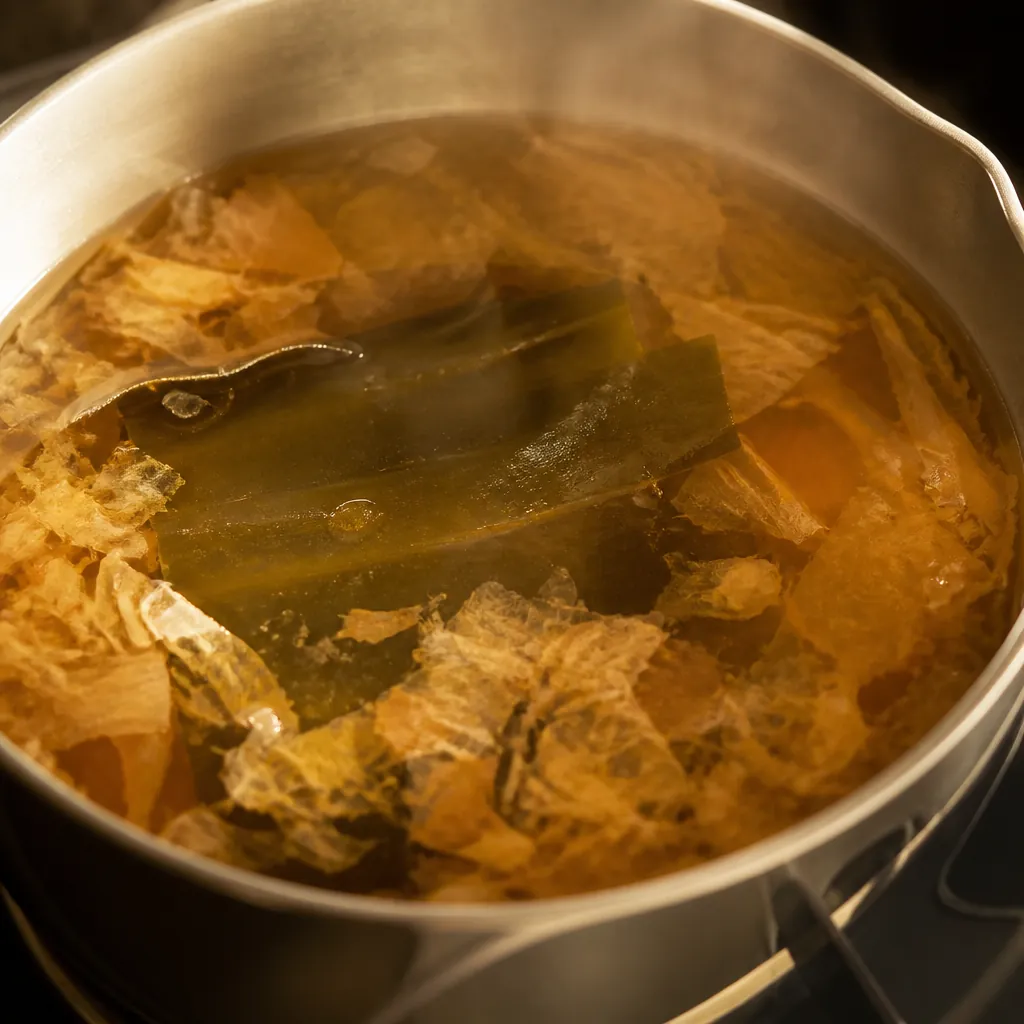
Dashi (出汁) is a family of Japanese soup stocks that forms the base for miso soup, clear broth soups, noodle broths, and simmering liquids. The word itself refers to the act of extraction, drawing flavor from carefully prepared natural ingredients through soaking or brief heating. The most recognized form is a broth made from kombu (dried kelp) and katsuobushi (dried, fermented, smoked bonito flakes), though several other varieties exist depending on the dish and the region.
What sets dashi apart from every other cooking stock in the world is its philosophy of restraint. You are not coaxing flavor out through hours of simmering. You are extracting it quickly, precisely, and cleanly, preserving only the purest expression of the ingredients’ character.
The History of Japanese Dashi
The origins of dashi stretch back thousands of years. Boiling was already used in Japanese cooking during the Jomon period, roughly 13,000 to 300 BC, and the stocks extracted from shellfish and fish bones were used to flavor other dishes from very early on. By the seventh century, a dashi using kombu and katsuobushi had taken recognizable form, and this combination was refined over the following centuries into the indispensable cooking stock that defines Japanese cuisine today.
The emergence of Buddhism in Japan was a significant turning point. With its emphasis on vegetarian meals, Buddhist culinary tradition placed kombu at the center of Japanese cooking. Kombu dashi, as a result, became deeply embedded in the culture long before meat-based stocks were common. Katsuobushi was later layered on top of this tradition, adding a smoky, marine depth that kombu alone could not provide.
During the Heian Period (794 to 1185), kombu was already so prized that it appeared in Japan’s oldest dictionaries, referred to by early names like Hirome. The imperial court incorporated dashi into its cuisine, cementing its status not as peasant food but as a refined culinary foundation.
Pro tip: When you taste a bowl of Japanese broth that feels rounded and complete even before any tare or toppings are added, that is the mark of a carefully made dashi. A weak dashi cannot be rescued by seasoning alone.
The Main Types of Dashi
There is no single dashi. Each variety carries a distinct personality, and choosing the right one for a given dish is as deliberate as choosing the right cut of fish for sushi. The most commonly used types in professional Japanese kitchens are listed below, but in practice, a skilled cook may blend two or more to achieve the exact depth they need.
Kombu Dashi
Made by soaking or gently simmering dried kelp in water, kombu dashi delivers a clean, elegant, slightly oceanic umami. It carries glutamate as its primary flavor compound, making it the most purely savory of all the dashi types. Kombu dashi is the foundation of shojin ryori, traditional Buddhist vegetarian cuisine, and it remains the go-to choice for vegetarian and vegan preparations. The flavor varies depending on the type of kombu, its region of origin, and even the harvest year.
Katsuo Dashi
Katsuo dashi is made exclusively from katsuobushi and is characterized by a light, smoky, aromatic flavor. The production of katsuobushi is an extraordinary process involving boiling, smoking, and fermentation over a period of several months. The result is one of the most concentrated and complex natural flavoring ingredients in any culinary tradition. On its own, katsuo dashi has a pronounced aroma that works well in dishes where a more assertive, savory note is appropriate.
Awase Dashi (Ichiban Dashi)
The combination of kombu and katsuobushi produces awase dashi, and the first brew of this combination is called ichiban dashi, meaning “first dashi.” This is the most prized form. It carries a sweet, clean umami that results from the interaction between the glutamate in kombu and the inosinate in katsuobushi. Ichiban dashi is used in delicate clear soups where its refined character can be fully appreciated. It would be overwhelmed in a dish with strong competing flavors.
Niban Dashi
Niban dashi, or “second dashi,” is made by reboiling the spent kombu and katsuobushi left over from ichiban dashi preparation. The flavor is less delicate, carries a stronger fishy note, and lacks the refined sweetness of the first brew. This does not make it inferior for everyday purposes. Niban dashi is the practical workhorse used in miso soup, simmered dishes (nimono), and recipes where the dashi is one layer among many competing flavors.
Niboshi Dashi
Made from small dried sardines or anchovies (niboshi or iriko), this dashi delivers a briny, more intensely savory flavor. It is particularly common in regional Japanese cooking and is a popular base for certain styles of ramen where a more assertive, oceanic character is desired.
Shiitake Dashi
Dried shiitake mushrooms produce a dashi rich in guanylate, the third major umami compound alongside glutamate and inosinate. Shiitake dashi has a distinctive earthy quality and is often combined with kombu dashi to create a deeply complex vegetarian stock. It is used in Buddhist vegetarian cooking and is an excellent choice for anyone seeking umami depth without any seafood or meat components.
Dashi and Umami: The Science Behind the Flavor
The reason dashi works is not mystical. It is chemistry, and understanding the chemistry helps you appreciate the craft behind a great bowl. In 1908, Professor Kikunae Ikeda of Tokyo Imperial University identified a taste in kombu dashi that could not be explained by any combination of the four recognized basic tastes: sweet, salty, bitter, and sour. He traced this taste to glutamate, an amino acid abundant in kombu, and named it “umami.” Subsequent discoveries in 1913 and 1957 identified inosinate (found in katsuobushi) and guanylate (found in shiitake mushrooms) as additional umami sources.
“The secret of Japanese cuisine is the art of enhancing and harmonizing. Dashi could be said to be the heart of Japanese cuisine, not because of the prominence of its own flavor but because of the way it enhances and harmonizes the flavors of other ingredients.”
The practical implication of this science is significant. When glutamate from kombu and inosinate from katsuobushi are combined in ichiban dashi, the resulting umami is not simply the sum of the two. The compounds interact synergistically, producing a depth of flavor that neither ingredient could achieve on its own. This is why awase dashi is so much more than a simple seafood stock. It is a precisely engineered flavor amplifier.
Pro tip: Never boil kombu. Bringing the water to just below boiling before removing the kombu protects the glutamate compounds and keeps the dashi clean and sweet. Boiling releases bitter, slimy compounds from the kelp that no amount of seasoning can fix.
Dashi in Ramen and Other Japanese Dishes
Dashi forms the base for miso soup, clear broth soups, noodle broths, and simmering liquids across the entire spectrum of Japanese cooking. It also appears in the batter for grilled dishes like okonomiyaki and in the custard base for chawanmushi (savory egg custard). Its presence is rarely announced. It simply makes everything around it taste more fully realized.
In the context of ramen, dashi plays a specific and essential structural role. A ramen bowl is built in layers: the dashi base, the tare (seasoning sauce), the protein and vegetable toppings, and the noodles. The dashi is not the seasoning. That is the job of the tare. The dashi is the platform on which everything else rests. Adding dashi to a chicken or pork broth transforms the base from merely savory to genuinely complex, with a depth that casual diners notice but often cannot identify by name.
Dashi in Shio Ramen
Shio ramen, the lightest and most delicate style of ramen, relies most heavily on the quality of its dashi. Because the shio tare (salt-based seasoning) is transparent and mild, it cannot disguise a weak or poorly made base. A clean, well-extracted ichiban dashi is the only foundation that allows shio ramen to express its full character. Any shortcut shows immediately in the bowl.
Dashi in Shoyu and Miso Ramen
In shoyu (soy sauce) and miso ramen, the tare carries stronger, more assertive flavors. This means niban dashi or a blended dashi with niboshi can work effectively without their rougher edges being exposed. The dashi still matters, but there is more room for variation in style and intensity.
At Zen Ramen and Sushi, the care taken with the broth foundation reflects this same understanding. Dashi is not an afterthought in authentic Japanese cooking; it is the decision that separates a technically competent bowl from one that stays with you. If you want to understand what you are tasting in our ramen and sushi menu, start by understanding dashi.
Dashi vs. Western Stock: A Key Distinction
One of the most common misunderstandings about dashi is treating it like a Western-style stock. The differences are fundamental, not just technical.
| Feature | Dashi (Japanese Soup Base) | Western Stock (Bouillon) |
|---|---|---|
| Primary ingredients | Dried kombu, katsuobushi, niboshi, or shiitake | Animal bones, meat scraps, mirepoix vegetables |
| Preparation time | Minutes (soaking) to under an hour | Several hours of sustained simmering |
| Flavor character | Clean, precise, delicate umami with minimal fat | Rich, complex, often fattier and more robust |
| Clarity | Typically very clear, almost transparent | Ranges from clear to deeply opaque |
| Role in a dish | Invisible amplifier, enhances other flavors | Often a prominent, standalone flavor component |
| Heat sensitivity | High. Overcooking destroys delicate flavor compounds | Low. Extended cooking builds more depth |
The key philosophical distinction is this: dashi is designed to disappear into the dish. Western stock is often designed to announce itself. A French consommé is meant to taste of beef. A perfect suimono (Japanese clear soup) is meant to taste of balance and harmony, with dashi as the invisible hand making that happen.
How to Read a Bowl of Ramen Through Its Dashi
For guests who visit Japanese restaurants frequently, developing the ability to read a bowl of ramen through its dashi base turns a meal into a genuinely educational experience. It is a skill that requires nothing more than paying attention to what you taste before you start mixing toppings into the broth.
The First-Sip Test
Take a spoonful of broth before touching anything else in the bowl. A well-made dashi-based ramen broth will deliver immediate savory depth without any particular ingredient dominating. If the broth tastes flat and then suddenly salty from the tare, the dashi base is weak. If it tastes rounded, complete, and slightly sweet underneath the seasoning, the dashi has been made with care.
Clarity as a Quality Signal
A clear golden broth in a shio or shoyu ramen is not an accident. It is the result of precise temperature control during dashi preparation and careful straining. A cloudy or gray broth in a style that should be clear often signals that the kombu was boiled rather than gently steeped, or that the katsuobushi was overextracted. Tonkotsu-style broths are intentionally opaque from collagen, but that is a different preparation entirely.
Depth Without Heaviness
The most accomplished Japanese soup bases share one quality: they feel substantial without being heavy. This is dashi doing its job. The umami compounds in a good dashi carry flavor through the entire palate, making the broth feel nourishing and satisfying without the fat load of a purely meat-based stock. When a bowl of ramen finishes clean rather than coating your mouth with grease, that is frequently the contribution of a well-balanced dashi base working in concert with the other elements.
Pro tip: If you are dining with someone new to Japanese cuisine, encouraging them to taste the broth first, before adding condiments or mixing the toppings, is the fastest way to help them understand what makes authentic Japanese ramen different from imitations. The dashi is where that conversation starts.
Frequently Asked Questions
What is dashi broth made from?
Dashi is most commonly made from kombu (dried kelp) and katsuobushi (dried, fermented, smoked bonito flakes). Other varieties use niboshi (small dried sardines or anchovies), dried shiitake mushrooms, or combinations of these. The exact ingredients determine the flavor profile, with kombu providing glutamate-based umami and katsuobushi contributing inosinate-based umami.
Is dashi the same as miso soup broth?
No. Dashi is the base stock into which miso paste is dissolved to create miso soup. Dashi itself has a clean, lightly savory flavor without the fermented, salty character of miso. The quality of dashi directly determines the quality of miso soup, since the miso paste alone cannot compensate for a weak or off-tasting stock underneath it.
Can dashi be made without fish?
Yes. Kombu dashi and shiitake dashi are both fully vegetarian and vegan options that deliver genuine, satisfying umami depth. Kombu-only dashi is the traditional foundation of Buddhist vegetarian cooking in Japan and has been used for centuries as a clean, flavorful stock that requires no animal ingredients.
What is the difference between ichiban dashi and niban dashi?
Ichiban dashi (first dashi) is the initial brew, made with fresh, high-quality kombu and katsuobushi. It produces a clean, sweet, refined broth suited to delicate clear soups and dishes where subtle flavor matters most. Niban dashi (second dashi) is made by reboiling the spent ingredients from the first brew. It has a stronger, more assertive fishy character and is used in everyday recipes like miso soup and simmered dishes where competing flavors can stand up to a bolder base.
Why does dashi taste different from other broths?
Dashi delivers umami through specific amino acids and nucleotides, primarily glutamate, inosinate, and guanylate, rather than through fat and collagen as in most Western stocks. This gives dashi a savory depth that feels clean rather than heavy. When glutamate from kombu and inosinate from katsuobushi are combined, they interact synergistically, amplifying the umami effect well beyond what either ingredient produces on its own.
How does dashi function in ramen specifically?
In ramen, dashi serves as the foundational broth base that is combined with a tare (seasoning sauce) to create the finished soup. Unlike Western-style seasoned broth, the dashi is not the seasoning itself. It provides the platform of umami depth over which the tare adds distinct flavor characters like shio (salt), shoyu (soy sauce), or miso. A weak dashi makes every style of ramen taste flat, regardless of how strong the tare is.
Does temperature matter when making dashi?
Temperature is one of the most critical variables in dashi preparation. Kombu should be removed from the water just before it reaches a full boil. Boiling kombu extracts bitter, unpleasant compounds that ruin the clean character of the stock. Katsuobushi should be added off the heat and steeped briefly, then strained. The entire process requires attention to these temperature boundaries, which is why a well-made dashi takes skill despite being made from only a handful of ingredients.
Have you noticed the difference in a bowl of ramen when the dashi base is clean and well-made? We would love to hear what flavors you pay attention to most when you sit down to a bowl.
References
- Overview of dashi, its umami science, and the role of glutamate and inosinate in Japanese cooking
- Dashi as the secret of washoku: types, preparation methods, and historical context from Japanese food culture
- Michelin guide to the different tiers and types of dashi and how quality affects the final dish
- A complete guide to Japanese dashi history, variations, and culinary applications
- How ramen dashi functions as a soup base and how it differs from seasoned Western broths