
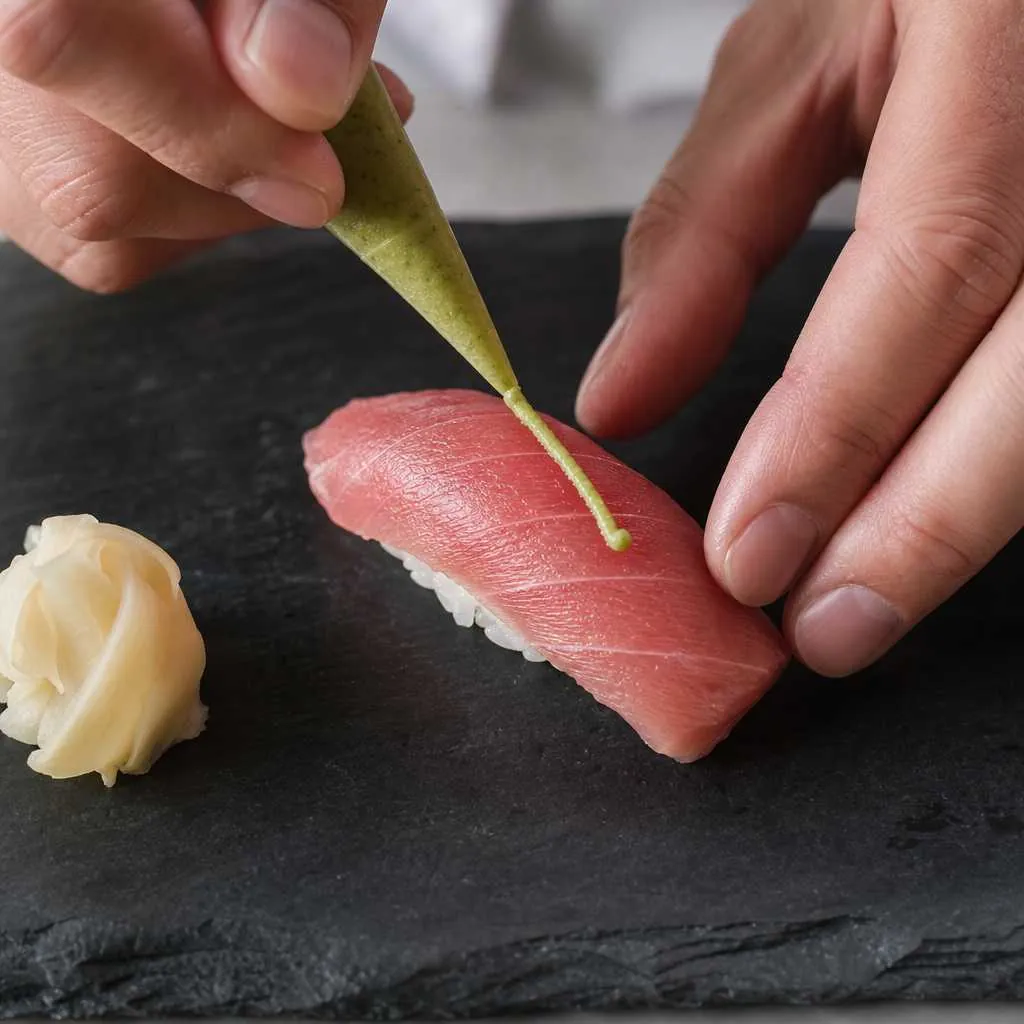
Most people who sit down to a sushi meal treat wasabi and pickled ginger as afterthoughts. They smear a thick green paste directly on every piece, drown the ginger in soy sauce, and wonder why their sushi tastes like a spicy, salty blur. That approach misses the entire point. These two condiments are precision tools, each with a distinct job, and knowing how to use them correctly will change how you experience every sushi roll and nigiri you eat, including the ones you order at Zen Ramen and Sushi.
Table of Contents
- Quick Takeaways
- What Is Wasabi and Why Does It Matter
- What Is Pickled Ginger and How It Works
- How to Use Wasabi Correctly at the Sushi Bar
- How to Use Pickled Ginger Correctly
- Real Wasabi vs. Fake Wasabi: What You Are Actually Eating
- Condiment Comparison: Wasabi, Pickled Ginger, and Soy Sauce
- How These Condiments Connect to the Broader Japanese Cuisine Table
- Frequently Asked Questions
- References
Quick Takeaways
| Key Insight | Explanation |
|---|---|
| Wasabi goes on the fish, not in the soy sauce | Mixing wasabi into soy sauce destroys its volatile compounds and dulls its heat within seconds. Apply it directly to the fish for full flavor impact. |
| Pickled ginger is a palate cleanser, not a topping | Eating ginger between different pieces of sushi resets your taste buds. Stacking it on top of a roll is a common Western misuse. |
| Over 95% of wasabi served outside Japan is imitation | Most green paste is horseradish dyed with food coloring. Real wasabi is made from Wasabia japonica and has a brighter, shorter-lasting heat. |
| Pink ginger is naturally occurring; bright pink is usually dyed | Young ginger turns naturally light pink when pickled in rice vinegar. Vivid pink color signals added dye, which affects flavor quality. |
| Wasabi has documented antimicrobial properties | Research published by food science journals confirms that isothiocyanates in wasabi inhibit certain bacteria, which historically made it practical alongside raw fish. |
| The amount of wasabi matters as much as placement | A rice-grain-sized amount on nigiri is standard. More than that overwhelms the fish’s natural flavor, which is the opposite of the intended effect. |
| Ginger variety affects the dining experience noticeably | Shin-shoga (young ginger) produces a milder, more delicate pickle. Older ginger creates a sharper, more pungent result that can overshadow delicate fish flavors. |
What Is Wasabi and Why Does It Matter
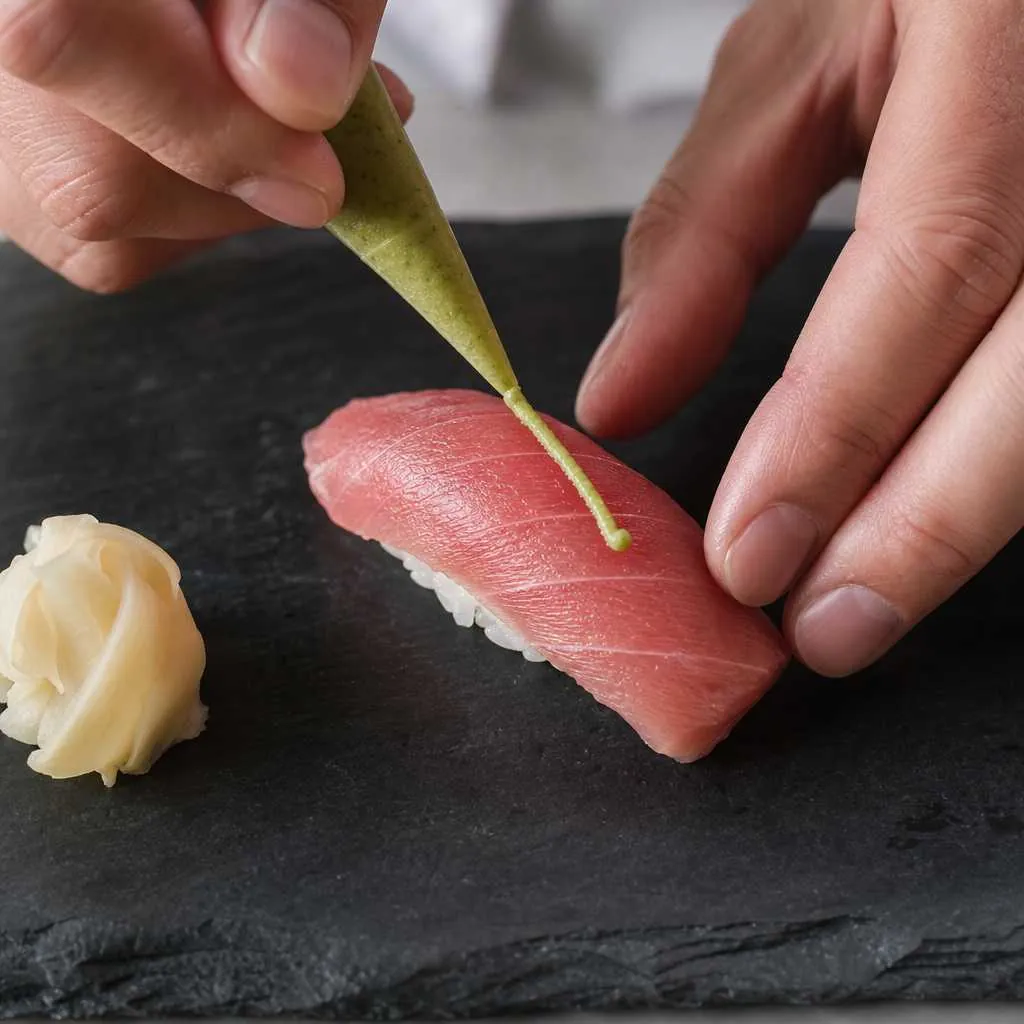
Wasabi comes from the rhizome of Wasabia japonica, a semi-aquatic plant native to the mountain stream valleys of Japan. It is one of the most difficult crops in the world to grow commercially, requiring cold, clean running water, specific soil conditions, and up to two years before the rhizome is harvest-ready. That difficulty is exactly why real wasabi is expensive and rare outside specialized Japanese restaurants.
The heat in wasabi comes from allyl isothiocyanate, a volatile compound released when the rhizome’s cells are broken during grating. Unlike capsaicin in chili peppers, which binds to pain receptors and produces a sustained burn, wasabi’s heat travels primarily through nasal passages and dissipates within 15 to 20 seconds. This is a critical distinction. The sharp, sinus-clearing sensation is intentional. It cuts through the richness of fatty fish without competing with the actual flavor.
Why Traditional Japanese Chefs Respect Wasabi as a Flavor Tool
In practice, skilled sushi chefs use wasabi as a bridge between the vinegared rice and the fish. They apply a thin layer directly to the underside of the fish before pressing it onto the rice. This technique, called shari preparation, means the diner never needs to add more. The wasabi is already calibrated to the specific cut of fish being served.
A common mistake is assuming more wasabi means a more authentic experience. It does not. Applying excessive wasabi to delicate white fish like flounder or sea bass destroys the fish’s subtle flavor entirely. The condiment should enhance, not dominate.
What Is Pickled Ginger and How It Works
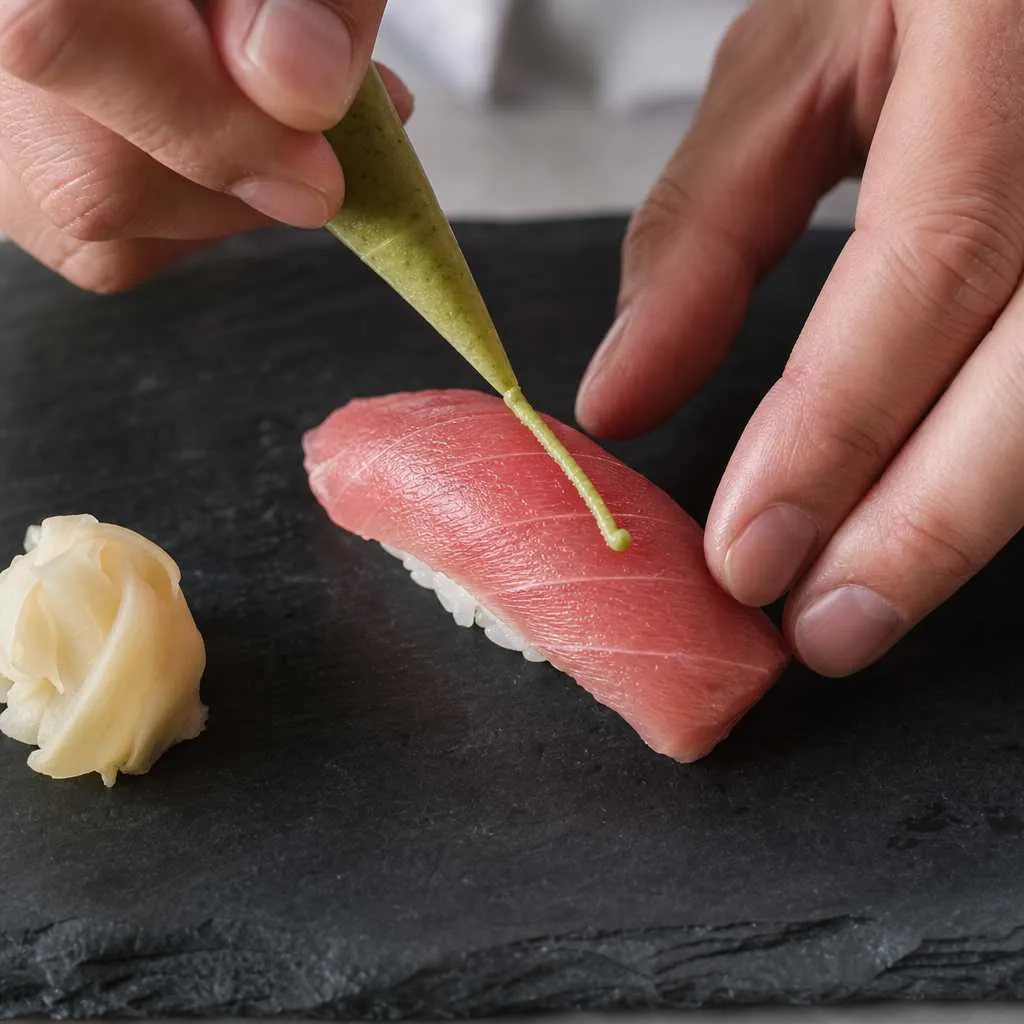
Pickled ginger served with sushi is called gari in Japanese. It is made by slicing young ginger thinly, salting it to draw out moisture, and then pickling it in a mixture of rice vinegar and sugar. The result is a mildly sweet, tangy, and gently spicy condiment with a crisp texture.
The function of gari is specific and non-negotiable in traditional Japanese cuisine: it cleanses the palate between different pieces of sushi. Eating a slice of pickled ginger after a piece of fatty tuna and before a delicate piece of scallop allows you to taste each fish accurately. Without it, flavors from previous bites linger and contaminate your perception of the next one.
The Difference Between Young and Mature Ginger Pickles
The best gari is made from shin-shoga, or young ginger, harvested in late spring and early summer. Young ginger has a thinner skin, a higher water content, and a more delicate flavor profile. When pickled, it develops a natural blush-pink color at the edges from anthocyanins reacting with the acidic brine. No food coloring is needed or appropriate.
Mature ginger pickles are sharper and more aggressive. They can overpower the palate rather than clear it. If the ginger served with your sushi is uniformly bright pink from root to tip, it has almost certainly been dyed. This is not a food safety issue, but it is an indicator of product quality and authenticity.
Pro tip: When dining at Zen Ramen and Sushi, ask how the gari is prepared. A restaurant that pays attention to condiment quality almost always applies the same care to its fish sourcing and rice preparation.
How to Use Wasabi Correctly at the Sushi Bar
The single most widespread error in sushi dining is mixing wasabi directly into the soy sauce dipping bowl. This is so common that most Western diners assume it is the correct technique. It is not, and there are two concrete reasons why.
First, wasabi’s active heat compounds are volatile. The moment they contact liquid, they begin breaking down. By the time you have stirred your wasabi into soy sauce, the sharpest and most aromatic compounds are already dissipating. You are left with mildly spiced soy sauce rather than functional wasabi. Second, the combination makes it impossible to control how much wasabi contacts each piece of sushi. You either get too much or too little, and the salt from the soy sauce overwhelms the wasabi’s nuance.
The Correct Application Method for Nigiri
For nigiri, if the chef has not already applied wasabi under the fish, place a small amount directly on top of the fish. Then dip only the fish side, not the rice side, lightly into soy sauce. This preserves the rice’s seasoning, keeps the wasabi active, and lets you taste all three elements: vinegared rice, fresh fish, and wasabi heat.
For rolls, apply wasabi sparingly to the roll itself before eating. Because rolls already contain multiple ingredients, including avocado, cucumber, or various proteins, their flavor complexity is higher. Less wasabi is almost always the right call.
Pro tip: If you enjoy heat but want it to last longer, eat the wasabi-coated piece of fish in a single bite rather than splitting it. The full volatile release hits at once and provides the intended nasal-clearing effect before fading cleanly.
How to Use Pickled Ginger Correctly
Gari should be eaten between pieces of sushi, never on top of them. This sounds simple, but it is the rule most frequently violated. Placing pickled ginger on a roll adds unnecessary acidity and sweetness that competes directly with the fish and rice. The ginger is not a topping, a garnish, or an ingredient in the bite itself.
Eat one or two thin slices of gari after finishing a piece, before moving to the next variety. Chew it completely, let the vinegar and ginger flavor coat your palate, and then wait a few seconds before proceeding. This 10-second pause is enough for the palate-cleansing effect to complete.
When to Skip the Ginger Entirely
If you are eating a progression of the same fish, for example, several pieces of salmon nigiri in a row, you do not need gari between each one. Its purpose is contrast and reset, not a mandatory punctuation mark after every bite. Use it intentionally, and it serves its function. Use it habitually, and it becomes background noise.
Real Wasabi vs. Fake Wasabi: What You Are Actually Eating
Here is the uncomfortable truth: if you have eaten wasabi at most restaurants outside of Japan, including many in the United States, you have almost certainly eaten a mixture of horseradish, mustard powder, and green food coloring. Estimates from Japanese culinary researchers and food journalists put genuine Wasabia japonica usage at roughly 5% or less of all wasabi served globally.
This matters for two reasons. The first is flavor. Real wasabi has a brighter, more herbaceous quality with a heat that rises quickly and fades within 15 to 20 seconds. Horseradish-based imitation wasabi has a harsher, more persistent heat that lingers in the throat and can overwhelm delicate fish. The second reason is cost and quality signaling. A restaurant serving real wasabi is making a financial commitment to authenticity. That level of investment rarely stops at the condiment.
How to Identify Real Wasabi
Real wasabi is typically grated fresh from the rhizome at the moment of service. It has a slightly coarser, less uniform texture than the smooth paste from a tube. Its color is a muted, natural green rather than the vivid artificial green of imitation products. It also degrades quickly. If the wasabi retains full heat after sitting exposed for more than 20 minutes, it is almost certainly not real.
“The real thing is delicate, complex, and worth seeking out. Imitation wasabi is not a substitute. It is a different product that happens to occupy the same role on the plate.” – Nobu Matsuhisa, as quoted in culinary interviews discussing Japanese ingredient authenticity.
Condiment Comparison: Wasabi, Pickled Ginger, and Soy Sauce
Understanding how these three sushi condiments relate to each other helps you use them as a coordinated system rather than independent additions. The table below outlines their distinct roles, correct usage, and how quality varies between authentic and commercial versions.
| Condiment | Primary Function | Quality Indicator |
|---|---|---|
| Wasabi | Enhances fish flavor, provides antimicrobial benefit, creates nasal heat that clears sinuses without lingering | Fresh-grated texture, muted green color, heat fades within 20 seconds. Smooth vivid paste indicates imitation product. |
| Pickled Ginger (Gari) | Palate cleanser between different sushi pieces, resets taste receptors, provides mild digestive support | Natural blush-pink at edges, delicate texture, balanced sweet-sour flavor. Uniform bright pink indicates food dye. |
| Soy Sauce | Light seasoning accent for fish, used sparingly on the fish side of nigiri only | Traditional tamari or naturally brewed shoyu has depth and complexity. Low-sodium options available for those monitoring salt intake. |
How These Condiments Connect to the Broader Japanese Cuisine Table
Wasabi and pickled ginger are not exclusive to sushi. Within the broader framework of Japanese cuisine, condiments serve as precision instruments that bring balance to dishes rather than mask them. This philosophy extends directly to ramen as well, where toppings like togarashi, nori, and pickled bamboo shoots serve similarly specific functions.
At Zen Ramen and Sushi, the menu reflects this integrated philosophy. The same attention to condiment quality that applies to the sushi program informs how the ramen bowls are constructed and served. Whether you are adjusting your broth with a small piece of ginger or using wasabi to brighten a delicate piece of hamachi, the underlying principle is the same: condiments enhance rather than replace the primary flavor.
Understanding wasabi and ginger as functional tools rather than table accessories will immediately improve how you navigate any Japanese menu. You will order more intentionally, eat more attentively, and get substantially more out of the restaurant experience without spending more money.
Frequently Asked Questions
Is it rude to mix wasabi into soy sauce at a Japanese restaurant?
It is not considered rude in a strict etiquette sense, but it is widely understood in Japanese dining culture to be a misuse of both condiments. Sushi chefs who prepare nigiri with wasabi already applied under the fish may take it as a signal that you have not noticed or do not appreciate their preparation. At a quality restaurant, the safest approach is to taste the sushi first before adding anything.
Why does wasabi lose its heat so quickly?
The heat in wasabi comes from allyl isothiocyanate, a volatile compound that is released when the plant cells are broken during grating. These compounds evaporate rapidly when exposed to air. This is why real wasabi is grated immediately before service and why mixing it into liquid accelerates the loss of heat. Horseradish-based imitation wasabi contains different compounds that are more stable and persistent, which is one reason the two products feel so different in the mouth.
Can I eat pickled ginger if I have dietary restrictions?
Gari is naturally gluten-free, vegan, and low in calories. The main ingredient concerns are sugar content and sodium from the salt used during preparation. People monitoring blood sugar or sodium intake should eat it in moderation. Some commercial preparations also contain food dye, which certain individuals prefer to avoid. Asking your server about the specific preparation at Zen Ramen and Sushi will give you accurate information for your situation.
Does wasabi have any health benefits beyond flavor?
Yes, and they are specific and documented. Isothiocyanates in real wasabi have demonstrated antimicrobial activity against certain bacteria in laboratory studies, including some strains that can be present in raw fish. Research from Japanese food science institutions has also explored potential anti-inflammatory properties. These effects are associated with real Wasabia japonica, not horseradish-based substitutes, which have a different chemical composition.
How much wasabi is appropriate for a single piece of nigiri?
A portion roughly the size of a small grain of rice is standard for a single piece of nigiri. This provides enough heat to interact with the fish without overwhelming it. For larger, fattier cuts like toro or salmon belly, a very slightly larger amount works because the fat content moderates the heat. For delicate white fish like hirame or tai, err on the side of less. The goal is a whisper of heat, not a shout.
What makes gari different from regular pickled ginger sold in grocery stores?
Restaurant-quality gari made from young shin-shoga is noticeably more delicate, less fibrous, and more complexly flavored than most grocery store pickled ginger products. Commercial products often use mature ginger, which has a harsher flavor and requires more sugar and vinegar to balance. They also frequently include pink dye. Young ginger pickled in quality rice vinegar with minimal additives is a fundamentally different product, not just a premium version of the same thing.
Have you tried adjusting how you use wasabi and pickled ginger at your next sushi meal? Share what you noticed in the flavor difference and whether it changed how you ordered.
References
- Statista: global data on Japanese restaurant industry trends and consumer dining preferences
- Forbes: coverage of Japanese food culture, restaurant quality standards, and ingredient sourcing practices
- U.S. Food and Drug Administration: food labeling regulations relevant to condiment ingredients and allergen disclosures
- USDA National Agricultural Library: nutritional and botanical information on Wasabia japonica and ginger varieties
- ScienceDirect: peer-reviewed food science research on isothiocyanate compounds and antimicrobial properties of wasabi