
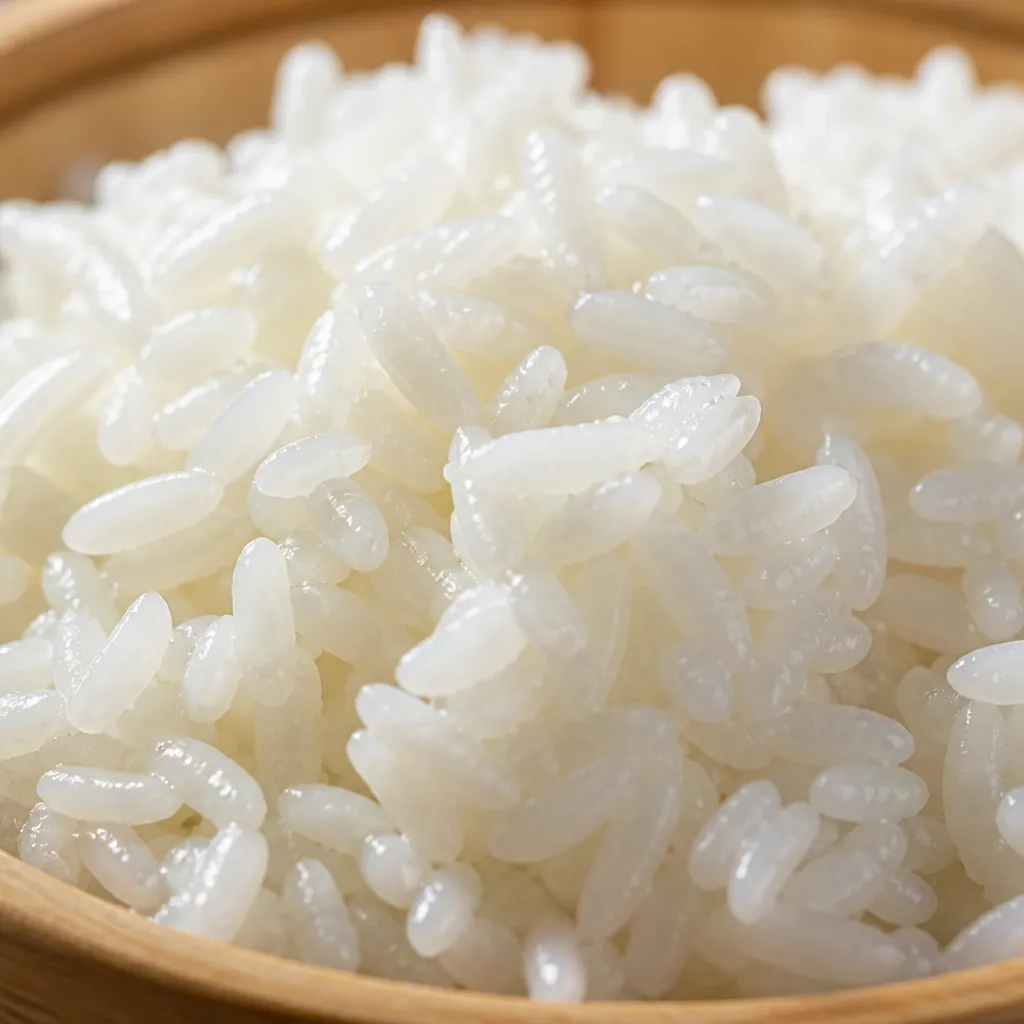
Most people who sit down to eat sushi think about the fish. They evaluate the freshness of the tuna, the quality of the salmon, the skill of the knife work. What they rarely think about is the rice underneath it. That is a mistake, and every serious sushi chef knows it. Sushi rice, known in Japanese as shari or sushimeshi, is not a neutral base. It is an engineered component with precise starch behavior, moisture content, and acid-salt balance. Get it wrong, and no amount of premium fish will save the dish. At Zen Ramen and Sushi, this is the standard we hold ourselves to with every plate we send out.
Table of Contents
- Quick Takeaways
- What Makes Sushi Rice Different From Regular Rice
- The Science of Temperature: Why Freshness Is Not Optional
- The Seasoning Ratio: Vinegar, Sugar, and Salt
- The Tools That Matter: Hangiri, Shamoji, and the Fan
- How Rice Quality Affects Your Whole Meal
- Comparing Sushi Rice Approaches: What Separates Good From Great
- Frequently Asked Questions
- References
Quick Takeaways
| Key Insight | Explanation |
|---|---|
| Short-grain rice is non-negotiable | Japanese short-grain rice has a high ratio of amylopectin to amylose, giving it the cohesive, slightly sticky texture that holds nigiri and maki together without becoming gluey. |
| Body temperature is the target | The ideal serving temperature for sushi rice is 35 to 40 degrees Celsius, approximately skin temperature. Cold rice becomes starchy and overly salty. Hot rice steams the fish and muddles flavors. |
| Seasoning must go on while the rice is still hot | Hot rice absorbs the vinegar mixture evenly. Applying seasoning to cooled rice produces uneven flavor and inferior texture. |
| Fanning creates gloss, not just coolness | Fanning the rice while folding in the vinegar evaporates excess surface moisture and produces the characteristic lustrous sheen of well-made sushi rice. |
| Washing removes excess starch | Rinsing the rice until the water runs mostly clear prevents a gummy, clumping texture that would ruin the integrity of each piece. |
| The Koshihikari variety is the professional standard | Short-grain varieties such as Koshihikari are preferred by professional sushi chefs for their distinct, reliable texture and flavor absorption. |
| Freshness is a time-sensitive quality | Sushi rice cannot be made hours in advance and stored in a refrigerator. Once it cools below the ideal range, the starch hardens and the vinegar notes disappear. |
What Makes Sushi Rice Different From Regular Rice
The word “sushi” itself is derived from the Japanese for “sour-tasting,” which tells you immediately that the rice is where the flavor identity of the dish begins. Sushi rice is not simply steamed white rice. It is steamed short-grain Japanese rice seasoned with a precise mixture of rice vinegar, sugar, and salt, creating a flavor profile that is tangy, subtly sweet, and savory without ever overpowering the toppings placed on top of it.
The structural reason for using Japanese short-grain rice comes down to starch chemistry. Short-grain rice has a high ratio of amylopectin to amylose. Amylopectin is the branched starch molecule responsible for the cohesive, slightly sticky quality you feel when the rice grains hold together in a piece of nigiri. Long-grain rice, by contrast, does not achieve this. It falls apart, does not hold flavors the same way, and lacks the chewy-yet-tender bite that makes a properly formed piece of sushi feel complete in the mouth.
It is also important to use white rice rather than brown. The bran layer that covers each grain of brown rice physically prevents the grains from adhering to each other. A chef who uses brown rice for nigiri is fighting against the grain, literally. The authentic sushi tradition uses polished white short-grain rice for very specific, well-understood reasons.
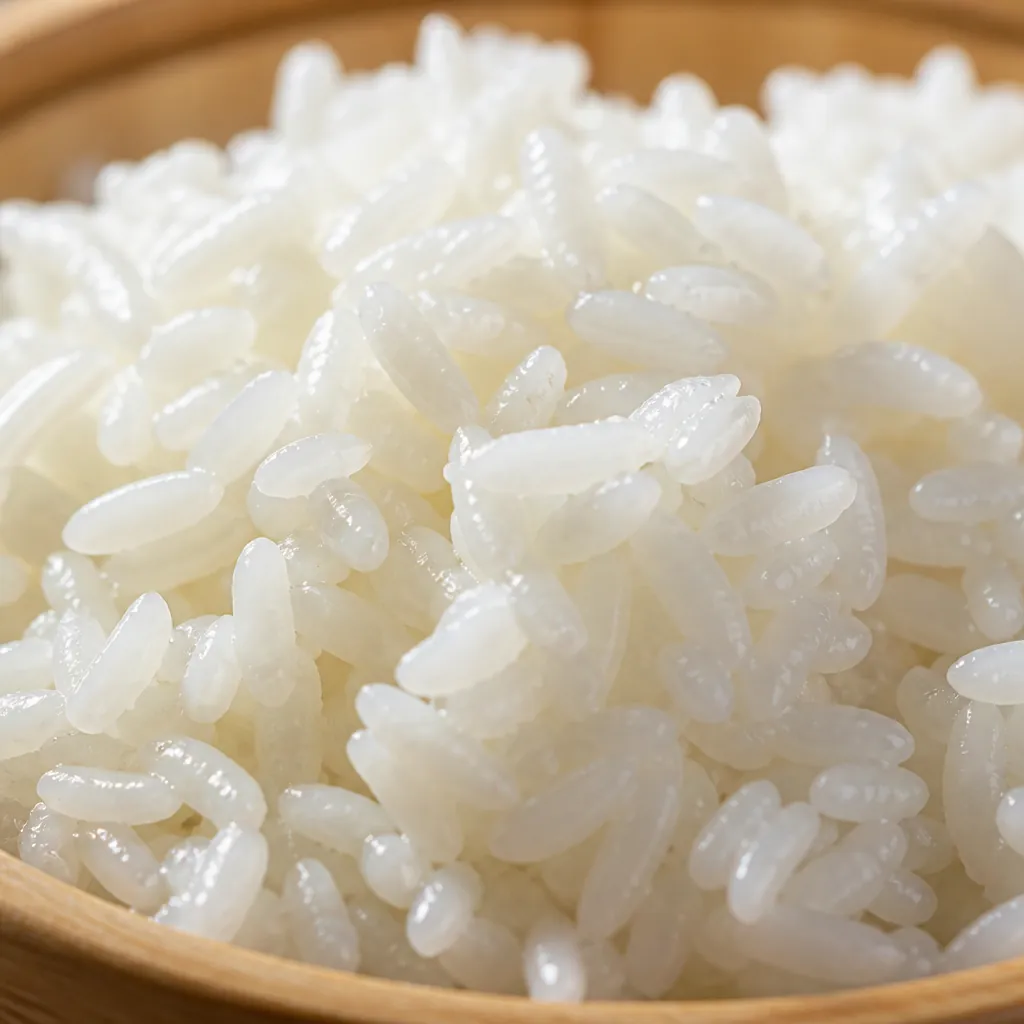
One practical note that many diners never consider: washing the rice is not optional. Rinsing thoroughly until the water runs mostly clear removes excess surface starch. Skip this step and the cooked rice becomes gummy, with grains that stick together in a clumped mass rather than gently cohering. A common mistake in lower-quality sushi restaurants is under-washing the rice, which produces a paste-like texture that no amount of vinegar seasoning can rescue.
Pro tip: If you are judging the quality of sushi rice by sight, look for a gentle, uniform sheen on each grain. Dull, matte grains usually mean the fanning step was skipped or the rice was refrigerated before serving. Glossy, individually distinct grains that hold together lightly are the mark of rice prepared correctly.
The Science of Temperature: Why Freshness Is Not Optional
Of all the variables that separate excellent sushi rice from mediocre sushi rice, temperature is the one most consistently misunderstood outside professional kitchens. The ideal serving temperature for nigiri rice is approximately 35 to 40 degrees Celsius, which is roughly skin temperature. This is not an aesthetic preference. It is a functional requirement rooted in how starch and fat interact with heat.
When sushi rice drops below this range, the starch hardens and the grains become rigid, breaking apart unnaturally rather than gently separating on the palate. Cold rice also amplifies saltiness while suppressing the vinegar aroma and the natural sweetness of the rice itself. What you taste from refrigerated sushi rice is an unbalanced, flat version of what it should be. This is the defining weakness of conveyor-belt sushi and pre-packaged supermarket rolls: the rice has been cold for too long.
Temperature also affects how the rice interacts with its toppings. Body-temperature rice melts differently against fatty fish than cold rice does. Cold shari stiffens the fat in toro or salmon, reducing the sensation of richness. At the correct temperature, the fat in the fish is encouraged to release its flavor more fully with every bite. This is why a skilled sushi chef forms nigiri immediately before serving, not thirty minutes in advance.
“Sushi rice is not seasoned rice. It is a precisely engineered component with specific starch behavior, moisture content, and acid-salt balance. Getting it right is the foundation of everything.”
In practice, professional itamae at serious sushi counters cool their hands to approximately 30 degrees Celsius before forming nigiri. This prevents the rice from sticking to their palms while still transferring gentle warmth to the shari. Each piece is portioned and formed moments before it reaches the guest. The window of optimal quality is real, and it is narrow.
A common mistake at less serious restaurants is cooking large batches of sushi rice early in the day and then holding it at room temperature under a damp cloth for hours. While the damp cloth does prevent the surface from drying out, the rice still cools past its optimal range well before service ends. Freshness, in the context of sushi rice, is genuinely a time-sensitive property.
The Seasoning Ratio: Vinegar, Sugar, and Salt
The seasoning mixture that transforms plain cooked rice into sushi rice is called sushi-zu, a solution of rice vinegar, sugar, and salt. The exact ratios are a point of professional debate and regional variation, but the underlying logic is consistent. A commonly taught base ratio in Edo-style sushi traditions is 5 parts rice vinegar to 2 parts sugar to 1 part salt. This is a starting point, not a fixed rule, and experienced chefs adjust it to match the specific rice variety being used and the toppings being served.
Rice vinegar is the only appropriate base for this mixture. It carries a mild acidity and a sweet, nutty flavor that complements the rice without overwhelming it. The role of the vinegar is not merely flavor. The acid in the vinegar also acts as a mild preservative, and when applied to warm rice, it absorbs evenly into each grain rather than pooling on the surface. This is why the seasoning must always go on while the rice is still hot.
The sugar balances the acidity of the vinegar, and the salt adds depth without making the rice taste savory in the wrong way. When the ratio is off in the direction of too much vinegar, the rice becomes sharp and intrusive. Too much sugar and the rice tastes confectionary rather than clean. The goal is a seasoning that supports the fish, not one that competes with it.
Pro tip: Season the rice with a gentle folding motion, not a stirring motion. Stirring breaks the delicate cooked grains and creates a mushy, gluey texture. The traditional slicing-and-folding technique with a wooden paddle preserves grain integrity while distributing the seasoning evenly.
The Tools That Matter: Hangiri, Shamoji, and the Fan
A professional kitchen that takes sushi seriously invests in specific equipment for rice preparation, and the reason is practical, not ceremonial. The hangiri is a wide, flat-bottomed wooden tub traditionally made from Japanese cypress, or hinoki. The wood serves two functions: it absorbs excess moisture from the freshly seasoned rice, preventing it from becoming waterlogged, and it naturally maintains an ideal holding temperature for longer than a metal or ceramic vessel would.
Japanese cypress also has natural antibiotic properties that help preserve the freshness of the rice. In a restaurant setting where rice is prepared continuously across a service, this matters. The ohitsu, a lidded cypress container, is used to store finished sushi rice between portions and keep it at the correct temperature with a damp cloth over the surface.
The shamoji, the traditional flat wooden paddle, is used to fold the seasoning into the rice and to portion it. Its flat, broad surface distributes pressure evenly without crushing the grains. Using a metal spoon or a regular spatula produces more breakage and an inferior final texture.
The fan, whether a hand fan or a small electric fan, is often misunderstood as simply a cooling device. Its primary function is to evaporate excess surface moisture from the rice while the seasoning is being folded in. This evaporation is what creates the characteristic glossy sheen on properly prepared sushi rice. Rice that is not fanned looks dull and tastes slightly wet. Fanning also allows the chef to control the cooling rate, slowing it down or speeding it up to hit the target temperature window precisely.
How Rice Quality Affects Your Whole Meal
When a friend who has eaten at a great Japanese restaurant tries to describe what made it special, they will often say something about the fish, or the atmosphere, or the chef’s skill. Rarely do they say, “The rice was extraordinary.” But when you ask them to describe the texture of the sushi, they will describe perfectly seasoned, cohesive, temperature-correct shari without realizing it. The rice is the invisible architecture of the entire experience.
For maki rolls, the rice must hold its structure through cutting without compressing into a dense, gummy log. For temaki hand rolls, the rice needs enough cohesion to stay together while being light enough to feel fresh and not heavy. For nigiri, the rice must form a piece that holds its shape in the hand and on the plate but dissolves naturally when eaten. Each of these requires rice that was made correctly, at the right time, and served without delay.
The quality of the rice also affects how you feel after the meal. A bowl of ramen at Zen Ramen and Sushi is a deeply satisfying experience partly because of the broth and the noodles, but the principle is the same across Japanese cuisine: the starch component is not an afterthought. When the rice is right, the entire meal feels balanced. When it is wrong, even excellent fish feels somehow off, and most diners cannot articulate why.
This is the real reason that dedicated sushi restaurants differentiate themselves on rice quality. In Japan, good fish is widely available at high-end restaurants. The sushi rice recipe and preparation process becomes the primary point of distinction between establishments that are merely good and those that are genuinely exceptional.
Comparing Sushi Rice Approaches: What Separates Good From Great
Not all sushi rice preparation is equal, and the differences are not subtle once you know what to look for. Here is how the three main approaches compare across the qualities that matter most to a serious diner.
| Approach | Key Characteristics | Impact on Your Plate |
|---|---|---|
| Traditional Professional Method (hangiri, hand-fanning, immediate service) | Short-grain Japanese rice washed thoroughly, cooked with precise water ratio, seasoned hot in cypress wood tub, hand-fanned to gloss, served at 35-40°C within minutes of forming | Glossy, cohesive grains that melt cleanly on the palate, vinegar notes balanced and present, rice enhances rather than competes with fish flavors |
| Mid-Level Restaurant Method (rice cooker, bowl seasoning, held under damp cloth) | Correct rice variety, proper seasoning ratio, but held at room temperature for 1-2 hours before service, no cypress wood, no precision temperature control | Acceptable texture when fresh, noticeably flatter flavor as holding time increases, grains begin to stiffen and lose vinegar character within an hour |
| Low-Quality or Pre-Made Method (wrong rice variety, refrigerated, seasoned incorrectly) | Long-grain or parboiled rice, stored refrigerator-cold, seasoning either absent or applied to cooled rice, mass-produced hours in advance | Crumbling or gummy texture, no gloss, overly salty taste from cold starch, vinegar aroma absent, fish flavors isolated rather than complemented |
The gap between the first and third approach is the difference between a meal you recommend to friends and one you quietly forget. At Zen Ramen and Sushi, rice preparation follows the logic of the traditional professional method because anything less defeats the purpose of the entire kitchen.
Frequently Asked Questions
What type of rice is used for authentic sushi?
Authentic sushi uses Japanese short-grain white rice, a variety sometimes labeled as uruchimai. Popular cultivars include Koshihikari. The short grain structure gives the rice its characteristic cohesion. Long-grain rice varieties like jasmine or basmati do not have the right starch composition and will not hold together correctly for nigiri or maki.
Why does sushi rice taste different from plain steamed rice?
Sushi rice is seasoned with a mixture of rice vinegar, sugar, and salt called sushi-zu. This seasoning gives the rice a balance of tangy, sweet, and savory flavors. The vinegar also interacts with the starch in the rice to slightly firm the exterior of each grain while keeping the interior tender. Plain steamed rice has none of this complexity and would taste flat as a sushi base.
Can sushi rice be made in advance and stored?
No, not if quality is the goal. Sushi rice stored in the refrigerator becomes stiff, overly salty, and loses its vinegar aroma as the starch hardens in the cold. Rice made hours ahead and held at room temperature also deteriorates past its optimal range well before it would be served. Fresh sushi rice is genuinely time-sensitive and should be formed into sushi shortly after preparation.
What is the difference between shari and sushimeshi?
Both terms refer to the same thing: the seasoned rice used in sushi. Sushimeshi is the more literal term, meaning “sushi rice” in Japanese. Shari is the term used specifically in sushi restaurant contexts and at the counter. The word shari is derived from the Sanskrit word for sacred remains, reflecting the reverence that Japanese culinary tradition places on the quality and purity of the rice.
How do I know if a sushi restaurant is using quality rice?
Look for a gentle, uniform gloss on the rice in each piece. Well-prepared sushi rice has a visible sheen from the fanning process. The grains should hold together in the piece but separate naturally when eaten, not clump into a dense mass or crumble apart. If the sushi arrives cold from refrigeration, that is a strong signal the rice was not prepared to a professional standard. Properly prepared sushi is served at approximately body temperature, not refrigerator-cold.
Does the seasoning ratio vary between restaurants?
Yes, and deliberately so. A commonly taught Edo-style base ratio is 5 parts rice vinegar to 2 parts sugar to 1 part salt, but professional chefs adjust this based on the specific rice variety, the season, and the toppings being served. Some chefs use a slightly more acidic seasoning for fattier fish and a gentler ratio for delicate white fish. This kind of adjustment is one of the markers of a kitchen that treats rice as a craft, not a commodity.
Why do sushi chefs use a wooden hangiri tub instead of a metal bowl?
Japanese cypress wood absorbs excess moisture from the freshly seasoned rice, which prevents it from becoming waterlogged or gummy. The wood also maintains the rice at an ideal temperature for longer than metal, which conducts heat too quickly and cools the rice unevenly. Traditional hangiri are made from hinoki cypress specifically because the wood also has natural properties that help preserve freshness during a service.
If you have eaten sushi at Zen Ramen and Sushi and noticed something different about the rice, we would genuinely love to hear what stood out to you. Share your experience with a friend who appreciates the details, or leave a note the next time you visit.
We would love your feedback and any insights you would share with others. What perspective would you add?
References
- The food science behind sushi rice starch, temperature, and vinegar balance
- How professional sushi chefs control rice temperature for authentic omakase service
- An authentic sushi rice recipe and guide from a Japanese-American chef based in Tokyo
- Understanding sushi rice selection, seasoning ratios, and preparation for restaurants
- Mastering shari: the role of the hangiri, fanning technique, and vinegar ratio in sushi rice