
Sitting at the sushi counter for the first time can feel like walking into someone’s kitchen uninvited. Most diners have no idea there is an entire unspoken code governing how to interact with the chef, how to eat, when to speak, and what ordering habits quietly label you as respectful or rude. Sushi bar etiquette is not about being stiff or performative. It is about showing genuine respect for a craft that takes years, sometimes decades, to master. Whether you are visiting Zen Ramen and Sushi for the first time or you have been here before, knowing these rules makes the experience dramatically better for everyone at the counter.
Table of Contents
- Quick Takeaways
- Why Counter Seating Is Different from Table Dining
- Before You Sit Down: Arrival and Seating Protocol
- How to Interact with the Itamae (Sushi Chef)
- Ordering at the Counter: What Works and What Does Not
- How to Eat Sushi Correctly at the Bar
- Soy Sauce, Wasabi, and Ginger: The Rules Nobody Explains
- Comparison of Counter Dining Styles
- Pacing, Noise, and Phone Etiquette at the Sushi Counter
- Paying and Tipping at a Sushi Bar
- Frequently Asked Questions
- References
Quick Takeaways
| Key Insight | Explanation |
|---|---|
| Eat nigiri with your hands, not chopsticks | Traditional sushi etiquette permits and even encourages hand eating for nigiri. It gives you better control and avoids breaking the carefully shaped rice. |
| Do not mix wasabi into your soy sauce | The chef has already applied the correct amount of wasabi directly to the fish. Mixing your own undermines that balance and signals unfamiliarity with the craft. |
| Eat each piece immediately after it is placed in front of you | Nigiri is made to be eaten within seconds. Letting it sit causes the rice to dry out and the fish to warm unevenly, ruining the intended texture. |
| Dip fish-side down into soy sauce, never rice-side | Rice absorbs soy sauce too aggressively and falls apart. The fish side allows a controlled, light coating that does not overpower the flavor. |
| Ginger is a palate cleanser, not a topping | Pickled ginger is eaten between different fish to reset your palate. Placing it on top of sushi is a common mistake that offends knowledgeable chefs. |
| Let the chef guide the pace | Rushing or hovering over the chef to place another order before finishing your current piece signals disrespect for the workflow and craft. |
| Ask questions, but choose the right moment | A good itamae welcomes genuine curiosity. Wait until the chef finishes a task before asking about the fish or preparation. Interrupting mid-cut is rude. |
Why Counter Seating Is Different from Table Dining
The sushi counter, called the omakase bar or simply the counter, is not just a seating arrangement. It is an extension of the chef’s workspace. When you sit there, you are entering a relationship with the person preparing your food in real time, inches away from you. This dynamic does not exist at a regular table.
At a table, mistakes in etiquette go largely unnoticed. At the counter, every action is visible to the chef, to other diners, and to the staff. This is why Japanese dining culture places heavy emphasis on counter-specific behavior that goes well beyond general restaurant manners.
In practice, diners who understand this distinction enjoy a fundamentally different meal. Chefs at sushi counters frequently tailor their selections, pacing, and conversation to guests who show genuine engagement. Those who treat the counter like a table with a better view miss the whole point.
Before You Sit Down: Arrival and Seating Protocol
Arrive on time. At a serious sushi counter, late arrivals disrupt the chef’s pacing for the entire seating. If you are running late, call ahead. This is not optional if you care about the experience.
Do not wear heavy cologne or perfume. This one surprises many people, but it is taken seriously in Japanese dining culture. The sushi counter is a sensory environment built around subtle aromas of fresh fish, seasoned rice, and nori. A strong scent overpowers those aromas for you and for every other guest at the bar.
What to Say When You Are Seated
When the host or chef greets you, a simple “Irasshaimase” response of a nod and a smile is appropriate. You do not need to speak Japanese, but acknowledging the greeting shows you are present and respectful. Do not immediately launch into your dietary restrictions or drink order before the chef has had a moment to set the stage.
Let the staff guide the first few minutes. They know the rhythm of the restaurant and will prompt you when the time is right to discuss allergies, preferences, or whether you want omakase or a la carte service.
How to Interact with the Itamae (Sushi Chef)
The itamae is not a performer hired to entertain you. The word itself translates roughly to “in front of the board,” referring to the cutting board. The chef’s primary job is the food. Conversation is secondary, and it follows the chef’s lead.
Genuine curiosity is always welcome. Asking what fish is freshest that day, where a particular ingredient comes from, or how a specific preparation is done shows real interest and typically opens the chef up. A common mistake is asking questions to sound knowledgeable rather than to actually learn something.
“A sushi chef spends years perfecting each cut, each seasoning ratio, each rice temperature. The greatest compliment a diner can offer is full attention and a willingness to eat what is placed in front of them.”
– Jiro Ono, master sushi chef and subject of the documentary Jiro Dreams of Sushi
Do not lean over the counter to watch the chef work. It is invasive. If the chef wants to show you something, they will position it so you can see. Hovering communicates distrust, not enthusiasm.
Pro tip: If the chef recommends something you have never tried, say yes. The counter is the one place in a Japanese restaurant where you can trust that recommendation completely. Chefs at the bar know exactly what is at peak quality that day.
Ordering at the Counter: What Works and What Does Not
You have two primary options at most sushi counters: omakase (chef’s choice) or a la carte. Omakase is the traditional counter experience and produces the best results if you have no serious dietary restrictions. It allows the chef to build a sequence of flavors that makes sense as a progression.
A la carte ordering is perfectly fine at a restaurant like Zen Ramen and Sushi, which serves both dedicated sushi enthusiasts and casual diners. But if you go a la carte at the counter, be specific and decisive. Asking “what do you recommend?” and then rejecting multiple suggestions wastes the chef’s time and creates an awkward dynamic.
What Not to Order at the Counter
Avoid ordering heavily modified rolls that require the chef to deviate significantly from standard preparation. These are better ordered at a table where the pace and workflow accommodate customization more naturally. The counter is designed for the chef’s craft, not for substitutions and additions.
Do not ask for items that are not on the menu and then act surprised when the answer is no. Serious sushi counters source specific fish daily, and what is available is what is available. This is a feature, not a limitation.
How to Eat Sushi Correctly at the Bar
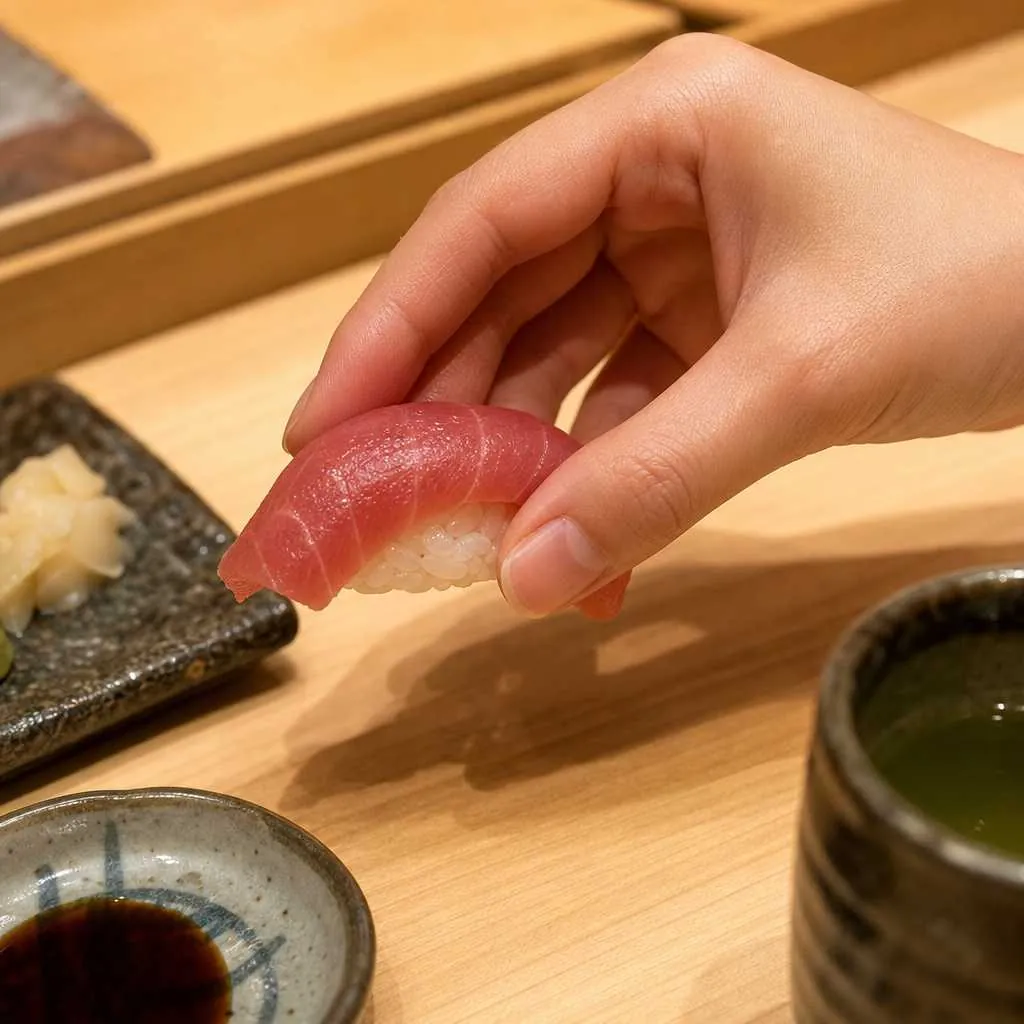
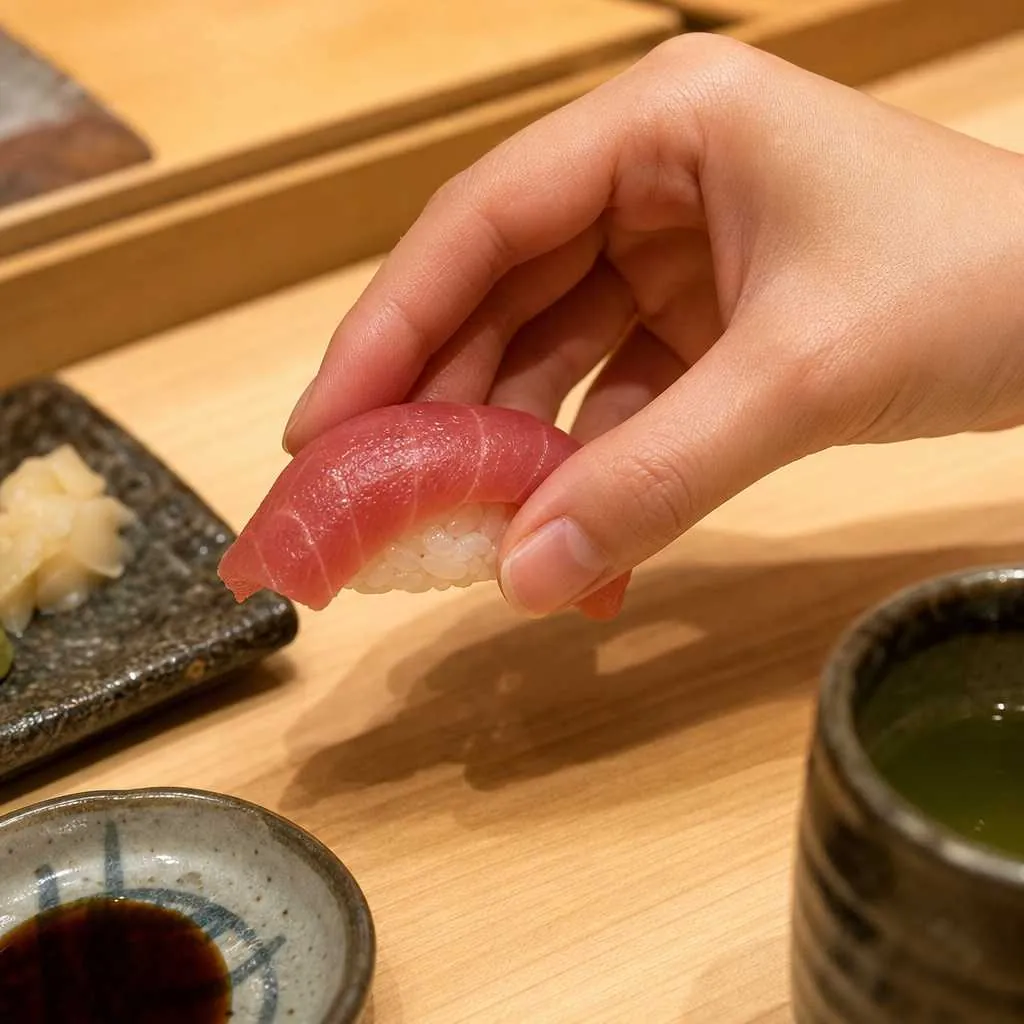
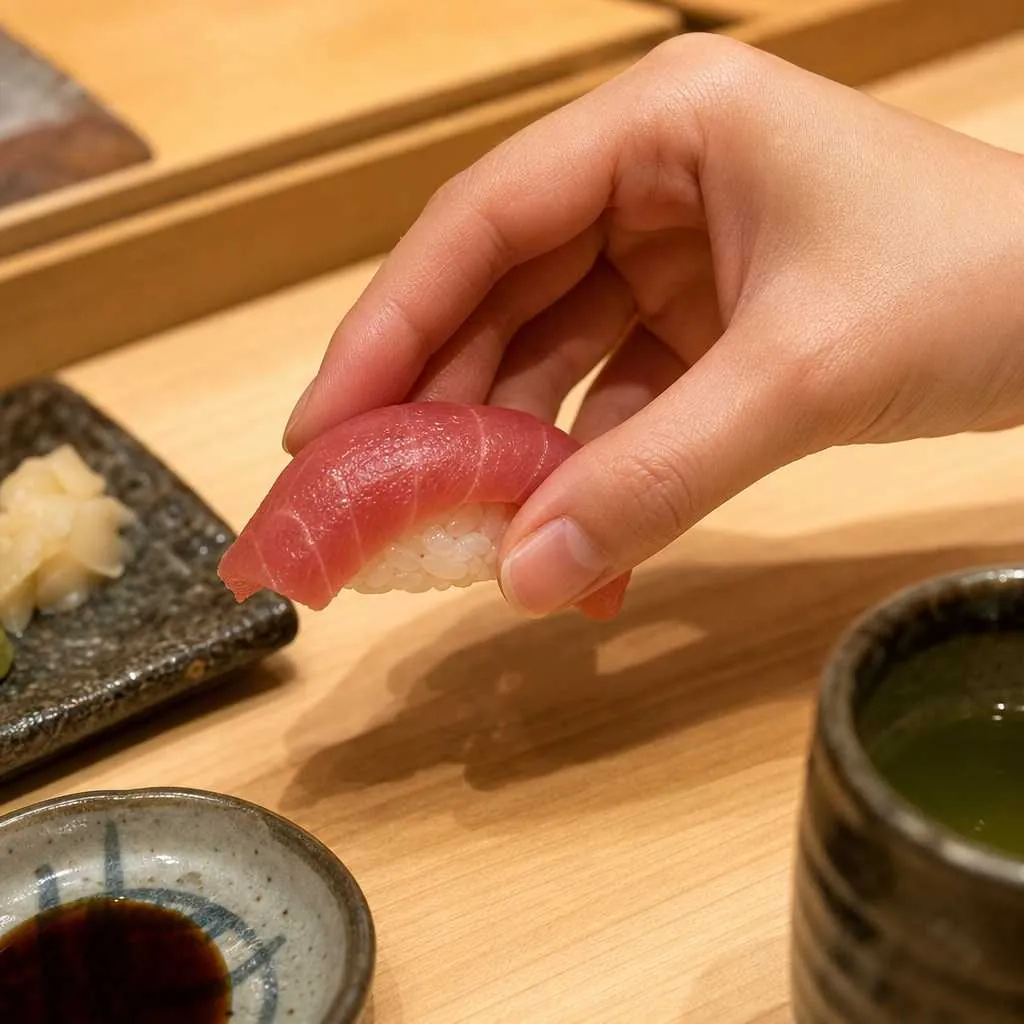
The single most contested rule in sushi etiquette is whether to use your hands or chopsticks. The answer at the counter is clear: use your hands for nigiri. This is historically accurate and practically superior. Your fingers provide better grip and sensitivity than chopsticks, reducing the chance of dropping the piece and breaking apart the rice.
Eat each piece in one bite. Nigiri is sized to be consumed whole. Biting a piece in half and setting it back down is considered bad form universally, and the reason is practical: a half-eaten piece of nigiri does not hold together, and the flavor profile is thrown off.
The Correct Soy Sauce Technique
Pick up the piece, turn it upside down so the fish faces down, and lightly touch the fish to the soy sauce. One brief dip is enough. You want a whisper of soy sauce, not a soak. Then eat it fish-side first so the flavor hits your palate before the rice.
This technique sounds fussy until you try it. The difference in flavor clarity is immediate and obvious. At a counter, doing this correctly also signals to the chef that you know what you are doing, which often results in more generous portions and better conversation.
Soy Sauce, Wasabi, and Ginger: The Rules Nobody Explains
At a proper sushi counter, the chef applies wasabi directly to the fish before placing it on the rice. This is deliberate. The amount is calibrated to the specific fish, not to a generic “how much wasabi do you like” preference. When you mix additional wasabi into your soy sauce dish, you are overriding that calibration and signaling that you do not trust the chef’s judgment.
This does not mean you cannot ask for more wasabi. If you genuinely enjoy heat, a polite request is fine. But mixing it yourself is a different signal entirely.
The Role of Pickled Ginger
Pickled ginger, called gari, is a palate cleanser. It exists to reset your taste between different fish so flavors do not bleed together. Eat a small piece between each type of sushi, not alongside it, and never on top of it. Piling ginger on a piece of nigiri is one of the most reliable ways to identify yourself as unfamiliar with sushi culture.
Pro tip: If you are sensitive to wasabi, mention this when you sit down, not after the first piece arrives. The chef can adjust the preparation from the start rather than having to redo individual pieces mid-service.
Comparison of Counter Dining Styles
Not all sushi counter experiences are structured the same way. Understanding the differences helps you choose the right approach for your visit and calibrate your behavior accordingly.
| Counter Style | Format | Best Etiquette Approach |
|---|---|---|
| Omakase Counter | Fixed chef-chosen sequence, often 10-20 courses, no menu. Price is set in advance. | Trust the chef completely. Eat everything placed in front of you. Ask questions between courses. No substitutions. |
| A La Carte Counter (like Zen Ramen and Sushi) | Full menu available. Guests order at their own pace. Chef prepares individual items as ordered. | Be decisive when ordering. Engage with the chef without slowing their workflow. Apply all eating etiquette rules. Start with lighter fish and move to richer cuts. |
| Conveyor Belt Counter (Kaiten-zushi) | Pre-made pieces on a rotating belt. Lower formality. Self-serve model with occasional direct orders. | Take only what you will eat. Do not pick up and return pieces. Ordering directly from the chef is still possible and still requires basic respect. |
Pacing, Noise, and Phone Etiquette at the Sushi Counter
The sushi counter is a focused environment. This does not mean it needs to be silent, but it does mean that the volume and nature of your conversation should match the space. Loud debates, phone calls taken at the counter, or shouting across the bar to friends at a table are all disruptive to other guests and to the chef’s concentration.
Phone photography is a complicated subject at the sushi counter. In practice, a quick photo of your dish before eating is broadly accepted. What is not acceptable is spending thirty seconds arranging the lighting, asking the chef to pause, or photographing the chef’s workspace without permission. The food was made to be eaten, not styled for a feed.
How Pacing Affects the Meal
One of the least discussed aspects of restaurant etiquette at the sushi bar is pacing. The chef determines the rhythm of service. If you finish a piece and immediately ask for the next item before taking a breath, you are pushing against a workflow that was designed to give each preparation the time it deserves.
Conversely, disappearing to the bathroom between every few pieces or taking long breaks on your phone between courses creates cold gaps in the chef’s service rhythm. At the counter, you are part of a live performance. Staying present and engaged is a courtesy that improves the experience for everyone.
Paying and Tipping at a Sushi Bar
In Japan, tipping is not practiced and can actually be considered offensive. In the United States, this cultural norm does not carry over. At American sushi restaurants, including Zen Ramen and Sushi, tipping is standard and expected. The appropriate range for counter service is 20 to 25 percent, particularly if the chef engaged with you directly throughout the meal.
If you experienced an omakase or a particularly personalized counter experience, erring toward the higher end of that range acknowledges the craft and time the chef invested specifically in your meal. Some high-end omakase counters build gratuity into the price; if this is the case, staff will let you know.
When paying, do not leave the counter without settling the bill. It sounds obvious, but in the flow of conversation and the end-of-meal warmth, some guests walk away expecting a server to chase them down. Signal clearly that you are ready to pay, settle promptly, and thank the chef directly before leaving.
Frequently Asked Questions
Is it rude to ask the sushi chef for recommendations?
Not at all. Asking for recommendations is one of the best things you can do at the counter. The chef knows exactly what is freshest that day and what preparations are particularly well done. The key is to ask when the chef is not mid-task and to be genuinely open to the answer rather than using it as a conversation opener before defaulting to your usual order.
Can I ask for my sushi without wasabi?
Yes, and you should mention this when you sit down rather than after the first piece arrives. Say “sabi nuki” (no wasabi) and the chef will accommodate you from the start. This is a straightforward and accepted request, not an insult to the craft. Allergies and serious dislikes are always worth communicating upfront.
What is the correct order to eat sushi at the counter?
The traditional sequence moves from lighter, more delicate fish to richer, more intensely flavored cuts. Start with white fish like flounder or sea bream, then progress to salmon, tuna, and finish with fattier cuts like toro or preparations involving sauces. This preserves your palate’s ability to distinguish subtle flavors throughout the meal. If you are doing omakase, the chef will manage this sequence for you automatically.
Is it acceptable to take photos of my sushi at the counter?
A quick photo before eating is generally accepted in most American sushi restaurants. The issue arises when photography delays eating, since nigiri is meant to be consumed immediately. Do not ask the chef to pose, do not photograph the chef’s workspace or fish trays without permission, and never let photo-taking be the reason a piece of sushi sits on the counter for more than thirty seconds.
What should I do if I genuinely dislike something the chef prepared?
Eat it anyway if you can. The counter is not the right place to reject a piece of food unless you have a genuine allergy or medical concern. If you simply do not enjoy a flavor, note it privately and mention it to the chef after the meal as feedback, not as a complaint during service. A good chef will appreciate honest, calm feedback delivered respectfully at the end of the experience.
Is it okay to request substitutions or modifications at a sushi counter?
Minor requests for common preferences are fine, particularly at an a la carte counter like Zen Ramen and Sushi. Significant modifications that require the chef to fundamentally alter a preparation are better suited to table ordering. At the counter, the less you modify, the more you experience the food as it was designed to be eaten. That is generally the better experience.
If you have sat at a sushi counter and had an experience that changed how you think about Japanese dining, share what surprised you most and what you wish someone had told you before you walked in.
References
- Forbes coverage of dining culture, restaurant trends, and hospitality industry standards
- Statista data on Japanese restaurant industry growth and consumer dining behavior in the United States
- Smithsonian Magazine editorial coverage of Japanese food culture and culinary history
- Epicurious expert guidance on sushi preparation traditions, ingredient sourcing, and dining practices
- Food and Wine authoritative reporting on sushi etiquette, chef culture, and counter dining experiences