
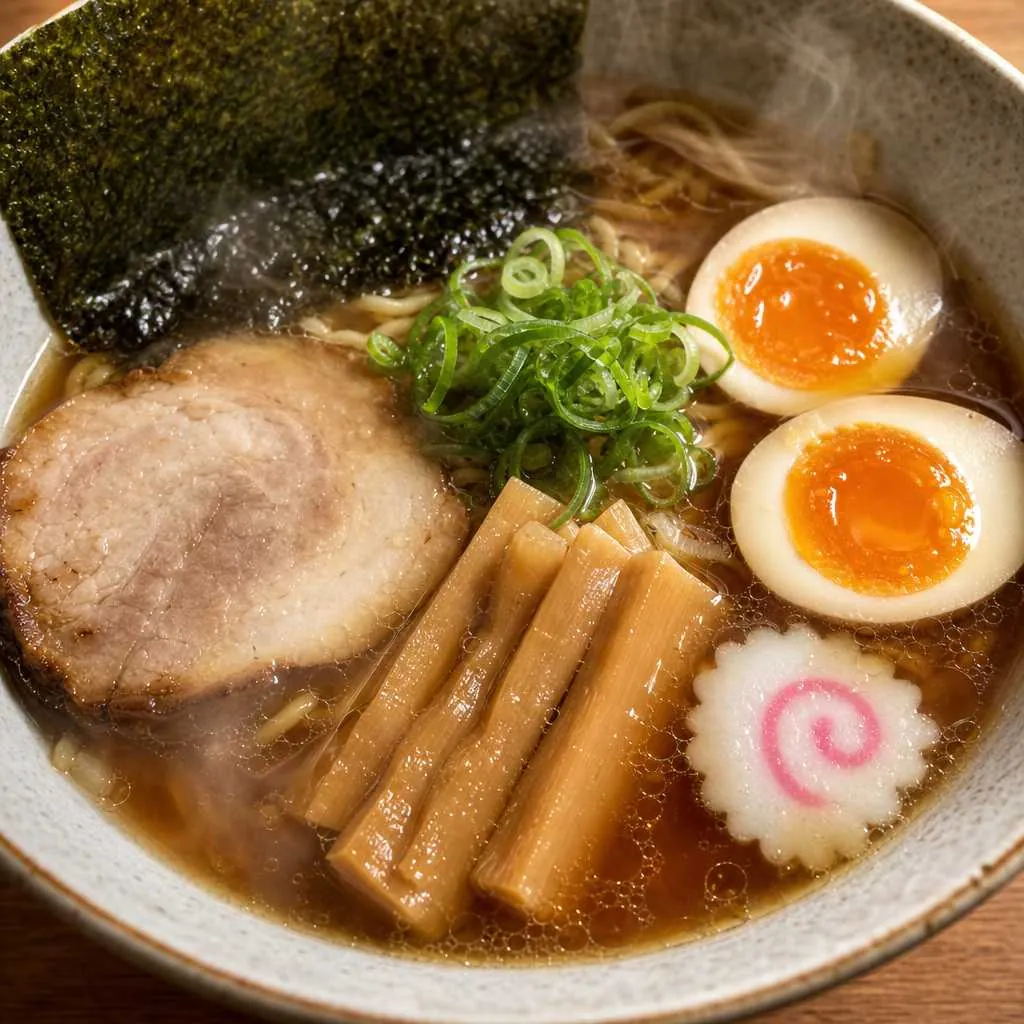
Most ramen lovers can name the obvious toppings: chashu pork, soft-boiled egg, nori. But menma often gets overlooked despite doing some of the heaviest lifting in a traditional ramen bowl. It sits quietly in the broth, adding a fermented, slightly sweet depth that no other topping replicates. If you have ever eaten a bowl at a serious ramen restaurant and noticed a soft, fibrous strip with a savory chew and mild funk, that was menma doing its job. This guide explains exactly what menma is, where it comes from, how it is made, and why any ramen worth eating should have it.
Table of Contents
- Quick Takeaways
- What Is Menma?
- History of Menma in Japanese Ramen
- How Menma Is Made
- The Flavor Profile of Menma
- Menma Versus Other Bamboo Shoot Preparations
- Menma as a Ramen Topping: Placement and Purpose
- Why Menma Matters at Zen Ramen and Sushi
- Frequently Asked Questions
- References
Quick Takeaways
| Key Insight | Explanation |
|---|---|
| Menma is fermented bamboo, not fresh | The fermentation process is what gives menma its distinctive umami depth, separating it from plain canned bamboo shoots sold in grocery stores. |
| It originated in Taiwan, not Japan | Menma was introduced to Japan through Taiwanese immigrants and Chinese noodle culture, becoming a standard ramen topping through cultural exchange in the 20th century. |
| The correct bamboo species matters | Authentic menma uses machiku bamboo (Sinobambusa tootsik), not the generic bamboo shoots found in stir-fry dishes, which produces a specific fibrous texture and flavor profile. |
| Menma is seasoned before it reaches your bowl | Quality menma is braised in soy sauce, mirin, and sometimes sesame oil before serving. The topping arrives already flavored, not bland. |
| It contributes nutritional value | Bamboo shoots are low in calories and contain dietary fiber, potassium, and B vitamins, making menma one of the few ramen toppings with a meaningful nutritional contribution. |
| Texture is its primary job in the bowl | Menma provides a soft but firm chew that contrasts the silky noodles and rich broth, giving the eating experience structural variety. |
| Volume of menma signals kitchen quality | Restaurants that use generous, properly seasoned menma are usually more attentive to authentic preparation overall. Thin, sparse, or flavorless menma is a red flag. |
What Is Menma?
Menma (メンマ) is a Japanese condiment made from fermented and dried bamboo shoots. The specific species used is machiku bamboo, also known as Sinobambusa tootsik, which is native to Taiwan and southern China. Unlike the crisp, neutral bamboo shoots used in stir-fries or Thai curries, menma has undergone a multi-stage fermentation process that transforms its texture from stiff and raw to fibrous, slightly springy, and deeply savory.
The strips you find in a ramen bowl are the final product of a process that involves harvesting young bamboo shoots, lactic acid fermentation through sun-drying, and then seasoning with soy-based sauces before serving. The result is a topping with an unmistakable identity that cannot be substituted with fresh bamboo without losing what makes it valuable in the first place.
In practice, a well-prepared menma should hold its shape in hot broth without becoming mushy. It should taste mildly sweet, savory, and slightly funky in a way that complements rather than competes with the soup base. If the menma in your bowl is odorless and textureless, it has either been improperly prepared or it is a low-quality commercial product that skipped the fermentation step.
History of Menma in Japanese Ramen
The history of menma in Japan is inseparable from the broader story of ramen itself. Ramen is not an indigenous Japanese food. It evolved from Chinese noodle dishes brought to Japan in the late 19th and early 20th centuries, primarily through Yokohama’s Chinatown and through the movement of Taiwanese and Chinese workers into Japanese port cities during the colonial period.
The Taiwanese Connection
Menma’s Japanese name is itself a historical artifact. The original Chinese term is lájiǎo or shinachiku in Japanese, meaning “China bamboo.” The name shinachiku fell out of use after World War II due to its politically uncomfortable connotations. Japanese food manufacturers rebranded the ingredient as menma, derived from men (noodles) and ma (abbreviation from machiku bamboo). The new name stuck and became the standard term used across Japan’s ramen culture from the 1950s onward.
How Menma Became a Standard Ramen Topping
By the mid-20th century, as ramen shops spread across Japan following postwar food shortages, ramen had solidified into regional styles: Sapporo’s miso, Hakata’s tonkotsu, Tokyo’s soy-based shoyu. Nearly every one of these regional traditions included menma as a standard topping. Its affordability, shelf stability as a preserved product, and flavor contribution made it a practical and delicious choice for ramen shop operators working with limited ingredients.
Today, menma appears in ramen bowls from Hokkaido to Fukuoka. It is not a trend or a garnish added for visual appeal. It is one of the canonical components of traditional ramen, with a documented presence in Japanese food culture spanning over 70 years.
“Ramen is a dish of accumulation. Every topping carries the memory of the people who brought it. Menma carries Taiwan.” – Ivan Orkin, American ramen chef and author of Ivan Ramen
How Menma Is Made
Understanding the production process helps explain why quality varies so dramatically between menma products and why well-prepared menma justifiably costs more than the cheapest commercial alternative.
Step One: Harvesting Machiku Bamboo
The bamboo shoots used for menma are harvested young, typically in spring, when the shoots are still tender but have enough structural integrity to survive the fermentation process. Machiku bamboo grows primarily in Taiwan and Fujian province in China. Most of Japan’s menma supply is imported from these regions.
Step Two: Lactic Acid Fermentation
After harvesting, the shoots are boiled to remove bitterness, then allowed to ferment through natural lactic acid bacteria. This is the critical step that transforms raw bamboo into menma. The fermentation develops the signature sour-umami undertone and softens the fibrous structure without making it mushy. This process can take weeks when done traditionally.
Commercial producers accelerate this process, which is why mass-market menma often tastes flat compared to artisanal products. A common mistake among ramen shops cutting costs is using non-fermented bamboo shoots and simply seasoning them with soy sauce. The result looks similar in the bowl but is missing the complexity that fermentation creates.
Step Three: Drying and Rehydration
After fermentation, the bamboo is sun-dried to concentrate flavor and extend shelf life. Before use, it is rehydrated in water, then braised in a seasoning liquid, typically soy sauce, mirin, sake, and sometimes sesame oil or dried bonito flakes. This braising step is where individual ramen restaurants make menma their own, adjusting the seasoning balance to complement their specific broth.
Pro tip: When evaluating a ramen restaurant’s commitment to quality, ask whether their menma is house-braised or served straight from a commercial pre-seasoned package. House-braised menma, adjusted to match the broth, shows the kitchen is thinking about flavor cohesion across the entire bowl.
The Flavor Profile of Menma
Menma’s flavor is genuinely difficult to describe to someone who has not tasted it, which is why so many explanations of it are vague. The honest description: it tastes like bamboo with a savory fermented depth that sits somewhere between sauerkraut and a mild soy-cured vegetable. The sweetness from mirin and the salt from soy sauce create a background note that ties the topping to the broth without overpowering it.
The texture is equally important. Menma should be tender but resistant. When you bite through a strip, there should be a slight springiness before it gives. This fibrous chew is what provides contrast to soft ramen noodles and the liquid richness of the broth. A bowl that is all soft textures becomes monotonous halfway through. Menma solves that problem.
In terms of how it interacts with different broth styles, menma performs best in shoyu (soy sauce) and shio (salt) broths, where its soy-forward seasoning is a natural extension of the soup’s flavor profile. It works well in tonkotsu too, where the rich pork fat benefits from the slightly acidic fermented note menma brings. The one pairing that requires the most care is miso ramen, where miso’s assertive flavor can compete with menma’s fermentation character. Skilled kitchens adjust the menma seasoning lighter for miso bowls.
Menma Versus Other Bamboo Shoot Preparations
One of the most persistent misconceptions about menma is that any bamboo shoot preparation is essentially the same. It is not. The difference between menma and other bamboo shoot products is significant enough that substituting one for another changes the character of the dish entirely.
| Preparation Type | Process | Use in Ramen |
|---|---|---|
| Menma (fermented bamboo) | Harvested, boiled, lactic acid fermented, sun-dried, rehydrated, and braised in soy-based seasoning | Ideal. Traditional, authentic topping with fermented umami that complements broth depth |
| Canned bamboo shoots (water-packed) | Harvested, boiled, canned in water with no fermentation step | Poor substitute. Neutral flavor and watery texture add no meaningful contribution to the bowl |
| Fresh bamboo shoots (pre-boiled) | Harvested, boiled to remove bitterness, sold fresh or vacuum-packed | Acceptable as a texture element if seasoned properly, but lacks the fermented character that defines authentic menma |
The data on Japanese ramen culture is consistent on this point: traditional ramen shops in Japan regard menma as a non-negotiable topping with a specific identity. The Japan Ramen Association notes that menma appears in over 80 percent of shoyu ramen bowls served in Japanese ramen establishments, indicating its status as a standard rather than an optional addition.
Pro tip: If you are ordering ramen and want to test whether the kitchen is using authentic menma, look at the color of the strips. Properly fermented and soy-braised menma will be a golden to light amber color. Pale white or gray strips indicate the bamboo has not been fermented or seasoned with care.
Menma as a Ramen Topping: Placement and Purpose
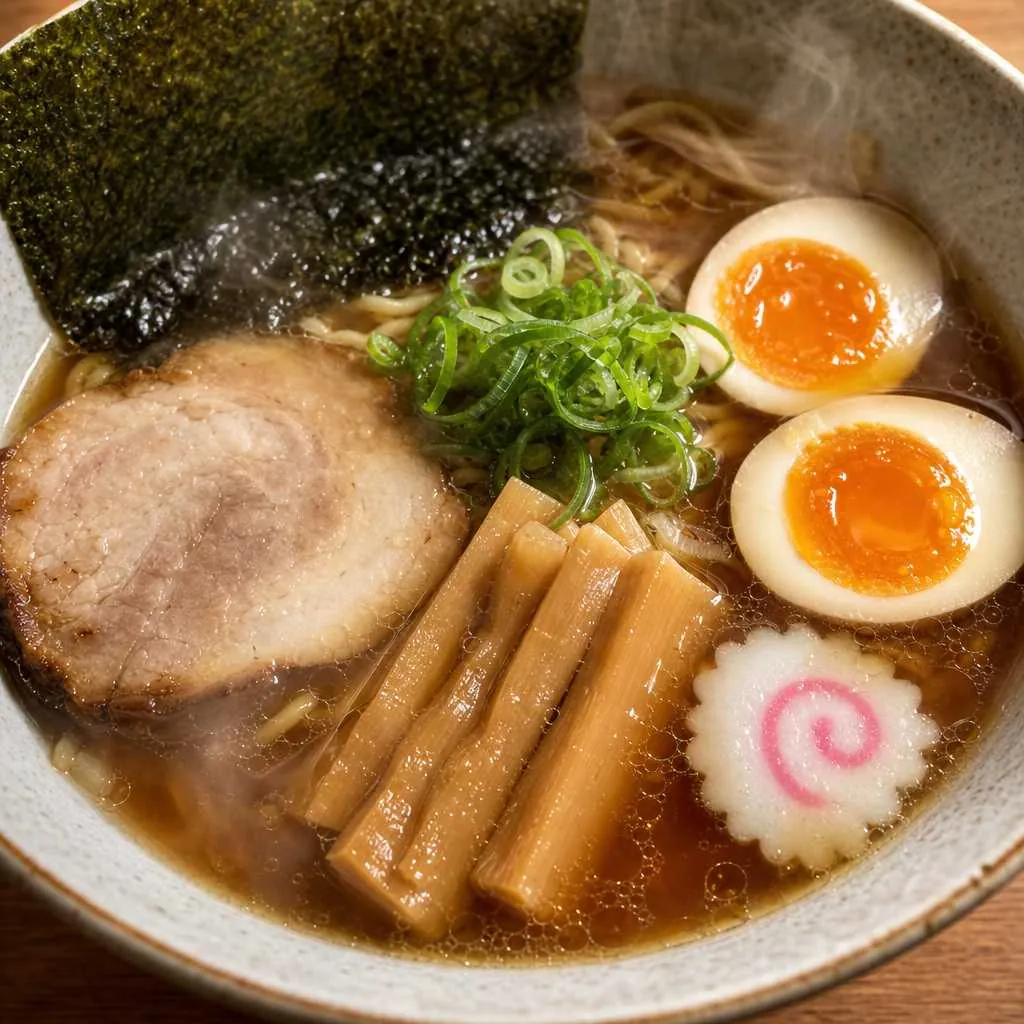
In a traditional ramen presentation, toppings are arranged with attention to visual balance and practical eating order. Menma is typically placed toward the side of the bowl, in two to three strips fanned slightly, positioned to remain partially above the broth so diners can see it clearly before eating.
Why Placement Is Not Arbitrary
Ramen bowl composition follows a logic rooted in how flavors release during eating. Toppings placed above the broth retain some of their seasoning concentration at the start of the meal. As the meal progresses and the topping slides into the broth, it begins releasing its seasoning into the soup, gradually deepening the flavor of the broth itself. This is especially true of menma, whose soy and fermented character slowly enriches the liquid it sits in.
This is why a bowl with three properly seasoned menma strips tastes different at the end of the meal than at the beginning. The broth has absorbed a small but measurable contribution from the topping. Removing menma from the recipe does not just remove a strip of bamboo. It removes a dynamic flavor contributor that affects the whole bowl across the time it takes to eat.
Menma Among Other Japanese Vegetables in Ramen
Within the broader category of Japanese vegetables used as ramen toppings, menma occupies a unique position. Negi (green onion) provides sharpness and freshness. Corn adds sweetness. Nori contributes an oceanic umami. Spinach or bean sprouts offer bulk and mild vegetal notes. None of these replicate what menma does.
Menma is the only fermented vegetable topping in the standard ramen canon, which means it is the only topping bringing lactic acid fermentation character to the bowl. That contribution is irreplaceable from a flavor-building perspective. Restaurants that remove it, whether for cost or convenience, are creating a bowl that is structurally incomplete by the standards of traditional Japanese ramen.
Why Menma Matters at Zen Ramen and Sushi
At Zen Ramen and Sushi, the commitment to traditional Japanese ramen means that every topping in the bowl is chosen and prepared for a reason. Menma is not a garnish placed for decoration. It is a functional component of authentic ramen that has earned its place in the bowl through centuries of culinary development.
When friends bring friends to a Japanese restaurant for the first time, the quality of the smaller details often determines whether the experience feels authentic or approximated. A bowl where the menma is properly fermented, well-seasoned, and correctly textured signals that the kitchen understands ramen at a level beyond assembling familiar-looking ingredients.
Competitors in the New York ramen space often focus their differentiation on broth style or pork quality. Those are important. But the toppings are where kitchen discipline shows in every single bowl, served consistently, every service. Menma done correctly is a mark of kitchen standards, not a trivial detail.
If you are someone who has been told by a friend to visit Zen Ramen and Sushi, pay attention to the menma in your bowl. Taste it before it has fully settled into the broth. Notice the chew, the salt-sweet balance, the faint fermented depth. That preparation reflects the same care applied to every element of the ramen offered here. Explore the full Zen Ramen and Sushi menu to see how these traditional elements come together in each bowl.
Frequently Asked Questions
What does menma taste like?
Menma tastes savory, mildly sweet, and has a subtle fermented tang. It has been braised in soy sauce and mirin before serving, so it carries those flavors while maintaining a faint lactic-acid depth from the fermentation process. It is not strongly sour and not sharp. The flavor is integrated and quiet, designed to complement the broth rather than dominate the bowl.
Are bamboo shoots and menma the same thing?
No. All menma starts as bamboo shoots, but not all bamboo shoots are menma. Standard canned bamboo shoots sold in grocery stores have not been fermented or specially seasoned. Menma is specifically fermented bamboo shoot that has been dried, rehydrated, and braised. The fermentation step is what defines menma and what makes it a distinct ingredient rather than just a type of vegetable.
Is menma healthy?
Menma is relatively low in calories and contains dietary fiber, potassium, B vitamins, and some antioxidants from the bamboo. The primary nutritional consideration is sodium, since menma is seasoned with soy sauce and mirin. For most diners eating ramen as an occasional meal, the sodium content of menma is not a meaningful concern. It is one of the more nutritionally valuable toppings in a ramen bowl compared to fatty pork-based additions.
Can vegetarians eat menma?
Yes. Menma is a plant-based ingredient. The bamboo shoot itself is vegan. The seasoning typically involves soy sauce and mirin, both of which are plant-derived. Some preparations include dried bonito flakes (katsuobushi) in the braising liquid, which would make it non-vegan. Diners with strict dietary requirements should ask the restaurant whether their menma preparation includes any fish-derived seasoning.
Why does menma sometimes taste different from one restaurant to another?
Because the braising stage is handled differently by each kitchen. The base fermented bamboo is consistent, but how a restaurant seasons it, the ratio of soy to mirin, whether they add sesame oil, how long they braise it, and how they adjust the seasoning to match their specific broth, all produce different results. A restaurant braising menma in-house will produce a different product than one using pre-seasoned commercial menma straight from a package. The variation you notice reflects the level of kitchen involvement in the topping’s final preparation.
What type of ramen is menma most commonly found in?
Menma is most associated with shoyu (soy sauce) ramen, particularly Tokyo-style ramen where the topping tradition is most deeply codified. It also appears consistently in shio (salt) ramen and tonkotsu ramen. It is used less frequently in miso ramen due to the seasoning competition between the miso base and menma’s fermented character, though skilled kitchens adjust the preparation to make it work in that context as well.
Have you noticed a difference in menma quality between ramen restaurants you have visited? Share your experience and let us know what made one bowl stand out from the rest.
References
- Food and Agriculture Organization of the United Nations: research on bamboo cultivation, traditional fermented food practices, and nutritional profiles of fermented plant-based foods
- National Center for Biotechnology Information: peer-reviewed studies on lactic acid fermentation in traditional Asian foods and bamboo shoot nutritional composition
- Forbes: coverage of Japanese food culture, ramen industry growth, and the global expansion of authentic Japanese cuisine
- Statista: market data on the Japanese restaurant industry, ramen category consumer trends, and Japanese food export statistics
- Encyclopaedia Britannica: historical and cultural documentation of Japanese cuisine, fermentation traditions, and the origins of ramen as a Japanese food category