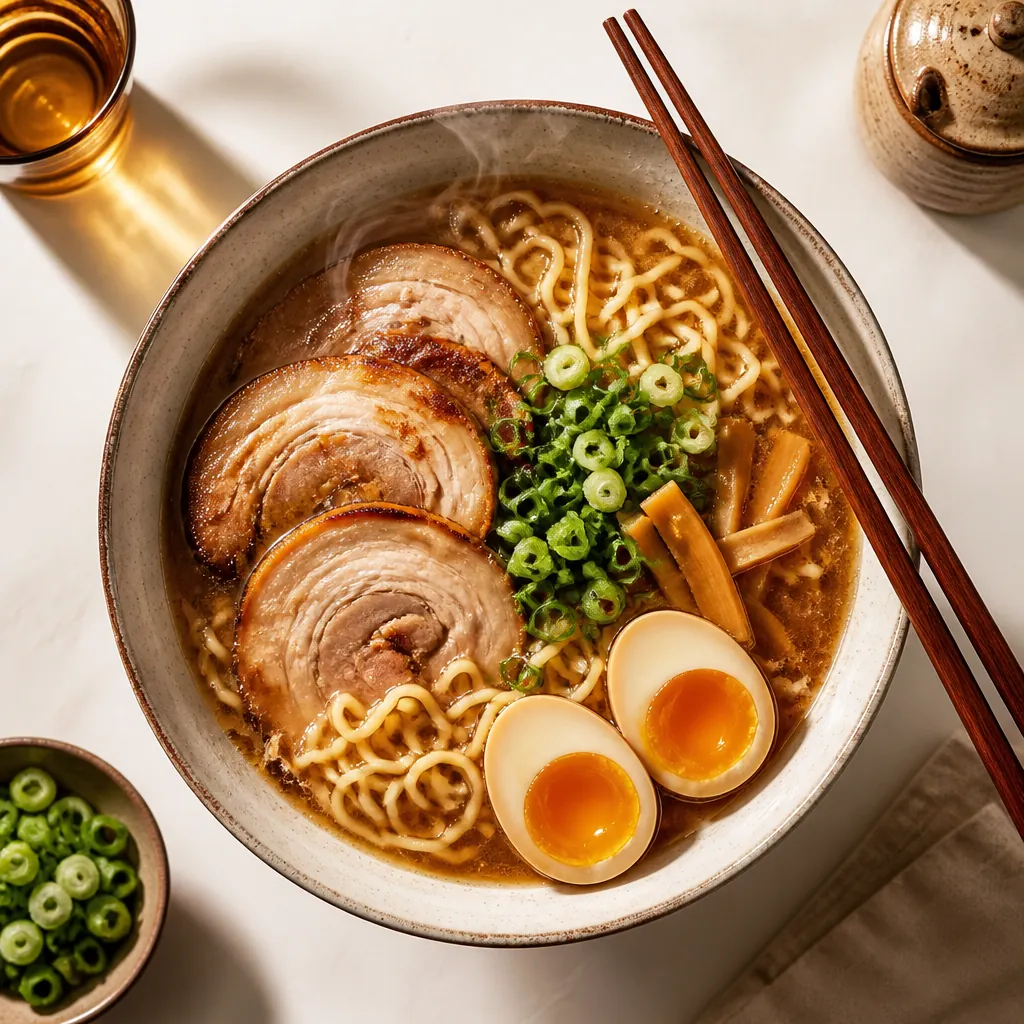
Most people eating ramen tonight have no idea they are consuming one of the most culturally complex dishes in culinary history. The history of ramen spans Chinese immigration into Japan, post-World War II food scarcity, instant noodle revolutions, and a decades-long journey across the Pacific. This is not a simple origin story. Ramen’s path from street stalls in Yokohama to restaurant menus across the United States is a story of survival, adaptation, and obsession, and understanding it makes every bowl taste richer. If a friend sent you here, keep reading. This article will change how you order.
Table of Contents
- Quick Takeaways
- Ramen Origins in Japan: The Real Story
- The Four Regional Styles That Defined Ramen Culture
- The Instant Ramen Revolution and Why It Mattered
- How Ramen Reached America and Who Brought It
- Ramen Style Comparison: Broth, Noodle, and Identity
- What Authentic Ramen Actually Means in 2024
- Frequently Asked Questions
- References
Quick Takeaways
| Key Insight | Explanation |
|---|---|
| Ramen is not originally Japanese | The dish evolved from Chinese wheat noodle soups brought to Japan by Chinese immigrants in the late 19th century, primarily settling in Yokohama and Kobe. |
| Post-WWII wheat surplus shaped ramen | American wheat aid flooded Japan after 1945, making cheap wheat noodles widely available and accelerating ramen’s rise as a staple street food. |
| Instant ramen democratized the dish globally | Momofuku Ando invented instant ramen in 1958, a product that sold over 100 billion servings annually by the 2010s according to the World Instant Noodles Association. |
| Regional broth styles are not interchangeable | Sapporo, Fukuoka, Tokyo, and Kyoto each developed distinct broth and noodle profiles that reflect local climate, agriculture, and taste preferences. |
| American ramen arrived in waves, not all at once | Ramen in America passed through Japanese immigrant communities in the early 1900s, then instant noodles in the 1970s, then restaurant-quality bowls in the 2000s. |
| Tonkotsu broth dominates American ramen menus | Fukuoka-style tonkotsu, with its rich pork bone base, became the most recognized ramen style in American restaurants due to its bold, unmistakable flavor. |
| Crafted ramen requires hours of preparation | A proper tonkotsu broth requires 12 to 18 hours of continuous simmering. Understanding this helps diners appreciate the difference between fast-food ramen and a well-built bowl. |
Ramen Origins in Japan: The Real Story
The ramen origins in Japan story begins not in Japan at all. Chinese immigrants bringing wheat noodle soup traditions, called “lamian” in Mandarin, arrived in Japanese port cities during the Meiji era, roughly 1868 to 1912. Yokohama’s Chinatown is consistently cited by food historians as the launch point for what would eventually become ramen.
The earliest Japanese records of ramen-like dishes date to around 1910, when a Chinese cook named Ozaki is credited with serving Chinese-style noodle soup at a restaurant called Rairaiken in Asakusa, Tokyo. The broth was seasoned with soy sauce, the noodles were Chinese-style wheat noodles, and the dish was sold cheaply to working-class customers.
Between 1910 and 1945, ramen remained a street food associated with Chinese cooking, sold from yatai (pushcart stalls). It was not yet a point of Japanese culinary pride. That identity shift came after the war.
How World War II Transformed Ramen Forever
Japan’s defeat in 1945 brought two simultaneous pressures: severe food shortages and an influx of American wheat aid. The U.S. government encouraged Japan to use wheat rather than rice to manage domestic grain surpluses. Black market wheat noodle stalls exploded across Japanese cities to feed a starving population.
Food scarcity became the mother of ramen’s invention. Vendors combined affordable wheat noodles with pork or chicken scraps to build flavorful broths that stretched limited ingredients. By the early 1950s, ramen had moved from the yatai into dedicated restaurants, and regional cooks began developing their own distinct versions.
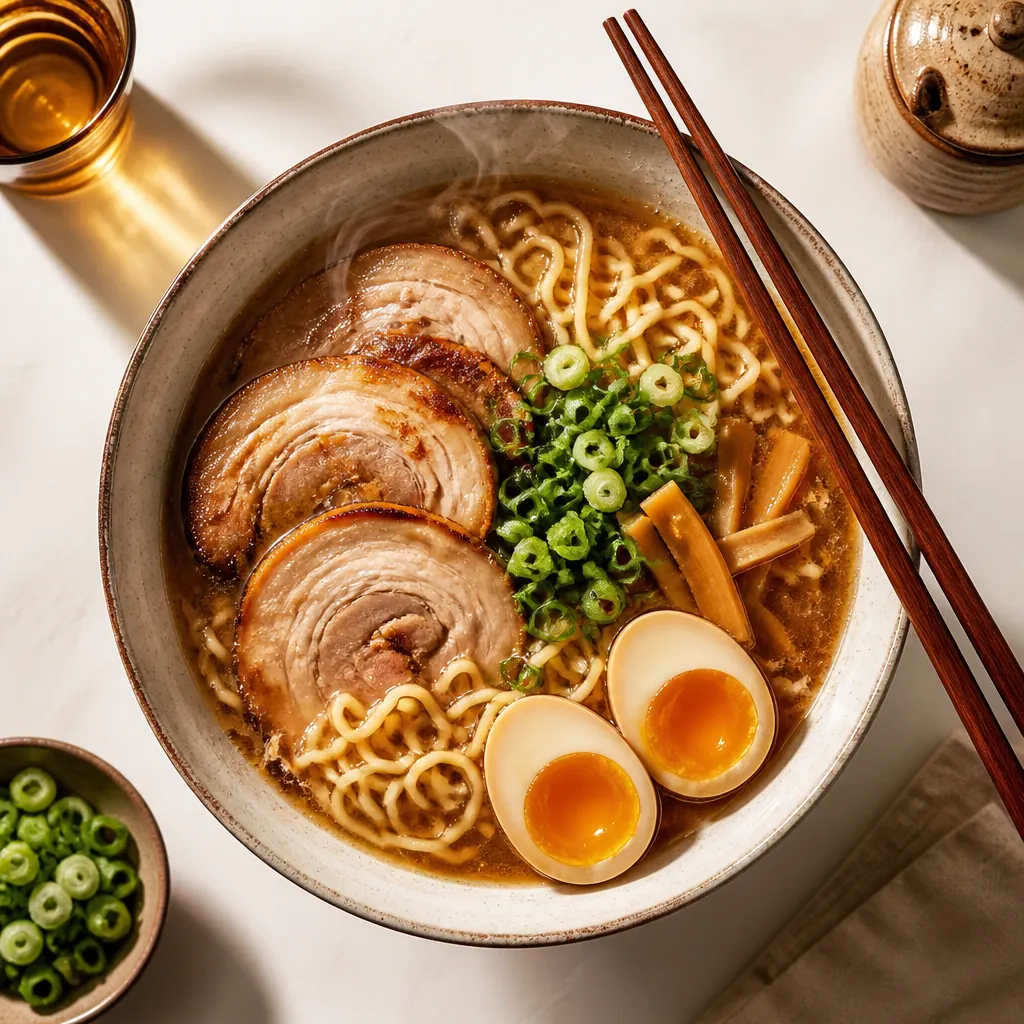
Pro tip: When you sit down at Zen Ramen and Sushi, notice the broth color. Clear, amber, or milky white tells you immediately which regional Japanese tradition inspired that bowl, long before you taste it.
The Four Regional Styles That Defined Ramen Culture
Japan’s four dominant ramen styles are not variations of one dish. They are distinct culinary traditions shaped by geography, local ingredients, and historical accidents. Treating them as interchangeable is a common mistake that flattens one of the most nuanced food cultures on the planet.
Sapporo Style: Miso and Cold-Weather Engineering
Hokkaido’s Sapporo became synonymous with miso ramen. The thick, fermented soybean paste base was added to noodle soup in the 1960s to create a hearty, calorie-dense meal suited to Hokkaido’s brutal winters. Corn, butter, and bean sprouts became standard toppings, reflecting the region’s agricultural output. Sapporo ramen noodles are typically thick, wavy, and made to hold up in a heavy broth.
Hakata and Fukuoka Style: The Tonkotsu Revolution
Fukuoka Prefecture, specifically the Hakata district, gave the world tonkotsu. Pork bones simmered for 12 to 18 hours at a rolling boil produce a rich, opaque, milky-white broth loaded with collagen. The noodles are thin and straight, and the dish is traditionally served with chashu pork, soft-boiled egg, and green onions. Tonkotsu’s bold flavor became the style most exported internationally, including to American restaurant culture.
Tokyo Style: Shoyu and the Urban Default
Tokyo ramen uses a clear, soy sauce-based broth, typically chicken or pork-based, with slightly curly medium-thickness noodles. It is the most historically rooted style, connected directly to the original Meiji-era Chinese-influenced noodle soups. When Japanese people outside a specific region say “ramen,” many are picturing Tokyo-style shoyu ramen by default.
Kyoto Style: The Quiet Contender
Kyoto ramen tends toward a darker, saltier soy sauce broth made from chicken with thin, straight noodles. It is less internationally known but holds a devoted following inside Japan. Kyoto chefs often finish the bowl with a drizzle of chicken oil for additional richness.
“Ramen is not fast food in Japan. It is the product of a craftsman who has spent years perfecting a single broth. The bowl reflects the chef’s life.” – Ivan Orkin, American ramen chef and founder of Ivan Ramen, Tokyo
The Instant Ramen Revolution and Why It Mattered
Momofuku Ando invented instant ramen in 1958 after spending months experimenting in a backyard shed. His product, Nissin’s Chicken Ramen, used flash-frying to dehydrate pre-cooked noodles, allowing them to rehydrate in boiling water in minutes. This was not a shortcut. At the time, it was a genuine food technology breakthrough.
Ando introduced Cup Noodles in 1971, specifically designed for the American market after observing that Americans broke up noodle blocks and ate them from cups. By 2023, the World Instant Noodles Association reported global instant noodle demand at over 121 billion servings per year. China, Indonesia, and India lead in consumption, but the United States ranks among the top ten markets globally.
Instant ramen did something important beyond convenience. It exposed hundreds of millions of people worldwide to the flavor profile of Japanese noodle soup, creating a baseline familiarity that made the leap to restaurant-quality ramen easier when it arrived. In practice, instant ramen was ramen’s global marketing campaign, unintentional but enormously effective.
Pro tip: The difference between instant ramen and a properly made broth at a restaurant like Zen Ramen and Sushi is not just flavor. It is hours of labor, quality protein, and fresh alkaline noodles made to hold up in that specific broth. They share a name but very little else.
How Ramen Reached America and Who Brought It
The story of ramen in America moves in three distinct waves, and conflating them misrepresents how the dish actually traveled and transformed.
First Wave: Japanese Immigrants and Hidden Communities
Japanese immigrants arrived in California and Hawaii beginning in the 1880s. They brought food traditions with them, including noodle dishes, but ramen as a distinct restaurant category did not emerge visibly in American cities during this period. Japanese-American communities prepared noodle dishes at home and in community settings, but anti-Japanese sentiment, culminating in World War II internment, suppressed Japanese cultural expression including food culture in public spaces.
Second Wave: Instant Noodles and Suburban Pantries
Nissin Foods brought Cup Noodles to the United States in 1971. By the 1980s, instant ramen packages priced at under twenty-five cents had become a staple in college dormitories and budget households across the country. This wave made ramen a household word in America, though it had almost nothing to do with what ramen actually is in Japan.
A common mistake made by American diners in this era was assuming ramen was simply seasoned instant noodle soup. This perception stuck for decades and is still the dominant frame for many American consumers who have never visited a dedicated ramen restaurant.
Third Wave: Restaurant Culture and the Ramen Boom
The real turning point came in the early 2000s when Japanese ramen chains began opening in American cities, primarily New York and Los Angeles. Ippudo opened its New York location in 2008, introducing many Americans to Hakata-style tonkotsu at a serious restaurant level. American chefs like David Chang at Momofuku Noodle Bar, which opened in 2004, brought ramen into fine dining conversations without abandoning the dish’s working-class roots.
By the 2010s, dedicated ramen restaurants were opening in mid-sized American cities. According to data from the National Restaurant Association, Japanese restaurants grew by approximately 45 percent in the United States between 2010 and 2020, with ramen as a primary driver of that expansion. Cities that once had no authentic ramen options now had several competing establishments.
Ramen Style Comparison: Broth, Noodle, and Identity
| Ramen Style | Broth Base and Key Characteristics | Best Suited For |
|---|---|---|
| Tonkotsu (Hakata/Fukuoka) | Pork bone broth, 12-18 hours simmered, milky white, rich collagen content. Thin straight noodles. Classic toppings: chashu pork, soft-boiled egg, nori, green onion. | First-time ramen diners wanting bold, unmistakable flavor. Cold weather dining. Those who enjoy rich, heavy broths. |
| Shoyu (Tokyo) | Soy sauce-seasoned chicken or pork broth, clear amber color, lighter body. Medium curly noodles. Historically the earliest restaurant ramen style in Japan. | Diners preferring cleaner, more delicate flavors. Those who want to taste the broth’s underlying ingredients rather than a dominant seasoning profile. |
| Miso (Sapporo) | Fermented soybean paste blended into chicken or pork broth, thick and hearty, savory-sweet. Thick wavy noodles. Common toppings: corn, butter, bean sprouts. | Diners who enjoy complex fermented flavors. Those seeking a filling, calorie-dense bowl. Excellent pairing with cold-weather comfort dining. |
What Authentic Ramen Actually Means in 2024
The word “authentic” gets misused constantly in food writing. Applied to ramen, it does not mean frozen in time or geographically pure. Ramen itself is a dish that began as a Chinese immigrant adaptation in Japan. It was reshaped by American wheat policies. It was industrialized and globalized. Authenticity in ramen means something different: honoring the craft and the intention behind each component.
A genuinely well-made ramen bowl in 2024 shares the same core commitments as the best Japanese ramen shops. The broth is built from whole ingredients, simmered properly, and seasoned precisely. The noodles are made with alkali water (kansui) to achieve the right chew and color. The toppings are prepared separately, each one adding a distinct textural or flavor element to the bowl.
The data consistently shows that American diners are increasingly sophisticated in their ramen expectations. Yelp’s dining trend reports from 2022 and 2023 identified ramen as one of the fastest-growing searched cuisine categories in the United States, with reviewers increasingly using specific terminology like tonkotsu, tare, and chashu, indicating a population that is genuinely learning the dish’s vocabulary.
What separates a memorable ramen experience from a forgettable one comes down to the tare, the concentrated seasoning sauce added to the bowl before the broth. Most diners never see it prepared and do not know it exists, but a skilled ramen chef’s tare recipe is often their most guarded secret. At Zen Ramen and Sushi, the same care that goes into the broth goes into every layer of the bowl, including the components most diners never directly notice.
Ramen’s journey from Chinese immigrant street food to globally recognized culinary category is not an accident. It is the result of continuous refinement, cultural exchange, and an ingredient-level commitment to making something excellent from humble components. Every serious ramen restaurant, including the best options in your city, is part of this ongoing story.
Frequently Asked Questions
Is ramen originally from Japan or China?
Ramen originated from Chinese wheat noodle soup traditions brought to Japan by Chinese immigrants during the Meiji era in the late 19th century. The dish was adapted by Japanese cooks over decades, developed distinct regional Japanese identities, and is now considered a cornerstone of Japanese cuisine, even though its roots are Chinese.
What is the oldest ramen style?
Tokyo-style shoyu ramen is the oldest documented restaurant ramen style in Japan. The first recorded serving of a Chinese-style noodle soup adapted for Japanese tastes is traced to Rairaiken restaurant in Asakusa, Tokyo around 1910, which used a soy sauce seasoned broth.
When did ramen become popular in America?
Ramen became widely known in America through instant noodle products starting in the early 1970s when Nissin introduced Cup Noodles. Restaurant-quality ramen gained significant American popularity in the 2000s, driven by openings of Japanese ramen chains in New York and Los Angeles and the rise of American chefs like David Chang who incorporated ramen into their menus.
What is the difference between tonkotsu and miso ramen?
Tonkotsu ramen uses a pork bone broth simmered for 12 to 18 hours until it becomes a rich, milky-white liquid high in collagen. It originated in Fukuoka and is seasoned primarily by the broth itself. Miso ramen, originating in Sapporo, uses a chicken or pork broth base blended with fermented soybean paste, creating a thicker, earthier, and sweeter broth profile.
How long does proper ramen broth take to make?
A proper tonkotsu broth requires a continuous rolling boil for 12 to 18 hours to break down the collagen in pork bones and achieve its characteristic milky texture. Lighter broths like shoyu or shio can be ready in 4 to 6 hours, but even these require careful attention to ingredient ratios and timing. This preparation time is one of the clearest markers separating genuine ramen restaurants from fast-food imitations.
What is tare in ramen and why does it matter?
Tare is the concentrated seasoning sauce added to the bowl before the broth is poured in. It is the component that determines whether a ramen is classified as shoyu (soy sauce tare), shio (salt tare), or miso (miso tare). Most diners never see the tare prepared separately, but it is often the most individually crafted element of a ramen chef’s recipe and the primary reason two bowls using similar broths can taste dramatically different.
Does Zen Ramen and Sushi serve traditionally made ramen?
Zen Ramen and Sushi specializes in authentically crafted Japanese ramen and sushi dishes, with broths and preparations that reflect genuine Japanese culinary traditions rather than simplified versions of the dish. The menu is designed for diners who appreciate the real history and craft behind Japanese cuisine, whether they are longtime enthusiasts or discovering the dish for the first time.
If you have eaten ramen at Zen Ramen and Sushi or at any other restaurant that changed your understanding of the dish, share what made that bowl different from everything you had tried before.
References
- Global instant noodle consumption data and food industry statistics from Statista
- Smithsonian Magazine coverage of food history, cultural exchange, and culinary immigration stories
- NPR reporting on American food culture, Japanese cuisine history, and the ramen industry’s growth in the United States
- Forbes coverage of restaurant industry growth, Japanese dining market trends, and food business expansion in America
- National Geographic food journalism covering Japanese culinary traditions, ramen culture, and regional Japanese cooking histories