
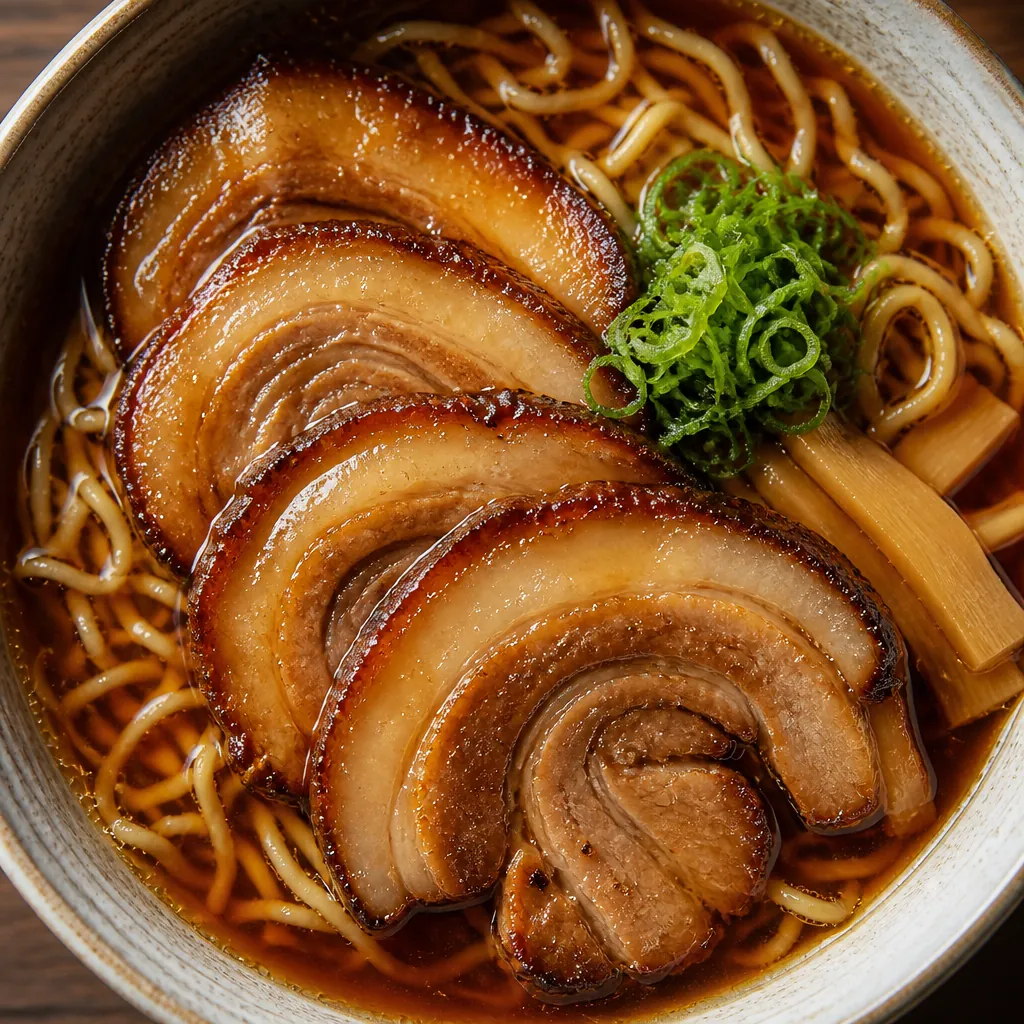
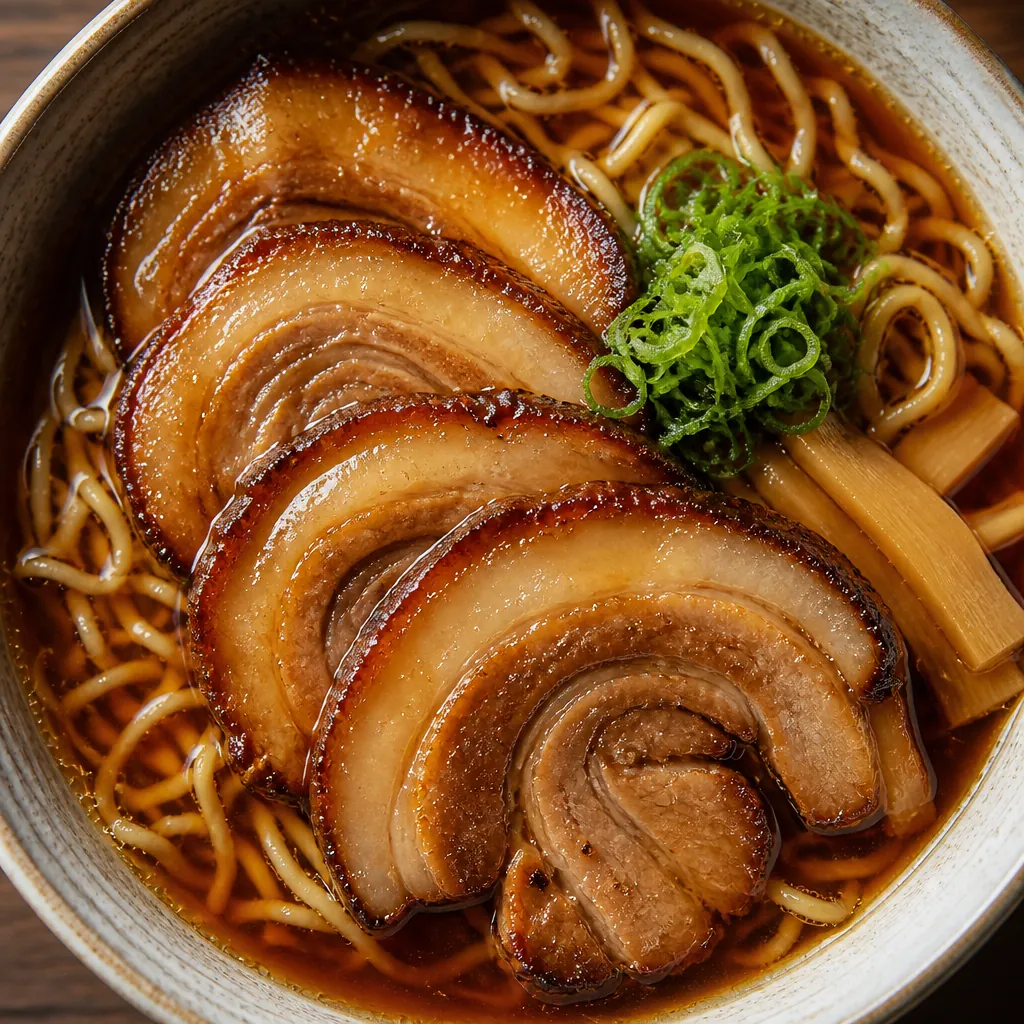
Most ramen bowls live or die by their broth, but the topping that actually makes a diner pause, take a photo, and order the same bowl again is almost always chashu pork. It sits on top of the noodles like a quiet statement: someone in this kitchen took their time. Those soft, lacquered slices of braised pork belly carry a depth of flavor that no sprinkle of scallions or sheet of nori can replicate. If you want to understand what separates a forgettable ramen experience from one you describe to a friend the next day, start here.
Table of Contents
- Quick Takeaways
- What Is Chashu Pork?
- From China to Japan: The Origin Story
- The Cut Matters: Pork Belly vs. Pork Shoulder
- The Braising Process Step by Step
- Chashu vs. Other Ramen Toppings
- How Chashu Interacts with Different Ramen Broths
- Common Mistakes That Ruin Chashu
- Frequently Asked Questions
- References
Quick Takeaways
| Key Insight | Explanation |
|---|---|
| Chashu is braised, not roasted | Japanese chashu is slow-braised in a sweet-savory liquid, not fire-roasted like its Chinese cousin char siu. The technique produces a silkier, more delicate texture. |
| Pork belly is the standard cut | Butabara (pork belly) is the richest and most traditional choice. Its fat-to-lean ratio creates the melt-in-your-mouth quality that defines great chashu. |
| The braising liquid does double duty | The leftover braising liquid is used to marinate soft-boiled ramen eggs (ajitsuke tamago), making it one of the most valuable byproducts in a ramen kitchen. |
| Overnight resting is non-negotiable | Slicing chashu fresh out of the pot destroys the spiral shape and misses the flavor-deepening that happens as the pork absorbs the braising liquid while cooling. |
| Rolling creates the signature spiral | Tying the pork belly into a tight roll before braising means every cross-section slice shows a consistent spiral of fat and lean, which is the visual marker of ramen-shop chashu. |
| Searing before braising matters | A quick sear builds a caramelized crust that holds the roll together and adds a layer of roasted flavor the braising liquid alone cannot produce. |
| Chashu works across multiple broths | Fatty pork belly chashu pairs well with rich tonkotsu; leaner pork shoulder chashu complements lighter shio or shoyu broths without overwhelming them. |
What Is Chashu Pork?
Chashu pork (チャーシュー, also written as 叉焼 or 焼豚) is the signature braised pork topping served on Japanese ramen. It is made by rolling a slab of pork belly into a tight cylinder, securing it with cooking twine, searing it until golden, and then braising it low and slow in a mixture of soy sauce, sake, mirin, and sugar until the connective tissue collapses and the fat turns almost translucent.
The result is sliced cold, perpendicular to the roll, so each piece reveals that unmistakable spiral of lean meat and creamy fat. That spiral is not just visual flair. It is what ensures every diner gets the same ratio of fat to lean in every bite, regardless of where the slice falls on the log.
At Zen Ramen and Sushi, the care that goes into every bowl starts with exactly this kind of ingredient-level attention. Chashu is not a garnish. It is the centerpiece of a properly built ramen bowl, and understanding what makes it great helps you recognize it when you taste it.
From China to Japan: The Origin Story
The name chashu is a Japanese phonetic adaptation of the Cantonese term char siu (叉燒), which literally means “fork roasted.” The original Chinese preparation involves marinating pork in a sweet, savory, and often red-colored sauce and then roasting or barbecuing it over high heat. The result is sticky, charred at the edges, and intensely flavored from the outside in.
Somewhere between Yokohama’s Chinatown, where Chinese culinary influence entered Japan in the late 19th and early 20th centuries, and the ramen counters that multiplied after World War II, the technique shifted entirely. Japanese cooks replaced the open fire with a covered pot and a low, patient braise. The flavor profile became quieter and more internal, the texture softer, and the presentation more precise.
Nibuta vs. Yakibuta: A Distinction Worth Knowing
In Japanese, you will sometimes see chashu referred to as nibuta (煮豚), meaning “simmered pork,” which is the technically accurate term for the braised version. Yakibuta (焼豚) means “grilled pork” and is the term that still technically appears in the kanji used for chashu, even though modern Japanese ramen chashu is almost never grilled. The two terms highlight the gap between the dish’s name and its actual technique, a gap that opened up as Japanese cooks quietly rewrote the recipe over generations.
This transformation from a Chinese roast to a Japanese braise is a perfect example of how Japanese cuisine absorbs outside influences and refines them into something that feels entirely native. The char siu connection explains the name; the nibuta technique explains why the texture is so different from anything you would find in a Cantonese barbecue shop.
A flat slab of belly rolled tight, tied with cotton twine, and simmered until the collagen gives up and turns silky. That spiral is how a pot of pork belly turns into portions you can stack across a run of ramen bowls.
The Cut Matters: Pork Belly vs. Pork Shoulder
Pork belly (butabara) is the default choice for chashu, and for good reason. Its layered fat and lean structure melts into a texture that is rich without being greasy when braised correctly. The fat softens to a point where it barely needs chewing, while the lean portions stay tender rather than chewy. This is the cut you find at most serious ramen shops, and it is the version that defines the dish for most diners.
Pork shoulder is the alternative for those who want a leaner result. It holds its shape a little more firmly after braising, makes cleaner slices, and carries the braising flavors differently because there is less fat to absorb and redistribute the liquid. Some ramen shops use shoulder chashu on lighter-style bowls, specifically because a fatty belly slice would unbalance a delicate shio or chicken-based broth.
Which Cut to Choose for Which Bowl
The practical rule is simple. If the broth is rich and opaque, like tonkotsu, pork belly chashu adds to the bowl’s depth without tipping it into heaviness. If the broth is clear or light, like shio or a salt-based chicken broth, leaner shoulder chashu lets the liquid stay the focus. Ordering or making chashu without thinking about what it will float in is one of the most common mistakes in home ramen cooking.
Pro tip: When evaluating chashu at a ramen shop, look at the fat layer. If it is white and waxy, the braise was either too short or done at too high a temperature. Properly braised chashu fat should be almost translucent, close to ivory rather than white, and should yield to slight pressure from a chopstick.
The Braising Process Step by Step
The braising liquid for chashu is built from four core ingredients: soy sauce, sake, mirin, and sugar. Aromatics, typically ginger, garlic, and green onion, are added to the pot but are not the dominant flavor. The liquid is not just a cooking medium; it is the flavor source, and the pork spends hours absorbing it.
Rolling and Tying the Belly
Rolling the pork belly into a tight cylinder before cooking is the step that separates ramen-shop chashu from a simple braised pork slab. The roll is secured with cotton cooking twine tied at regular intervals, creating vertical rings, with a horizontal weave to hold the shape under heat. This structure ensures the pork holds its log shape throughout the braise and produces clean, uniform spirals when sliced cold.
Searing Before the Braise
The log goes into a hot, oiled pan before it ever sees braising liquid. Searing on all sides for roughly two minutes per side does two things: it creates a caramelized exterior that adds a roasted note to the final flavor, and it firms up the outer layer so the roll stays intact during the long, wet cook. Skipping this step produces a paler, softer exterior that lacks the contrast between the outer crust and the interior.
The Low, Slow Braise
Once the seared roll goes into the braising liquid, the pot is covered and the heat drops to a low simmer. The cooking happens over a period of several hours, during which collagen in the pork converts to gelatin, the fat layers soften, and the liquid slowly reduces and concentrates. The pork is turned periodically to ensure even color and flavor penetration.
The finished roll should feel noticeably heavier than when it went in, not because it gained mass, but because the tight structure has given way and the meat is saturated with braising liquid. It should yield easily when pressed, not spring back.
The Overnight Rest
This is the step most impatient cooks skip, and it is the reason home chashu rarely matches restaurant quality. After cooking, the roll stays submerged in the reduced braising liquid and is refrigerated overnight. During this rest, the fat re-solidifies, making the log easy to slice cleanly. The flavors deepen as the pork continues absorbing the liquid. Slice it warm, and you get ragged edges, a collapsed spiral, and a blander flavor. Slice it cold, and you get the clean, glossy rounds that look and taste like they came from a proper ramen counter.
Pro tip: Never discard the braising liquid after the overnight rest. Strained and refrigerated, it becomes the marinade for soft-boiled ramen eggs (ajitsuke tamago). Drop halved jammy eggs into the leftover liquid for a few hours and you get a second premium topping from the same pot.
Chashu vs. Other Ramen Toppings
Ramen toppings each play a different role in the bowl, but chashu carries more weight than any other single topping. It contributes protein, fat, sweetness from the braising glaze, and visual drama in a way that nothing else replicates. Still, understanding how it sits alongside the other standard toppings helps you build or order a more intentional bowl.
| Topping | Primary Contribution to the Bowl | Best Pairing with Chashu |
|---|---|---|
| Chashu Pork | Rich umami depth, fat, sweetness, textural contrast, visual centerpiece | Always. It is the anchor of the bowl. |
| Ajitsuke Tamago (Marinated Egg) | Creamy, jammy yolk; salty-sweet marinated white; cuts through fatty richness | Ideal alongside chashu; the egg’s creaminess balances the pork fat. Often marinated in the same braising liquid. |
| Menma (Fermented Bamboo Shoots) | Crunchy texture, mild fermented tang, earthiness | Provides textural contrast to the soft chashu and lifts the palate between bites of rich pork. |
| Nori (Dried Seaweed) | Oceanic, mineral notes; absorbs broth; visual contrast | Neutral alongside chashu; its main role is broth-interaction, not flavor competition. |
| Narutomaki (Fish Cake) | Mild, slightly sweet fish flavor; retro visual element | Works with chashu in classic shoyu bowls; less common in modern tonkotsu-style ramen. |
The combination of chashu and ajitsuke tamago is the closest thing ramen has to a standard premium pairing. Both are made from the same braising liquid, they share a flavor DNA, and the egg’s rich yolk echoes the fat in the pork. If you are ordering at Zen Ramen and Sushi and want to build the most complete bowl, these two together are the choice that ramen cooks have validated over decades of refinement.
How Chashu Interacts with Different Ramen Broths
Chashu does not exist in isolation. How it performs depends heavily on what it is floating in, and a well-matched chashu-to-broth pairing is one of the quiet markers of a kitchen that understands its own menu.
Tonkotsu Broth
Tonkotsu is the richest of the major ramen broths, built from pork bones simmered for many hours until the liquid turns milky, thick, and deeply savory. Pork belly chashu belongs here. The fat in the belly harmonizes with the collagen-rich broth rather than fighting it, and the sweetness of the braising glaze acts as a counterpoint to the broth’s intensity. A leaner shoulder chashu in tonkotsu can feel slightly dry and out of place.
Shoyu Broth
Shoyu ramen, with its clear, brown, soy-seasoned broth, is versatile enough to handle either cut. Belly chashu is the classic pairing and adds body; shoulder chashu keeps the bowl lighter and lets the broth’s clean soy flavor stay prominent. Both work, but the choice signals something about the bowl’s intended character.
Shio Broth
Shio (salt-based) broth is the most delicate of the major styles, usually chicken or seafood-based with a pale, translucent appearance. Fatty pork belly chashu risks overwhelming it. Leaner pork shoulder chashu or even a thinner slice of belly is the right call here. The pork should complement the broth’s lightness, not bulldoze it.
Miso Broth
Miso ramen occupies the middle ground. Its fermented paste base is robust enough to carry fatty belly chashu, and the sweetness of the braising glaze pairs naturally with miso’s own complex, slightly sweet depth. This pairing often produces the most harmonious overall bowl because both components share that balance of salt, sweet, and umami.
Common Mistakes That Ruin Chashu
Chashu looks simple enough to wing, but there is a short list of errors that consistently produce disappointing results. Each one is avoidable with a clear understanding of why the technique works the way it does.
The first and most damaging mistake is cooking at too high a temperature. Chashu braised at a rolling boil produces meat that is tough on the outside, unevenly cooked inside, and depleted of fat rather than enriched by it. The braise should be a gentle simmer, barely moving at the surface.
The second mistake is skipping the overnight rest and trying to slice the chashu warm. The fat in pork belly is liquid at braising temperature. Slicing the roll warm means the fat runs out, the spiral collapses, and the slices fall apart. Refrigerating overnight re-solidifies everything and produces slices that hold their shape cleanly when cut.
A third common error is using too little liquid in the braise. The pork should be mostly submerged, and the pot should be covered. Insufficient liquid means the top of the roll dries out and absorbs none of the braising flavor. The visual result is a pale, uneven exterior rather than the lacquered, mahogany color that signals good chashu.
Finally, discarding the braising liquid is a waste that undermines the value of the whole process. That liquid, reduced and strained, is packed with gelatin, pork fat, and concentrated soy-mirin-sake flavor. It is the foundation of excellent marinated eggs and can also be used as a glaze when reheating chashu slices in a pan before serving.
At Zen Ramen and Sushi, the kitchen’s approach to toppings reflects this same philosophy: every component in the bowl should be fully realized, not an afterthought. When you taste the chashu in a bowl here, you are tasting a process that took longer than the meal itself.
Frequently Asked Questions
What does chashu pork taste like?
Chashu pork is sweet, savory, and deeply umami. The braising liquid, which combines soy sauce, sake, mirin, and sugar, penetrates the pork over a long cook and creates a flavor that is richer and more complex than a simple roast. The fat layers contribute a creamy, almost buttery quality, while the caramelized exterior from the initial sear adds a subtle roasted note. It is not aggressively salty or spicy, but rather a rounded, lingering richness that coats the palate.
Is chashu the same as char siu?
They share a name and a Chinese origin, but the techniques and results are completely different. Chinese char siu is marinated and then roasted or barbecued over high heat, producing a sticky, charred exterior with a firmer texture. Japanese chashu is slow-braised in a covered pot at low heat, producing a softer, silkier texture with the flavor distributed throughout the meat rather than concentrated on the outside. Think of them as distant cousins, not the same dish.
Can chashu be made with a cut other than pork belly?
Yes. Pork shoulder is the most common alternative and is preferred by cooks who want a leaner result or a firmer slice. It braises well, holds its shape more easily, and works better with lighter ramen broths where fatty belly chashu would overpower the broth. Some kitchens also use pork loin for an even leaner option, though the risk of dryness increases. Pork belly remains the standard because its fat-to-lean ratio is the most forgiving and produces the richest texture.
How long does chashu keep and how should it be reheated?
Chashu keeps well in the refrigerator for up to four or five days when stored in an airtight container, ideally submerged in or alongside some of the braising liquid to prevent drying out. For reheating, the best method is a quick sear in a hot pan with a brush of the reduced braising liquid, which re-caramelizes the surface and restores the glaze. Microwaving works in a pinch but produces a flabbier exterior with no textural contrast. Chashu can also be frozen in slices for longer storage.
Why does restaurant chashu look so different from what most people make at home?
The main differences come down to the roll technique, the overnight rest, and the quality of the braise. Restaurant kitchens roll the belly tightly and tie it at precise intervals, which produces cleaner spirals. They also allow the full overnight rest before slicing, which tightens the roll and deepens the flavor. At home, the most common shortcut is skipping one or both of these steps, which results in irregular slices and a paler, less glossy surface. The ingredients themselves are not the limiting factor. The technique and patience are.
Does the chashu braising liquid change the flavor of the entire ramen bowl?
Not directly, because chashu sits on top of the broth rather than cooking in it. But indirectly, yes. The fat that renders out of the pork during the braise, and the glaze that caramelizes on the surface of the slice during reheating, both contribute to the bowl’s overall fat content and flavor once the chashu begins to dissolve into the broth as you eat. A well-made chashu gradually enriches the broth around it. This is why properly braised, fatty chashu makes a tonkotsu bowl taste even better toward the bottom of the bowl.
Have you had a chashu experience at a ramen shop that completely changed how you thought about the dish? We would love to hear about it in the comments.
References
- Just One Cookbook: Complete guide to making homemade chashu with rolled and flat methods
- Sudachi Recipes: Ramen-shop style chashu pork recipe and technique breakdown
- MasterClass: Overview of chashu pork preparation, cut selection, and braising tips
- Caroline’s Cooking: Chashu pork recipe with explanation of differences from Chinese char siu
- San-J: Guide to the most popular ramen toppings including chashu, ajitsuke tamago, and menma