
Most people have eaten grocery store sushi at some point. The rice is cold, the fish has that dull, watery texture, and the rolls fall apart before they reach your mouth. It is not a great experience, but many people accept it as normal. It is not normal. Fresh sushi from a dedicated Japanese restaurant is a completely different product, and the gap between the two is wider than most casual diners realize. If a friend has already told you Zen Ramen and Sushi is worth the visit, here is the full picture of why they are right.
Table of Contents
- Quick Takeaways
- Reason 1: The Fish Quality Is Non-Negotiable
- Reason 2: Sushi Rice Is a Craft, Not an Afterthought
- Reason 3: Knife Skills Change Everything About Texture
- Reason 4: Temperature Control Is Managed at Every Step
- Reason 5: Menu Specificity Beats a Generalist Kitchen
- Reason 6: Freshness Is a Daily Discipline, Not a Marketing Claim
- Reason 7: The Chef-Diner Relationship Shapes What You Eat
- Reason 8: Proper Pairing and Context Elevate the Entire Meal
- Dedicated Japanese Restaurant vs. Other Sushi Sources
- Frequently Asked Questions
- References
Quick Takeaways
| Key Insight | Explanation |
|---|---|
| Sushi-grade fish sourcing is everything | Dedicated Japanese restaurants source fish specifically rated for raw consumption, often through daily or twice-weekly deliveries. Grocery stores use general seafood supply chains not built for this purpose. |
| Sushi rice requires years of practice to master | The seasoning ratio, temperature at pressing, and rice variety all affect the final product. A trained itamae spends years on rice alone before moving to fish work. |
| Knife angle determines fish texture | Cutting against the grain at the correct angle shortens muscle fibers, producing a cleaner melt-in-the-mouth texture. This is a trained skill, not a kitchen task. |
| Fish must be served at 50 to 55 degrees Fahrenheit | Too cold kills flavor. Too warm accelerates spoilage. A restaurant kitchen actively manages this. A grocery cold case does not. |
| Referral diners get more value per visit | Coming in with a specific recommendation means you already know what to order, and the staff can guide you deeper into the menu rather than starting from scratch. |
| Menu depth signals culinary commitment | A restaurant whose entire identity is built around ramen and sushi has no incentive to cut corners on either. Generalist kitchens balance priorities across many cuisines. |
| Context and pairing multiply enjoyment | Miso soup, pickled ginger, correct sake temperature, and proper chopstick etiquette guidance all exist at a dedicated Japanese restaurant and nowhere else at the same quality level. |
Reason 1: The Fish Quality Is Non-Negotiable
The single biggest factor separating fresh sushi at a dedicated Japanese restaurant from everything else you have eaten is the sourcing chain for the fish itself. Sushi-grade fish is not a regulated term in the United States according to the FDA, but in practice it refers to fish that has been handled, frozen to specific temperatures to kill parasites, and stored according to protocols designed for raw consumption.
A serious Japanese restaurant builds a relationship with a specific fish distributor who delivers multiple times per week. The chef personally inspects incoming fish for smell, color, firmness, and eye clarity on whole fish. That inspection process does not happen at a grocery store seafood counter, a gas station convenience section, or an all-you-can-eat buffet line.
Why the supply chain gap is so large
Grocery store seafood moves through a general supply chain optimized for shelf life and volume. Sushi restaurants need fish that peaks in freshness within 24 to 48 hours of delivery. These are fundamentally different business requirements, which is why you cannot replicate restaurant-quality sushi at home with supermarket fish.
At Zen Ramen and Sushi, the fish sourcing philosophy is built around this daily commitment. When a friend tells you the salmon melts differently here, this is the operational reason behind that experience.
Pro tip: Ask your server when the fish delivery arrives each week. Visiting on or the day after a delivery day guarantees you are eating fish at its absolute peak freshness window.
Reason 2: Sushi Rice Is a Craft, Not an Afterthought
Most people focus entirely on the fish when evaluating sushi quality. This is a mistake. Professional sushi chefs in Japan traditionally spend the first two years of their apprenticeship working exclusively on rice, never touching fish at all. The rice is that important, and that difficult to get right.
Sushi rice requires a specific short-grain Japanese variety, typically Koshihikari. It must be cooked at the correct water ratio, seasoned with rice vinegar, sugar, and salt at a precise ratio, fanned during mixing to achieve the correct sheen without becoming sticky or clumping, and served at body temperature, not refrigerator temperature.
What cold rice does to the experience
Cold rice is dense, gummy, and overpowering. It kills the delicate flavor of the fish sitting on top of it. This is exactly what you get from pre-made grocery sushi, which is refrigerated for hours before purchase. A restaurant makes rice in small batches throughout service, which means the rice you eat was prepared within the last two hours.
“The rice is the soul of sushi. The fish is the face, but the rice is everything underneath it.” Jiro Ono, master sushi chef, as cited in culinary documentation of the Sukiyabashi Jiro restaurant.
Reason 3: Knife Skills Change Everything About Texture
This reason surprises people who have never thought about it, but it is one of the most physically demonstrable differences between restaurant sushi and anything else. The way a fish slice is cut determines its texture in your mouth more than almost any other single factor after freshness.
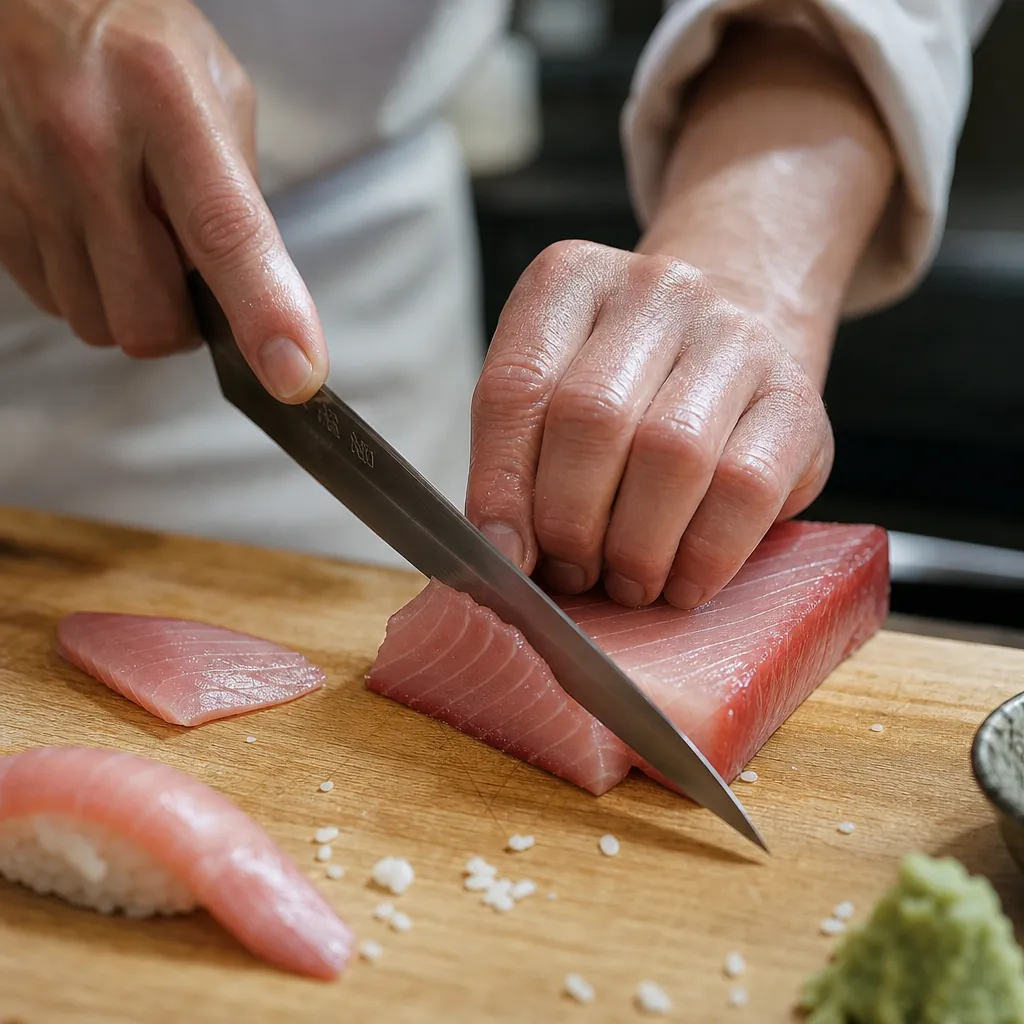
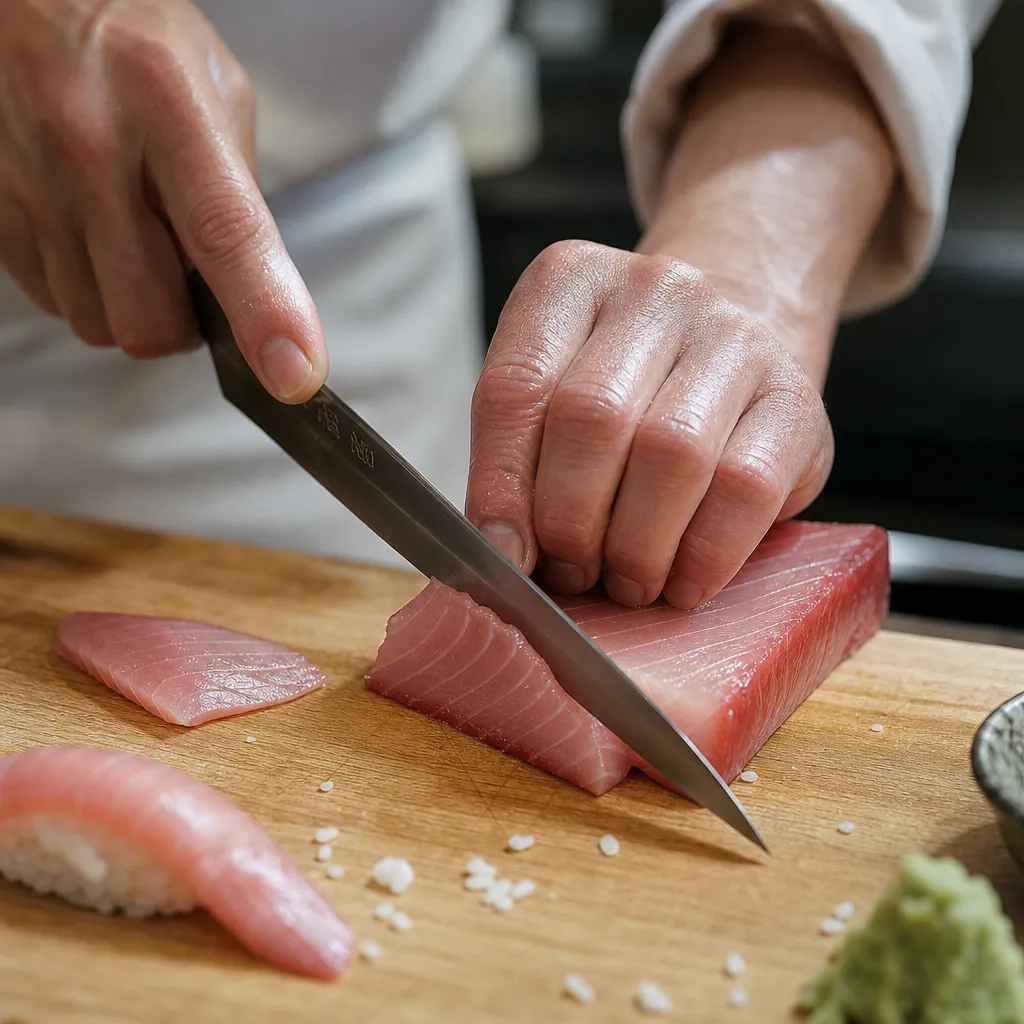
Fish muscle has grain, just like beef. Cutting across that grain at the correct angle shortens the fibers, producing a clean bite that releases flavor immediately. Cutting with the grain or at a wrong angle produces a chewier, stringier texture. A trained itamae uses a single long, pulling motion with a yanagiba knife to achieve a clean cut without tearing or compressing the flesh.
The equipment gap is real
A professional yanagiba knife costs several hundred dollars and is sharpened on a whetstone before and after every service. The knife used to slice deli fish at a supermarket is maintained to a completely different standard. Equipment matters in any precision craft, and sushi cutting is a precision craft.
When you eat nigiri at a dedicated restaurant like Zen Ramen and Sushi and notice the fish seems to dissolve rather than require chewing, you are experiencing the direct result of correct knife technique applied to high-quality, properly sourced fish.
Reason 4: Temperature Control Is Managed at Every Step
Sushi fish has a narrow optimal serving temperature range. The FDA food safety guidance recommends keeping raw fish below 41 degrees Fahrenheit for storage, but the actual ideal serving temperature for maximum flavor expression is between 50 and 55 degrees Fahrenheit. Below that, the fat compounds in fish like salmon and tuna solidify and the flavor becomes muted. Above that, spoilage accelerates rapidly.
A trained sushi chef removes fish from refrigeration at a calculated time before service. The fish warms slightly, the fat softens, and the piece is assembled and served immediately. This entire process takes careful timing and attention. No grocery store or convenience food operation manages this sequence.
Pro tip: If your nigiri arrives at the table so cold it feels like it came directly from a freezer, that is a sign of temperature management failure. Good sushi should feel cool but not refrigerator-cold when it reaches your tongue.
Reason 5: Menu Specificity Beats a Generalist Kitchen
A restaurant that serves everything, from burgers to pad thai to sushi, cannot dedicate the same level of ingredient investment and staff training to any single dish category. The economics do not support it, and the kitchen priorities do not align with it.
Zen Ramen and Sushi is built entirely around Japanese cuisine, with sushi and ramen as the twin anchors of the menu. Every purchasing decision, every training hour, every piece of kitchen equipment, and every staff hire is made in service of doing those two things extremely well. This is structurally different from a generalist kitchen that happens to offer a sushi roll as one option among fifty.
Ingredient investment follows menu identity
When sushi is your entire identity as a restaurant, you cannot afford to serve mediocre fish. Your reputation depends on those pieces specifically. This creates a built-in quality floor that generalist restaurants simply do not have for any single menu category.
Competitors in the New York Japanese dining market like Ichiran, Yasubee, and Kame take very different approaches to menu focus. Ichiran is famous for hyper-specialized tonkotsu ramen with almost no menu variation at all. That level of singular commitment produces a specific kind of excellence. Zen Ramen and Sushi applies that same dedication across both ramen and sushi, which is a harder operational challenge but produces a more complete Japanese dining experience.
Reason 6: Freshness Is a Daily Discipline, Not a Marketing Claim
Every sushi restaurant claims to use fresh fish. The word is on signs, menus, and websites everywhere. But freshness is not a label, it is an operational system. It requires daily fish inspections, strict first-in-first-out inventory rotation, clearly defined maximum holding times for each fish variety, and the willingness to 86 an item when it does not meet the day’s standard rather than serve something borderline.
In practice, a dedicated Japanese restaurant runs these systems because its entire business model depends on them. When you sit down at Zen Ramen and Sushi and notice that a particular fish is not available that day, that absence is itself a quality signal. It means the fish did not meet inspection standards, and the kitchen chose not to serve it rather than compromise what reaches your plate.
How freshness connects to food safety
According to the FDA’s guidelines on raw seafood consumption, proper freezing protocols and temperature management are the primary safeguards against parasitic risk in raw fish. These protocols are standard operating procedure at a licensed Japanese restaurant. They are not consistently applied along a grocery store supply chain optimized for cooked-fish sales.
Reason 7: The Chef-Diner Relationship Shapes What You Eat
In traditional Japanese sushi culture, the relationship between an itamae and a regular guest is genuinely collaborative. The chef learns your preferences, knows which fish you prefer fatty versus leaner, remembers if you dislike sea urchin, and can make real-time recommendations based on what arrived in that day’s delivery.
This kind of relationship is completely impossible with pre-packaged grocery sushi. It is also impossible at a restaurant where sushi is a minor menu category handled by a line cook with no specialized training. It requires a dedicated sushi chef with real knowledge, a kitchen that values that role, and enough repeat business to build those guest relationships over time.
How referral visits benefit from this dynamic
If a friend sent you to Zen Ramen and Sushi with a specific recommendation, you are already ahead of a first-time walk-in. Tell your server who sent you and what they recommended. That context allows the kitchen team to guide you toward the dishes that match what your friend already knows you will enjoy, which is a more efficient path to a great meal than working through a menu blind.
Reason 8: Proper Pairing and Context Elevate the Entire Meal
Fresh sushi is not just about individual pieces in isolation. The full experience includes miso soup to warm the palate before raw fish, properly prepared pickled ginger as a palate cleanser between different fish varieties, wasabi quality and application, and the option to pair with sake, Japanese beer, or green tea served at the correct temperature.
A dedicated best sushi restaurant manages all of these supporting elements with the same care applied to the fish itself. Pickled ginger should be pale pink, not bright red from artificial coloring. Wasabi should ideally be freshly grated from real wasabi root, or at minimum a high-quality paste not mixed with horseradish dye. Sake should be recommended based on the fish being ordered, not just handed over at room temperature without thought.
These details exist at Zen Ramen and Sushi because the entire operation is oriented around delivering an authentic Japanese dining experience. They are absent or inconsistent at generalist restaurants where sushi is an add-on, not a core identity.
Dedicated Japanese Restaurant vs. Other Sushi Sources
| Factor | Dedicated Japanese Restaurant (e.g., Zen Ramen and Sushi) | Grocery Store / Convenience Sushi |
|---|---|---|
| Fish sourcing | Dedicated sushi-grade supplier, multiple deliveries per week, chef inspection on arrival | General seafood supply chain, not optimized for raw consumption |
| Rice preparation | Small batches throughout service, served at body temperature, correct seasoning ratio | Made in bulk, refrigerated for hours, served cold and dense |
| Knife technique | Trained itamae using professional yanagiba knife, correct grain-cut angle | General kitchen staff, standard knife, no specialized training |
| Temperature management | Active temperature staging from storage to plate, 50-55 degrees Fahrenheit at service | Static refrigeration from production through sale |
| Pairing and context | Miso soup, quality pickled ginger, sake pairing recommendations, staff expertise | Soy sauce packet, generic wasabi, no pairing guidance |
| Quality floor | Restaurant identity depends on sushi quality, built-in incentive not to compromise | Sushi is one SKU among thousands, quality is not brand-defining |
Frequently Asked Questions
What makes sushi from a Japanese restaurant taste different from grocery store sushi?
The difference comes from multiple compounding factors: fish sourced specifically for raw consumption and delivered fresh multiple times per week, rice prepared in small batches and served warm, professional knife technique that changes the texture of each slice, and active temperature management from storage to plate. Any one of these factors alone would produce a noticeable difference. All of them together produce a completely different product.
Is restaurant sushi actually safer to eat than pre-packaged sushi?
A licensed Japanese restaurant operates under strict health department oversight and maintains specific cold-chain protocols designed for raw fish service. Pre-packaged grocery sushi travels through a supply chain built for general seafood, is packaged in advance, and sits in a cold case without the same freshness timeline controls. The FDA recommends consuming raw fish only from reputable establishments with proper handling protocols, which a dedicated sushi restaurant is specifically designed to meet.
Why does sushi rice at a restaurant taste so much better than homemade versions?
Professional sushi rice uses a specific short-grain Japanese variety like Koshihikari, seasoned with a precise ratio of rice vinegar, sugar, and salt, and served at body temperature after being fanned during the mixing process. Most home cooks use the wrong rice variety, incorrect water ratios, and refrigerate the rice before serving, which creates a dense, cold, gummy texture that overwhelms the fish. Replicating restaurant sushi rice at home requires the same equipment, ingredients, and training that a professional kitchen provides.
How do I know if a sushi restaurant is actually dedicated to quality Japanese cuisine?
Look at three things. First, does sushi represent a core part of the restaurant’s identity, not just one item on a sprawling menu? Second, does the staff demonstrate knowledge about individual fish varieties, seasonal availability, and pairing options? Third, is the fish ever unavailable because it did not meet the day’s inspection standard? That last point is the clearest quality signal because it means the kitchen is making decisions based on fish quality rather than revenue pressure.
What should I order on my first visit to Zen Ramen and Sushi if a friend recommended it?
Tell your server exactly what your friend recommended and ask them to build from there. If you want to establish a baseline for the kitchen’s fish quality, start with a piece of salmon nigiri and a piece of tuna nigiri. These are the two most common fish in any sushi program, and they will immediately tell you whether the sourcing and technique are at the level you are hoping for. From there, follow staff recommendations on the day’s best fish based on the most recent delivery.
Why does it matter that a restaurant specializes in both ramen and sushi specifically?
Ramen and sushi represent two of the most technically demanding categories in Japanese cuisine. A restaurant that builds its entire identity around both must develop genuine operational depth in Japanese ingredients, sourcing, and technique. This creates a kitchen culture and supplier network that benefits both programs. A restaurant with this level of Japanese culinary commitment is structurally different from one that serves sushi as an afterthought alongside dishes from other culinary traditions.
Have you noticed a specific difference between fresh sushi at a dedicated Japanese restaurant and sushi from another source? Share what stood out most to you.
References
- U.S. Food and Drug Administration guidance on safe raw seafood consumption and fish handling protocols
- Statista data on Japanese restaurant industry growth, sushi market trends, and consumer dining preferences in the United States
- Forbes reporting on the fine dining and specialty restaurant industry, including what separates cuisine-specific restaurants from generalist competitors
- National Institutes of Health research on foodborne illness risks associated with raw fish consumption and safe preparation standards
- Penn State Extension food safety resources covering cold-chain management, raw seafood handling, and temperature control best practices for foodservice operations