You sit down at a sushi restaurant, open the menu, and immediately face three rolls that every table around you seems to be ordering: the spicy tuna roll, the dragon roll, and the rainbow roll. They all look appealing, they all get recommended, and they are all very different eating experiences. Picking the wrong one for your palate does not ruin the meal, but picking the right one makes it memorable. This guide breaks down exactly what is in each roll, what kind of diner each one suits, and how to decide with confidence the next time you pull up a stool at Zen Ramen and Sushi.
Table of Contents
- Quick Takeaways
- What Is a Spicy Tuna Roll
- What Is a Dragon Roll
- What Is a Rainbow Roll
- Side-by-Side Comparison
- How to Choose Your Signature Roll
- Pairing Your Roll with Ramen
- Frequently Asked Questions
- References
Quick Takeaways
| Key Insight | Explanation |
|---|---|
| Spicy tuna is an American invention | The spicy tuna roll was invented in Los Angeles in the early 1980s, born out of resourceful use of tuna scraps mixed with chili sauce. It is not a traditional Japanese roll. |
| Dragon rolls are mostly cooked | Most dragon roll versions use shrimp tempura or grilled eel inside, making them a reliable choice for diners who are cautious about raw fish. |
| Rainbow roll is a sampler, not just a roll | Its whole point is variety. Multiple fish species are layered across the top, letting you taste several flavors in a single order. |
| Heat level varies widely on spicy tuna | Some kitchens use sriracha, others use ichimi togarashi or house chili mayo. Ask your server how hot the spicy tuna runs before you order. |
| Dragon roll is the most visually dramatic | Thinly sliced avocado is fanned over the top to resemble dragon scales. If presentation matters to you at a group table, this roll photographs well. |
| Rainbow roll requires the freshest kitchen | Multiple raw fish species sit on top exposed. The quality of the rainbow roll directly reveals the quality of a restaurant’s fish sourcing. |
| Ordering all three is a legitimate strategy | Each roll occupies a genuinely different flavor and texture lane. Sharing all three between two people covers heat, richness, and variety in one sitting. |
What Is a Spicy Tuna Roll
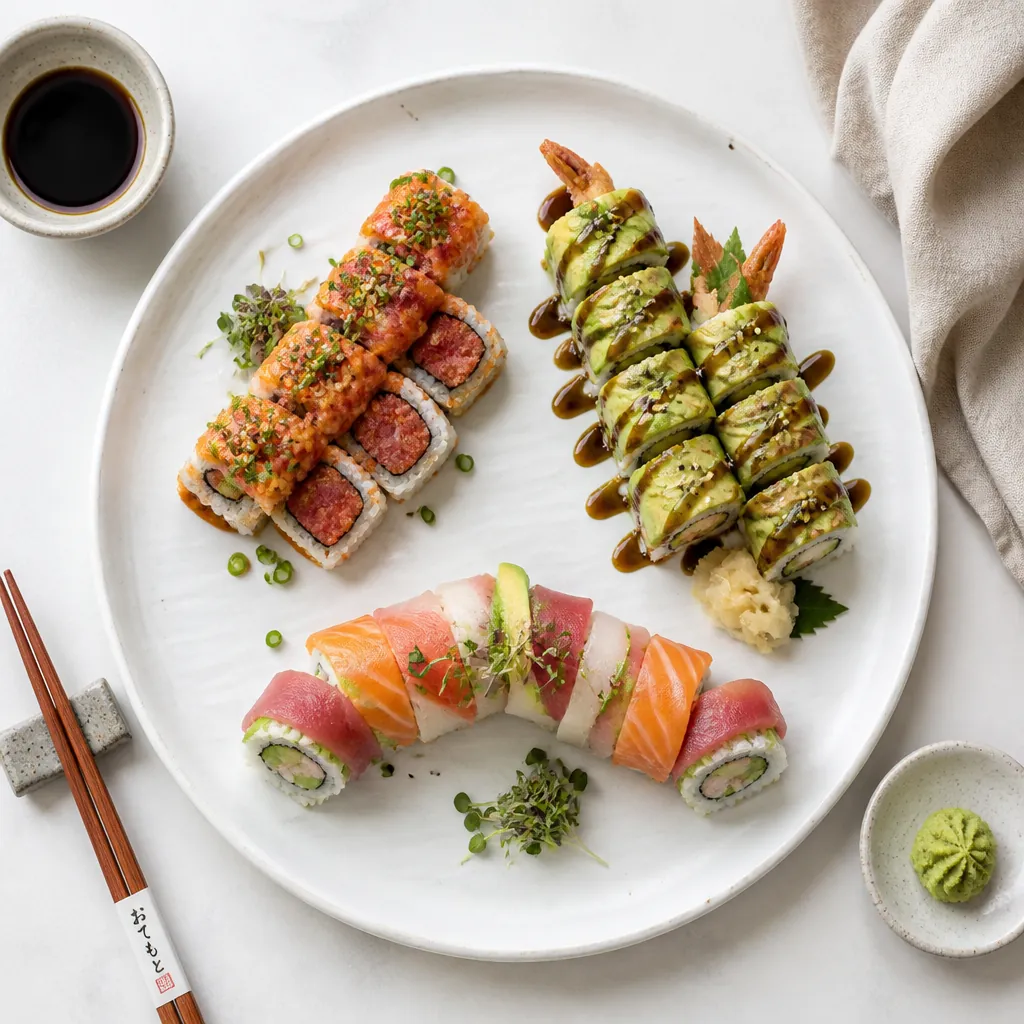
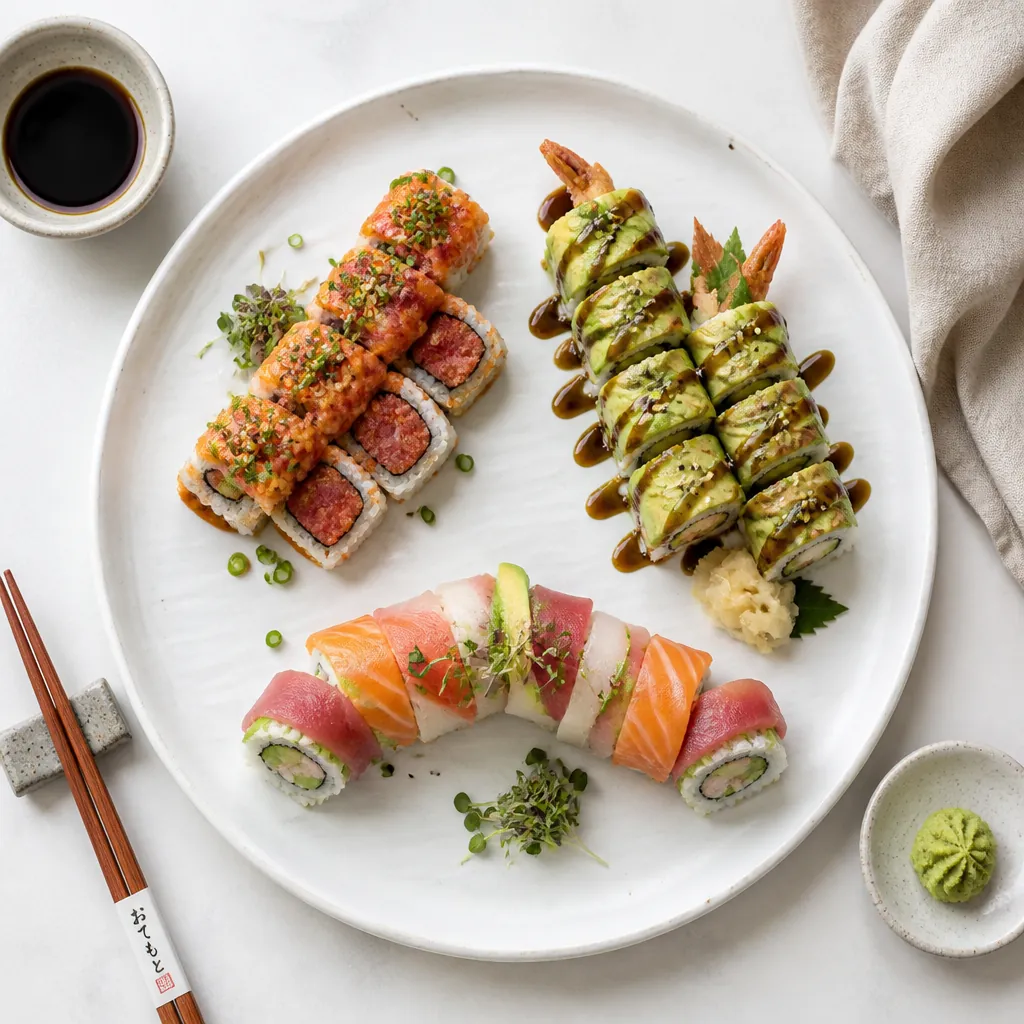
The spicy tuna roll is arguably the most ordered sushi roll in the United States, and its backstory is grounded in practicality rather than tradition. The roll was invented in Los Angeles in the early 1980s by mixing tuna scraps with chili sauce and rolling the result with seaweed and rice. It was a resourceful move by sushi chefs who did not want to waste small, uneven cuts of tuna that could not be used for cleaner preparations.
The core build is simple: raw tuna combined with spicy mayo or sriracha, wrapped in nori and seasoned sushi rice. Some versions include cucumber for crunch. The roll is often finished with ichimi togarashi, a ground red chile powder that adds dry heat on top of the creamy sauce heat inside.
Why the Spicy Tuna Roll Remains a Benchmark Roll
Ordering a spicy tuna roll at a new restaurant is actually one of the better quality tests a diner can run. Because the ingredients are so few, there is nowhere to hide a mediocre product. Bad tuna is immediately obvious. Too much mayo overwhelms the fish. Under-seasoned rice throws the whole thing off.
At Zen Ramen and Sushi, the spicy tuna roll is worth ordering early in the meal, before your palate gets saturated with richer flavors. Eating it first gives you a clean read on the kitchen’s fish quality and sauce balance. If it lands well, everything else on the menu becomes much more trustworthy.
Pro tip: If you find standard spicy tuna rolls too hot, ask whether the kitchen can tone down the chili level. Most sushi chefs will accommodate this without losing the core flavor of the roll.
What Is a Dragon Roll
The dragon roll is an inside-out roll, meaning the rice sits on the outside with nori wrapping the ingredients on the inside. The filling is typically shrimp tempura and cucumber, and the defining feature is thinly sliced avocado layered over the top of the roll, fanned out to resemble the scales of a dragon. A sweet eel sauce is usually drizzled over the finished roll, and tobiko (fish roe) is often added for color and a light pop of brininess.
Some versions substitute grilled eel (unagi) for shrimp tempura, which produces a smokier, richer roll. Both approaches result in a cooked-fish experience, which is exactly why the dragon roll is so widely recommended for diners who are not yet fully comfortable with raw fish.
The Texture Profile That Sets Dragon Roll Apart
The contrast in the dragon roll is the main event. The crispy shrimp tempura inside creates a crunch. The avocado on top is cool and buttery. The eel sauce is sweet and savory at the same time. No other roll on a standard menu delivers that specific combination of textures in a single bite.
A common mistake diners make with dragon rolls is ordering them too late in the meal. The crispy texture of the tempura inside degrades if the roll sits for more than a few minutes. Order it early, eat it quickly, and do not let it rest while you photograph it.
Pro tip: When you order a dragon roll, ask whether the avocado is going on top or inside. Some restaurants build it both ways, and the version with avocado layered outside in the classic fan pattern is significantly more impressive to look at and slightly different to eat.
What Is a Rainbow Roll
The rainbow roll is an evolution of the California roll. It is a uramaki, with rice on the outside, and inside you will find crab or imitation crab, avocado, and cucumber, which is the standard California roll base. What makes it a rainbow roll is what happens on top: multiple types of fish, most commonly tuna, salmon, and yellowtail, are sliced thin and layered across the top of the roll, alongside extra slices of avocado, creating the colorful striped appearance the name references.
The originator of the rainbow roll is not definitively known, but the style is thought to have come from the Little Tokyo neighborhood of Los Angeles. Like the California roll it builds on, it is firmly an American-style sushi creation rather than a traditional Japanese preparation.
What Makes the Rainbow Roll the Most Versatile Order
The rainbow roll functions as a sampler. Because the fish toppings are sliced thin and layered rather than mixed into the filling, each piece you eat can taste slightly different depending on which topping you hit. One piece might be heavy on salmon, the next on yellowtail. It is the closest thing to ordering multiple rolls without actually doing so.
This also makes the rainbow roll a reliable choice when dining with someone who has slightly different preferences. Ordering one rainbow roll alongside a more decisive choice like a spicy tuna roll covers a lot of ground between two people without requiring a lengthy negotiation over the menu.
A rainbow roll is the ultimate gateway sushi. It is built on a familiar California roll base, layered with multiple fish toppings, and designed specifically to let diners sample variety without committing to a single flavor profile.
Side-by-Side Comparison
Before deciding, it helps to see all three rolls measured against the same criteria. The table below compares the spicy tuna roll, dragon roll, and rainbow roll across the factors that actually matter at the table: raw fish content, dominant flavor, heat level, and who the roll is genuinely best suited for.
| Feature | Spicy Tuna Roll | Dragon Roll | Rainbow Roll |
|---|---|---|---|
| Primary fish | Raw tuna | Shrimp tempura or grilled eel (cooked) | Multiple raw fish (tuna, salmon, yellowtail) |
| Raw fish present | Yes | No (in most versions) | Yes |
| Dominant flavor | Spicy, savory, creamy | Rich, sweet, buttery | Fresh, light, varied |
| Heat level | Medium to high (varies by kitchen) | None to low (eel sauce is sweet) | None (unless jalapeño or spicy mayo added) |
| Texture highlight | Smooth, soft | Crispy inside, creamy outside | Silky fish on top, crunchy inside |
| Best suited for | Diners who want bold flavor and some heat | Cooked-fish preference, rich flavor seekers | Diners who want variety and lighter flavors |
| Visual presentation | Standard, clean | Dramatic avocado scale pattern | Colorful striped fish pattern |
How to Choose Your Signature Roll
Your signature roll is not the one that sounds most impressive. It is the one that consistently delivers what you are actually in the mood for. Here is a direct framework for making the call.
Choose the Spicy Tuna Roll If
You want clean, punchy flavor with real heat. You enjoy raw tuna and are comfortable with the fish being the star of the bite. You are testing a new restaurant’s quality and want a baseline read fast. The spicy tuna roll is also the best choice if you are eating solo and want a roll that satisfies without needing the variety that multi-fish rolls provide.
It is also the honest answer for anyone who has ordered a spicy tuna roll before and keeps thinking about it. A roll you return to is already your signature roll. Stop overthinking it.
Choose the Dragon Roll If
You are eating with someone who avoids raw fish, or you yourself prefer cooked preparations. The dragon roll’s shrimp tempura interior means the fish question never comes up. It is also the right pick if you want something richer and more filling than a lighter raw-fish roll. The sweetness of the eel sauce plays well with a cold Sapporo or a clean sake, making it a strong pairing roll if you are drinking.
Choose the Rainbow Roll If
You want to explore the menu without over-committing. The rainbow roll is the correct order when you are at a restaurant for the first time and want to assess the kitchen’s fish quality across multiple species in a single roll. It is also the best choice for a shared table where preferences differ, since the variety across the top slices means different people can favor different pieces of the same roll.
In practice, the rainbow roll also functions as a confidence-builder for diners who are still building their raw fish vocabulary. Because the flavors are lighter and less aggressive than a spicy tuna roll, it is easier to identify the difference between tuna and salmon and yellowtail when they are laid out cleanly side by side rather than mixed into a spicy filling.
Pairing Your Roll with Ramen
Zen Ramen and Sushi is built around the idea that ramen and sushi belong on the same table, and choosing the right roll to pair with your ramen bowl is worth thinking through. The pairing logic is straightforward: lighter rolls go with richer broths, and bolder rolls go with cleaner broths.
A spicy tuna roll pairs best with a tonkotsu or rich miso ramen because both components carry bold, assertive flavor. They are equals at the table and neither overwhelms the other.
A dragon roll works well alongside a shoyu or shio broth ramen. The lighter, clearer broth does not compete with the richness of the avocado and eel sauce on the roll. The two complement each other without pushing into flavor overload.
A rainbow roll is the most flexible pairing. Its lighter flavor profile means it sits comfortably next to almost any ramen without creating conflict. If you are not sure what ramen you want yet, order the rainbow roll first while you decide. It will not lock you in anywhere.
Pro tip: At Zen Ramen and Sushi, pairing one roll with a ramen bowl is a well-balanced meal for one person. If you are ordering for two, getting two different rolls alongside two different ramen bowls and sharing both lets you cover significantly more of the menu without over-ordering.
Frequently Asked Questions
Is a spicy tuna roll safe to eat if I am sensitive to heat?
It depends on the kitchen’s recipe. Some versions use a mild spicy mayo where the heat is mostly perceived as warmth rather than burn. Others use a heavier hand with sriracha or chili powder. The safest approach is to ask your server whether the spicy tuna runs mild or hot before you order. Most restaurants will adjust the heat on request.
Does the dragon roll always contain raw fish?
In most versions found in American sushi restaurants, the dragon roll uses cooked ingredients. Shrimp tempura and grilled eel (unagi) are both cooked preparations, and the avocado layered on top is not fish at all. Some restaurants offer a variation with raw tuna on top instead of avocado, which is sometimes called a red dragon roll. If you want to confirm you are getting a fully cooked roll, ask the kitchen before ordering.
What is the difference between a rainbow roll and a California roll?
A California roll contains crab or imitation crab, avocado, and cucumber, wrapped in rice with nori inside. A rainbow roll uses that same California roll as its base and then adds multiple types of raw fish, most commonly tuna, salmon, and yellowtail, layered across the top alongside extra avocado. The rainbow roll is essentially a California roll with a colorful raw-fish topping added.
Which of these three rolls is best for someone trying sushi for the first time?
The dragon roll is the most approachable starting point because it contains no raw fish. Its crispy shrimp tempura interior, buttery avocado exterior, and sweet eel sauce drizzle deliver familiar flavors in a format that does not require any adjustment to unfamiliar textures. Once you are comfortable with the dragon roll, the rainbow roll is a natural second step because it introduces multiple raw fish flavors gently, without the heat element of the spicy tuna roll.
Can I order all three rolls in one sitting?
Yes, and it is a reasonable strategy, especially when sharing between two people. Each of the three rolls occupies a genuinely different flavor lane: the spicy tuna roll brings heat and savory punch, the dragon roll brings richness and crunch, and the rainbow roll brings freshness and variety. Eating all three in one sitting gives you a comprehensive read on the kitchen’s sushi program and helps you identify which one you want to come back for specifically.
Why does the spicy tuna roll taste different at every restaurant?
Because the recipe is not standardized. The spicy tuna roll was an improvised American creation, not a dish with a fixed traditional recipe, so every kitchen builds its version slightly differently. Variables include the cut of tuna used, the ratio of tuna to sauce, the sauce itself (sriracha, house chili mayo, or togarashi), and whether cucumber or other ingredients are included. A spicy tuna roll at one restaurant can be legitimately twice as hot and half as creamy as the same-named roll at another restaurant down the street.
Have you found your go-to sushi roll yet, or are you still working through the menu? Share your current favorite in the comments and let us know what you paired it with at Zen Ramen and Sushi.
References
- Wikipedia entry covering the origin, ingredients, and history of the spicy tuna roll
- Wikipedia overview of the rainbow roll, its California roll base, and fish topping variations
- Mental Floss history of sushi in the United States, including the invention of the spicy tuna roll
- The Japanese Bar guide to the rainbow roll, covering its origin in Los Angeles and ingredient breakdown
- Delishably practical sushi guide covering dragon rolls, rainbow rolls, and how to choose rolls by flavor preference