
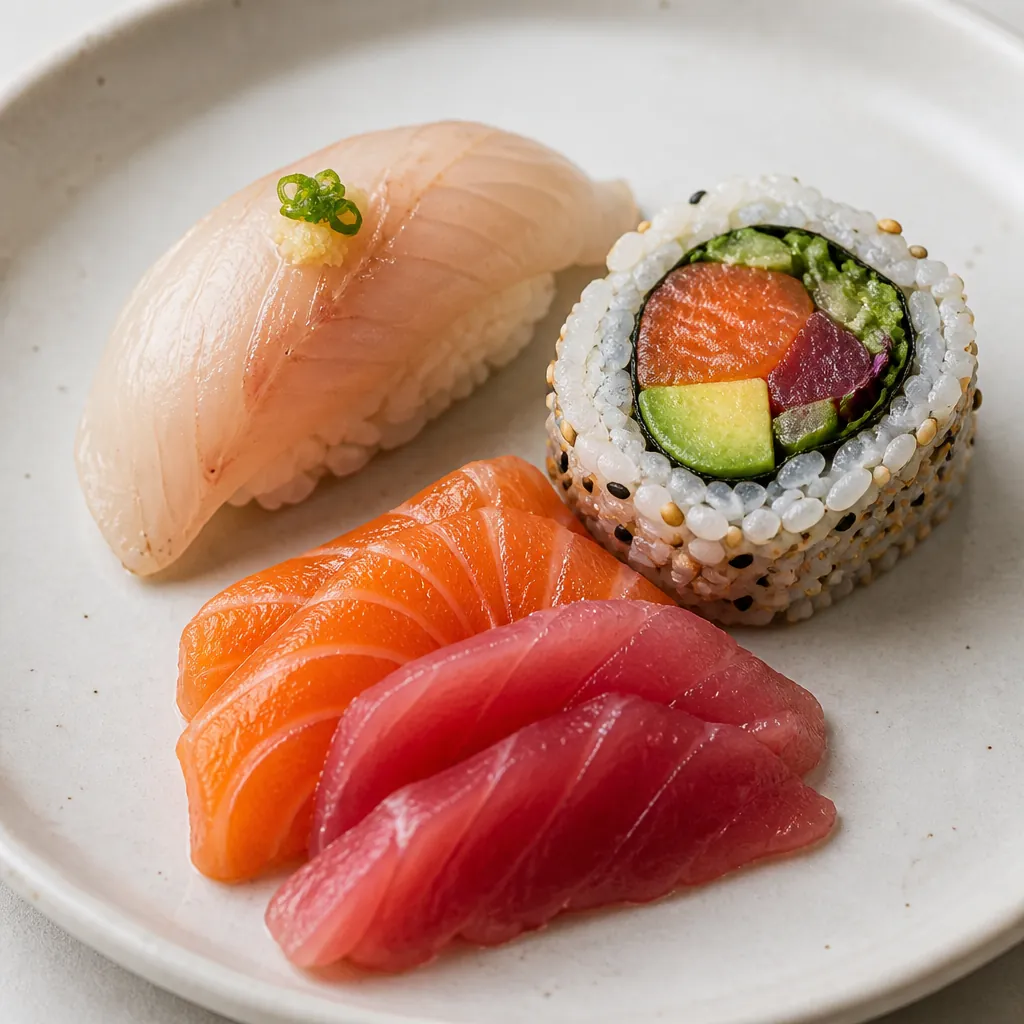
Most people sitting down at a Japanese restaurant for the first time freeze when the menu arrives. Nigiri, maki, sashimi, temaki – the words blur together, and nobody wants to ask the server to explain each one. The truth is, understanding nigiri vs maki vs sashimi takes less than five minutes, and it changes everything about how you order and what you enjoy. This glossary cuts through the confusion with plain descriptions, real distinctions, and practical advice for anyone exploring Japanese cuisine, whether you are a first-timer or someone who has been ordering the same roll for years.
Table of Contents
- Quick Takeaways
- What Is Nigiri
- What Is Maki
- What Is Sashimi
- Nigiri, Maki, and Sashimi Side by Side
- Other Sushi Types Worth Knowing
- How to Order Like Someone Who Knows What They Are Doing
- Frequently Asked Questions
- References
Quick Takeaways
| Key Insight | Explanation |
|---|---|
| Sashimi contains no rice | Sashimi is sliced raw fish or seafood served alone. It is not sushi by the strict definition because it has no vinegared rice. |
| Nigiri is hand-pressed rice topped with fish | A small oblong rice mound is pressed by hand and a slice of fish or other topping is laid across it. Simple, precise, and technique-dependent. |
| Maki is the rolled sushi most people picture | Maki uses a bamboo mat to roll rice and fillings inside nori seaweed, then slices the roll into rounds. |
| Rice quality defines nigiri more than toppings do | A skilled itamae (sushi chef) seasons the rice with specific ratios of rice vinegar, sugar, and salt. Bad rice ruins great fish. |
| Maki comes in multiple sizes and styles | Hosomaki is thin with one filling. Futomaki is thick with multiple fillings. Uramaki has rice on the outside. Each behaves differently on the palate. |
| Sashimi is the purest test of fish quality | With no rice or sauce to hide behind, sashimi reveals exactly how fresh and well-handled the fish is. It is the most unforgiving preparation. |
| Wasabi placement matters | Traditional nigiri has wasabi placed between the rice and fish by the chef. Drowning either nigiri or sashimi in wasabi paste overrides the fish flavor entirely. |
What Is Nigiri
Nigiri, short for nigiri-zushi, translates roughly to “hand-pressed sushi.” The chef takes a small handful of vinegared sushi rice, shapes it into a compact oblong mound using a firm but controlled squeeze, and places a single slice of topping directly on top. That topping is called the neta. Common neta include tuna (maguro), salmon (sake), yellowtail (hamachi), shrimp (ebi), and sea urchin (uni).
The rice in nigiri is not an afterthought. In practice, the ratio of vinegar to sugar to salt in the seasoning, and the temperature of the rice when it is pressed, determine whether the piece holds together and releases cleanly when eaten. Warm rice, slightly tacky but never gummy, is what a skilled chef is aiming for. Most diners notice when nigiri crumbles or feels dense and cold – those are signs of a kitchen cutting corners on the basics.
The Role of Wasabi in Nigiri
Authentic nigiri is served with a small amount of real wasabi pressed between the rice and the fish by the chef, not as a side condiment to mix into soy sauce. The wasabi acts as a mild adhesive and adds a gentle heat that enhances rather than overwhelms the fish. A common mistake is mixing wasabi into the soy sauce dish and dipping aggressively. That approach masks the fish entirely and suggests the diner does not trust the quality of what they ordered.
At Zen Ramen and Sushi, the nigiri selection reflects a commitment to sourcing fish that can stand on its own. If you are trying nigiri for the first time, start with salmon or yellowtail. Both are forgiving entry points with mild, clean flavors that do not require much adjustment from someone accustomed to Western cuisine.
Pro tip: Eat nigiri in one bite whenever possible. Two bites pull the fish away from the rice and you lose the ratio the chef built into the piece.
What Is Maki
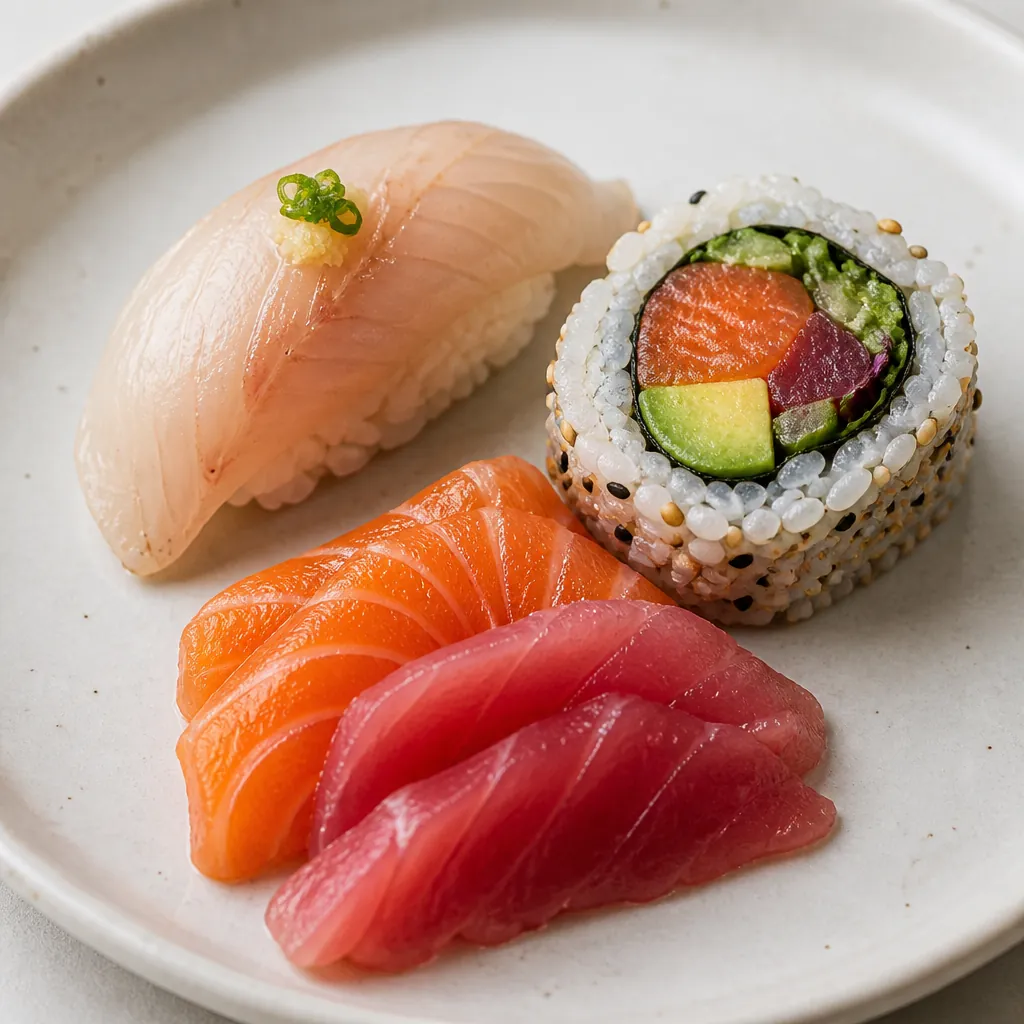
Maki-zushi means “rolled sushi.” A sheet of dried seaweed called nori is placed on a bamboo rolling mat (makisu), then spread with a thin, even layer of sushi rice. Fillings are arranged in a line near one edge, and the mat is used to roll the nori tightly around everything. The resulting cylinder is then cut into rounds, typically six or eight pieces per roll.
The variety inside maki is wider than most diners realize until they start paying attention to the menu descriptions. Each type has a different rice-to-filling ratio and a different eating experience.
Hosomaki: Thin Rolls With One Filling
Hosomaki is narrow, usually about an inch in diameter, and contains a single ingredient. Classic examples include kappa maki (cucumber), tekka maki (tuna), and natto maki (fermented soybeans). These are the no-fuss workhorses of the maki family. Because the roll is small, the nori and rice flavors come through more prominently than the filling.
Futomaki: Thick Rolls With Multiple Fillings
Futomaki is a larger roll with multiple fillings packed together. A cross-section of a futomaki cut reveals a layered composition of ingredients that might include tamagoyaki (sweet egg), cucumber, pickled gourd (kanpyo), and fish cake. These are common in traditional Osaka-style sushi and are often served at celebratory meals.
Uramaki: Inside-Out Rolls
Uramaki reverses the usual structure. The rice is on the outside of the roll and the nori wraps around the filling on the inside. The California roll is the most widely recognized uramaki in the United States. Uramaki lends itself to toppings on the outer rice surface, such as sesame seeds, tobiko (flying fish roe), or thin avocado slices.
Pro tip: When ordering maki, look at the filling list rather than the roll name. Creative roll names at many restaurants describe the same combination of ingredients. Reading the description saves confusion and helps you avoid ordering duplicates.
What Is Sashimi
Sashimi is sliced raw fish or seafood served without rice. Technically, it is not sushi at all. The word sushi refers specifically to preparations that include vinegared rice. But sashimi is served at nearly every sushi restaurant and appears on virtually every sushi-focused menu, so it lives in the same conversation.
What distinguishes good sashimi from bad sashimi is more obvious than with other preparations. There is no rice to fill your mouth, no nori to add flavor, and no sauce to compensate. The fish sits on a small garnish of shredded daikon radish and sometimes a shiso leaf. That is the entire plate. The quality of the fish, the precision of the knife cut, and the handling from delivery to plate are completely exposed.
How Sashimi Is Cut and Why It Matters
Different fish require different cuts. Tuna is typically cut straight across the grain into thick, firm slabs. Flounder (hirame) is cut into thinner slices because the flesh is more delicate. Squid (ika) is often scored with a crosshatch pattern to soften its texture before cutting. A common mistake is assuming all sashimi slices are the same. The thickness and direction of each cut affects how the fish feels in the mouth and how much flavor releases when you chew.
Sashimi is the right order when you want to assess a restaurant’s fish sourcing directly. If a kitchen is serving sashimi-grade fish handled with care, everything else on the menu that uses raw fish will reflect that same standard.
“The simplest preparations are the most honest ones. Sashimi does not hide behind anything. Every bite tells you exactly what kind of kitchen you are dealing with.” – Common principle among traditional Japanese itamae (sushi chefs)
Nigiri, Maki, and Sashimi Side by Side
The chart below makes the structural differences immediate and easy to reference. These are not generalizations – they reflect the standard definitions used in Japanese culinary practice.
| Feature | Nigiri | Maki | Sashimi |
|---|---|---|---|
| Contains Rice | Yes, hand-pressed | Yes, rolled | No |
| Contains Nori (Seaweed) | Sometimes a thin strip | Yes, wraps the roll | No |
| Raw Fish Required | No (cooked options exist) | No (cooked fillings common) | Typically yes |
| Served in Pieces | 2 per order (typical) | 6-8 pieces per roll | 3-5 slices per order |
| Best For | Tasting single fish quality | Sharing, variety, combination flavors | Purest assessment of fish freshness |
| Skill Emphasis | Rice technique, fish sourcing | Rolling tightness, filling balance | Knife skill, fish handling |
Other Sushi Types Worth Knowing
Nigiri, maki, and sashimi cover the core vocabulary, but a full sushi glossary includes several other preparations that appear on most menus. Knowing these saves you from guessing or defaulting to the same three items every visit.
Temaki: Hand Rolls
Temaki is a cone-shaped hand roll. A sheet of nori is rolled into a cone by hand, filled with rice and ingredients, and served open at the top. Temaki is meant to be eaten immediately after it is made – the nori softens within minutes of contact with the rice’s moisture and loses its satisfying crunch. Temaki is not a great choice for delivery or if you are the type to photograph your food before eating.
Chirashi: Scattered Sushi
Chirashi-zushi is a bowl of sushi rice topped with a variety of sashimi slices and garnishes. It is informal, filling, and often the best value on the menu for someone who wants to try multiple fish without ordering several individual pieces of nigiri. In Japanese households, chirashi is common during celebrations like Hinamatsuri (Girls’ Day).
Onigiri: Not Sushi, But Commonly Confused
Onigiri are triangular or round rice balls wrapped in nori and filled with ingredients like pickled plum (umeboshi), salmon, or tuna mayo. They are a Japanese convenience food, not a sushi preparation. The rice is not seasoned with vinegar. Mentioning onigiri here because it is consistently confused with sushi-related preparations, and the confusion is understandable given the rice-and-nori combination.
How to Order Like Someone Who Knows What They Are Doing
Understanding the difference between sushi types matters most at the moment you sit down and open the menu. Here is how that knowledge translates into better ordering decisions in practice.
Start with sashimi if you want to test the restaurant’s fish quality before committing to more. Two or three slices of tuna or salmon sashimi tell you everything you need to know about freshness and handling. If those are excellent, order broadly. If the fish smells or tastes off, skip the rest of the raw preparations and stick to cooked options.
Order nigiri to taste a single fish at its best without distraction. When you want to compare two types of fish, nigiri is the right format. The rice is minimal enough that the fish flavor dominates.
Use maki rolls for sharing or for building a meal with more volume. A well-constructed roll with complementary fillings is a satisfying experience on its own, but it is not the right format for evaluating fish quality in isolation.
At Zen Ramen and Sushi, the menu is organized in a way that makes this kind of progressive ordering straightforward. You can start with sashimi, move to nigiri, and finish with a specialty roll without the order feeling disjointed. That structure is intentional and reflects an understanding of how diners actually eat through a Japanese meal.
Pro tip: Ask the server which fish came in most recently. Sushi restaurants receive deliveries on specific days of the week. Ordering the freshest fish, whatever it happens to be that day, is usually better than defaulting to a personal favorite that arrived three days ago.
Frequently Asked Questions
Is sashimi technically sushi?
No. Sashimi is not sushi by definition. Sushi requires vinegared rice as the base or binding element. Sashimi is raw fish or seafood served alone without rice. The two are related in that they appear on the same menus and use the same types of fish, but they are structurally different preparations.
What is the difference between a California roll and traditional maki?
A California roll is a uramaki, meaning the rice is on the outside and the nori wraps the inside fillings. Traditional maki (hosomaki or futomaki) has the nori on the outside. The California roll also uses imitation crab (surimi) and avocado, which are not traditional Japanese ingredients. It was developed in North America in the 1970s as an entry point for diners unfamiliar with raw fish.
Can you order nigiri with cooked ingredients?
Yes. Several common nigiri toppings are cooked or heat-treated. Ebi (shrimp) is typically boiled and butterflied. Unagi (freshwater eel) is grilled with a sweet soy glaze. Tamagoyaki (sweet egg) is a cooked omelet slice. Nigiri is not exclusively a raw fish preparation, which makes it accessible to diners who prefer cooked options.
Why does sashimi come with shredded daikon radish?
The shredded daikon (called tsuma) serves a functional purpose beyond decoration. Its mild, clean flavor acts as a palate cleanser between bites of different fish. It also has mild antimicrobial properties that have made it a traditional pairing with raw fish in Japanese culinary practice for centuries. You are meant to eat it, not push it to the side.
How do you know if sushi rice is made correctly?
Properly made sushi rice should be slightly warm, glossy, and sticky enough to hold its shape without feeling gummy or wet. It should have a mild, balanced tang from the vinegar seasoning, not a sharp acidic punch. When you press a piece of nigiri between your fingers (gently), it should hold its shape and release cleanly. Cold, hard, or excessively sour rice indicates that the rice was improperly seasoned, stored incorrectly, or made ahead of time without proper resting.
What is the right way to eat nigiri with soy sauce?
Turn the nigiri upside down and dip the fish side lightly into the soy sauce, not the rice side. Dipping the rice into soy sauce causes the piece to absorb too much liquid, loosens the structure, and results in oversalted bites. The fish side holds up to brief contact with soy sauce without disintegrating. Use a small amount and do not soak it.
Is temaki different from maki?
Yes. Temaki is a hand roll shaped into a cone and not cut into pieces. Maki is a cylinder rolled with a bamboo mat and sliced into rounds. Temaki must be eaten immediately because the cone shape and the open top mean the nori becomes soft quickly. Maki holds its structure better over a few minutes, though it is also best eaten promptly after cutting.
If you have visited Zen Ramen and Sushi or have a question about a specific sushi type that was not covered here, share your experience or question in the comments – we read every one and update this guide based on what readers actually want to know.
We would love your feedback and any insights you would share with others. What perspective would you add?
References
- Global data and statistics on the Japanese food service and restaurant industry
- Forbes coverage of food culture, restaurant trends, and culinary industry reporting
- Encyclopaedia Britannica reference entries on Japanese culinary history and sushi origins
- U.S. Food and Drug Administration guidance on raw fish consumption, sashimi-grade standards, and seafood safety
- Smithsonian Magazine historical and cultural reporting on the evolution of sushi in Japan and globally