Most people have eaten instant noodles at some point and called it ramen. That’s not a moral failing, but it is a factual error. Authentic Japanese ramen is a completely different culinary experience, built on hours of labor, precise technique, and ingredients that no foil seasoning packet can replicate. According to Statista, the global instant noodle market exceeded 116 billion servings in 2022, which tells you exactly how many people are eating the imitation without ever tasting the real thing. If someone you trust recommended Zen Ramen and Sushi to you, this guide will show you exactly what separates quality ramen from a shortcut in a cup.
Table of Contents
- Quick Takeaways
- Sign 1: The Broth Is the Biggest Tell
- Sign 2: The Noodles Are Made Fresh or Craft-Dried
- Sign 3: The Toppings Are Intentional, Not Decorative
- Sign 4: The Aroma Hits You Before the Bowl Does
- Sign 5: The Bowl Has Layers of Flavor, Not Just Salt
- Real Ramen vs. Instant: A Direct Comparison
- Frequently Asked Questions
- References
Quick Takeaways
| Key Insight | Explanation |
|---|---|
| Broth requires hours, not minutes | Authentic tonkotsu broth simmers pork bones for 12 to 18 hours to produce its milky, collagen-rich texture. No powder creates this. |
| Fresh or craft noodles have texture variation | Real ramen noodles carry the broth differently than instant noodles. They have a specific bite called koshi that instant noodles lack entirely. |
| Chashu pork is slow-cooked, not rehydrated | Authentic chashu is braised pork belly that melts at room temperature. Instant noodle toppings are freeze-dried and rubbery. |
| Tare is the seasoning soul of real ramen | A concentrated seasoning base called tare, added separately, determines whether a bowl is shoyu, shio, or miso style. Instant ramen uses one uniform powder. |
| The aroma is fat-forward, not artificial | Real ramen smells of rendered animal fat, roasted aromatics, and stock. Instant noodle smell is predominantly MSG and dehydrated flavoring. |
| Flavor evolves as you eat | Authentic bowls become richer halfway through as fat emulsifies into the broth. Instant noodles taste the same from first bite to last. |
| The egg tells the whole story | A properly marinated ajitsuke tamago has a jammy, custardy yolk and soy-glazed white. No instant brand replicates this without a real kitchen behind it. |
Sign 1: The Broth Is the Biggest Tell
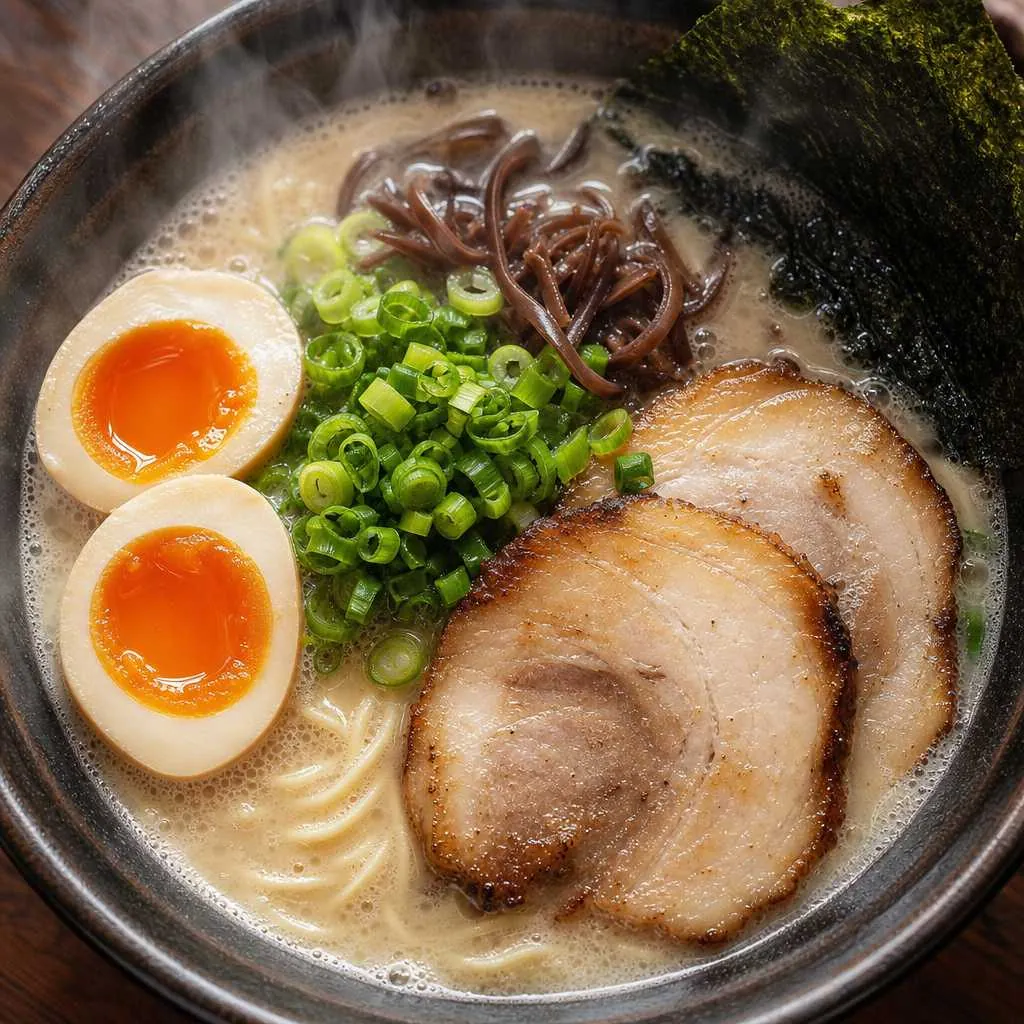
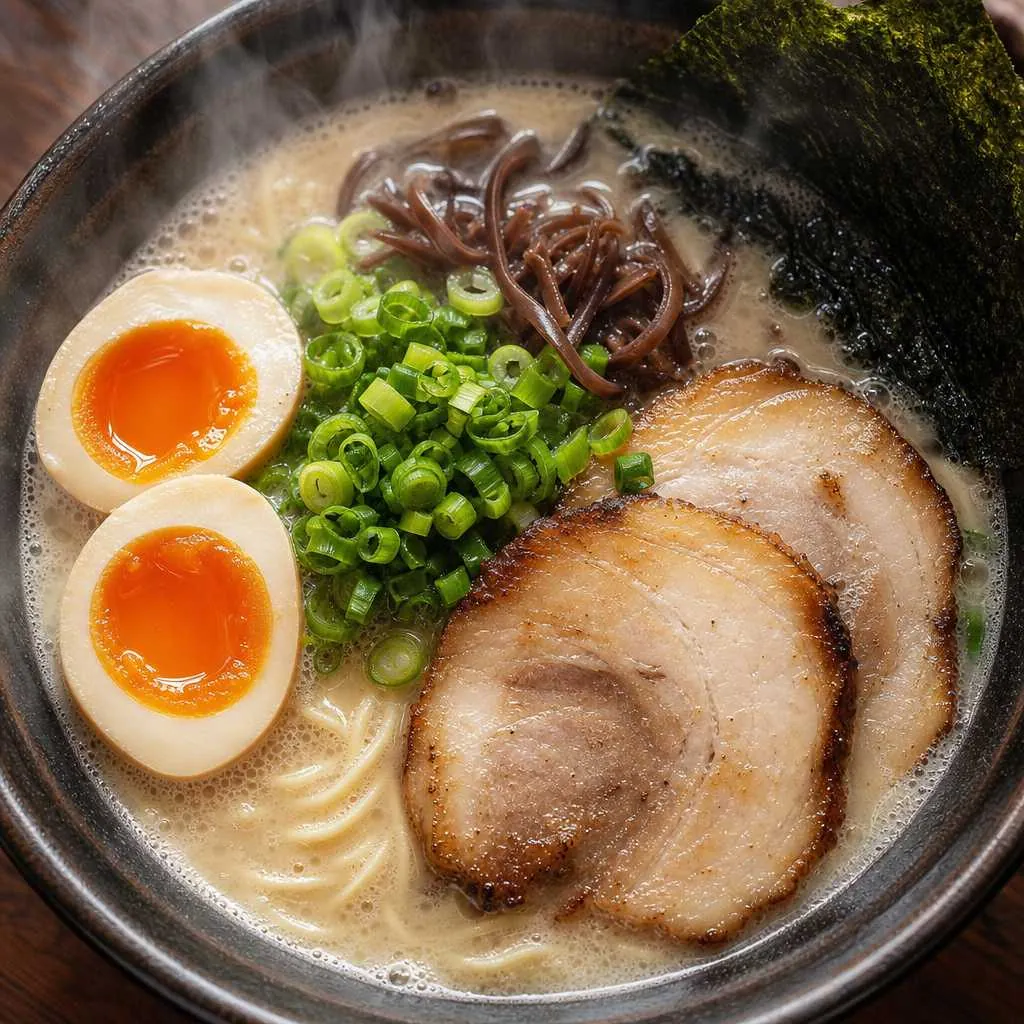
The single most reliable way to identify authentic Japanese ramen is to look at and taste the broth. In practice, a tonkotsu broth that has been simmered correctly for 12 to 18 hours will be opaque, almost milky white, and will coat the spoon with a thin layer of collagen. A shoyu broth will be a deep amber with a clean, savory finish that is never muddy or one-dimensional.
Instant noodle broth is made by dissolving a powder or liquid concentrate in hot water. The result is thin, aggressively salty, and flat on the palate after the second sip. There is no fat emulsification, no collagen body, and no aromatic depth because none of those things were ever built in.
What real broth production actually involves
At Zen Ramen and Sushi, the broth process begins well before any customer walks in. Bones are blanched, rinsed, and then slow-simmered with aromatics. The process is not negotiable, it cannot be rushed, and the result is a liquid that carries weight and complexity in a way that a seasoning packet physically cannot replicate.
A common mistake diners make is assuming a rich color means rich flavor. Instant broths can be colored dark with soy-flavored powder. The real test is mouthfeel. If the broth feels thin and watery despite its color, you are not eating authentic ramen.
Pro tip: Dip a clean spoon into the broth and let it cool for five seconds. Authentic tonkotsu or miso broth will leave a visible, slightly viscous coating on the metal. Instant broth runs off clean like water.
Sign 2: The Noodles Are Made Fresh or Craft-Dried
Real ramen noodles are made from wheat flour, water, and kansui, an alkaline mineral water that gives them their characteristic yellow tint and firm, springy bite. This texture is called koshi in Japanese, and it is the defining quality that separates a proper ramen noodle from everything else on the market.
Instant noodles are pre-cooked through deep frying or air drying, then compressed into a brick shape for packaging. When you add hot water, they rehydrate into something soft and uniform with no textural variation. They absorb the broth liquid but they do not interact with it the way a properly made noodle does.
How noodle thickness and shape match the broth
This is where serious ramen gets interesting. In authentic Japanese ramen culture, noodle selection is not random. Thin, straight noodles are paired with lighter shio or shoyu broths because they allow the delicate flavors to come through. Thick, wavy noodles are matched with heavy miso or tonkotsu broths because their surface area holds the fat-rich liquid better.
Instant noodle manufacturers use one noodle format for one artificial broth flavor. The pairing is never considered because the product was never designed around culinary logic. It was designed around shelf life and manufacturing efficiency.
“Ramen is not fast food that happens to be popular. It is a craft discipline with regional traditions that span centuries. The noodle, the broth, and the toppings form a system, not an assembly.” – Ivan Orkin, ramen chef and author of “Ivan Ramen”
Sign 3: The Toppings Are Intentional, Not Decorative
Every topping in an authentic ramen bowl serves a specific function. Chashu pork adds fat and umami. Nori adds a mineral, oceanic note and softens as it absorbs broth. Bamboo shoots (menma) add a fermented crunch that contrasts the soft noodle texture. The ajitsuke tamago, that soft-boiled egg marinated in soy and mirin, adds richness and sweetness in alternating bites.
None of these can be freeze-dried and rehydrated without losing their essential quality. The chashu loses its melt-away fat. The egg loses its jammy center. The menma loses its layered fermented flavor. What instant noodle packets offer instead are corn bits, carrot flakes, and small cubes of something labeled as meat.
The ajitsuke tamago is a quality benchmark
If you want one quick test for real ramen vs. instant, look at the egg. A properly made ajitsuke tamago requires peeling a soft-boiled egg with a six-to-seven minute cook time, then soaking it in a tare-based marinade for a minimum of four hours, often overnight. The result is a white that is bronze on the outside and fully set, with a yolk that is still flowing at the center.
This egg cannot be rushed, packaged, or approximated. When you see it sitting in your bowl at Zen Ramen and Sushi, you are looking at the direct result of someone managing timing and temperature with precision. That is what a topping should be.
Pro tip: Cut the soft-boiled egg in half before eating it. If the yolk is fully hard and pale yellow, the kitchen either overcooked it or used a pre-boiled product. A properly prepared ajitsuke tamago yolk should be jammy, darker orange, and slightly runny at the center.
Sign 4: The Aroma Hits You Before the Bowl Does
Authentic ramen has a layered, fat-forward aroma that is immediately recognizable as animal-based, savory, and warm without being sharp or artificial. Tonkotsu smells of rendered pork fat and toasted garlic. Miso ramen carries fermented soybean paste forward with corn sweetness underneath. Shoyu bowls have a clean, soy-forward brightness. These are not manufactured smells. They are the byproduct of actual cooking.
Instant noodles smell primarily of sodium, artificial flavoring compounds, and palm oil, which is the fat used in the frying process that creates the noodle brick. Some people find that smell comforting because of familiarity, but it has no relationship to the aroma profile of a real ramen kitchen.
Mayu and aromatic oils add the final layer
Many authentic ramen preparations finish the bowl with a small amount of aromatic oil. Mayu, which is burnt garlic oil, is added as a finishing element to tonkotsu-style bowls. Sesame oil is drizzled over certain miso preparations. Chili oil may be added for heat. These finishing elements add a top note of aroma that reaches you while the bowl is still being carried to the table.
In practice, the moment a proper bowl passes by your table on its way to another diner, you will smell it. That involuntary response is the most honest signal you will ever get that you are somewhere that takes quality ramen seriously.
Sign 5: The Bowl Has Layers of Flavor, Not Just Salt
This is the most subjective of the five signs, but also the most definitive once you have experienced it. A well-constructed authentic ramen bowl changes as you eat it. The first sip of broth is clean and immediate. By the midpoint of the bowl, the melting chashu fat has emulsified into the liquid, making it richer. Near the end, the noodles have released some of their starch, and the broth becomes slightly thicker and more intense.
Instant noodles deliver the same sodium-forward flavor from the first forkful to the last. There is no evolution because there is no complexity built in. The data consistently shows that salt is the dominant flavor compound in instant noodle products, with sodium levels in some leading brands reaching 1,800 milligrams per packet, which is 75 to 80 percent of the recommended daily intake in a single serving.
Umami is not the same as salt
A common mistake is treating saltiness and umami as the same sensation. They are not. Umami is a savory depth produced by glutamates occurring naturally in ingredients like pork bones, kombu seaweed, dried shiitake, and fermented miso. Salt amplifies flavor but does not create it. Authentic ramen uses salt strategically through the tare, but the underlying depth comes from umami-rich stock, not sodium volume.
Instant noodles use MSG and hydrolyzed proteins to simulate umami. These compounds work on the same taste receptors but they cannot replicate the complexity of hours-simmered stock. You can taste the difference clearly when both are fresh and hot. The instant version peaks immediately and fades. The authentic bowl reveals itself slowly.
Real Ramen vs. Instant: A Direct Comparison
| Element | Authentic Japanese Ramen | Instant Noodles |
|---|---|---|
| Broth | 12 to 18 hours simmered from bones and aromatics, collagen-rich and opaque | Powder or liquid concentrate dissolved in hot water, thin and salty |
| Noodles | Fresh or craft-dried, kansui-based, firm bite with koshi texture | Pre-fried or air-dried noodle brick, uniform soft texture after rehydration |
| Toppings | Slow-braised chashu, marinated soft-boiled egg, fresh nori, fermented menma | Freeze-dried corn, dehydrated carrot flakes, processed meat cubes |
| Seasoning | Handcrafted tare applied separately to create shoyu, shio, or miso variations | Single-flavor seasoning packet with MSG, hydrolyzed protein, and salt |
| Flavor arc | Evolves and deepens throughout the bowl as fat and starch interact | Flat from start to finish, no evolution, sodium-dominant from first to last bite |
| Aroma | Animal fat, roasted aromatics, fermented depth, finishing oil layers | Palm oil, artificial flavoring compounds, sharp sodium smell |
Frequently Asked Questions
What makes ramen broth authentic vs. artificial?
Authentic ramen broth is produced by simmering animal bones, aromatics, and sometimes dried seafood for 12 to 18 hours depending on the style. This process extracts collagen, fat, and glutamates that create body and depth. Artificial broth is a seasoning powder or liquid concentrate dissolved in water, which delivers sodium and flavoring compounds but no structural richness or umami complexity from actual cooking.
Can high-quality instant ramen ever compare to restaurant ramen?
Premium instant ramen brands have improved significantly, and some use air-drying instead of frying for better noodle texture. However, no packaged product has solved the broth problem. You cannot produce collagen-rich, fat-emulsified stock in a powder or paste that reconstitutes in two minutes. The noodle gap is closeable. The broth gap is not, at least not at mass production scale with shelf-stable packaging.
How long does it take to make authentic ramen broth?
Tonkotsu broth requires a minimum of 12 hours of active simmering to reach its characteristic milky opacity, with most serious kitchens running the process for 15 to 18 hours. Chicken paitan broth follows a similar timeline. Shio and clear shoyu broths made from lighter stocks can be ready in 6 to 8 hours, but the work still begins the previous day. No authentic style is a same-day, start-to-finish process when done properly.
What are the four main ramen styles and how do I identify them?
The four main styles are shoyu, which is soy-based and amber-colored with a clean savory finish; shio, which is salt-based and the clearest of all styles with a light, delicate flavor; miso, which is the most robust and cloudy with fermented depth and often sweetness; and tonkotsu, which is pork bone-based, white and opaque, with a fatty, rich mouthfeel. Each has a specific broth character and tare composition that distinguishes it from the others. Instant ramen uses approximations of these labels without replicating the actual culinary logic behind any of them.
Is MSG in ramen a sign of low quality?
No. MSG occurs naturally in many authentic ramen ingredients including kombu, dried shiitake mushrooms, and fermented miso. Many traditional ramen kitchens also add small amounts of MSG intentionally to amplify umami. The difference between authentic ramen and instant noodles is not the presence or absence of MSG but rather the depth of the base that surrounds it. Authentic ramen uses MSG on top of a foundation of real stock. Instant noodles use MSG as the foundation itself, with no stock beneath it.
How can I tell if chashu pork is made in-house or pre-packaged?
In-house chashu pork belly will have visible fat layers that are soft enough to cut with a chopstick. The exterior will have a slightly lacquered, soy-glazed appearance with caramelized edges. Pressed or pre-packaged chashu is uniform in shape, often perfectly round or rectangular, with a rubbery texture and no visible marbling variation. At a quality ramen restaurant, the slices will differ slightly from bowl to bowl because they are cut from an actual braised roll, not a manufactured product.
Have you had an experience where authentic ramen completely changed how you thought about Japanese food? Share what surprised you most in the comments.
References
- Statista: global instant noodle consumption data and food industry market statistics
- Forbes: reporting on the growth of authentic Japanese cuisine and restaurant dining trends in the United States
- U.S. Food and Drug Administration: sodium intake guidelines and daily recommended values for packaged food products
- Harvard T.H. Chan School of Public Health: research on sodium consumption, processed food health impacts, and dietary umami compounds
- ScienceDirect: peer-reviewed food science research on collagen extraction from bone broth and the chemistry of umami flavor development