Most people have tried instant noodles at some point. But calling them ramen is like calling a frozen burger a steakhouse meal. Authentic ramen is a completely different category of food, built on techniques, time, and ingredients that a packet of dehydrated powder cannot replicate. If a friend brought you to Zen Ramen and Sushi for the first time, you may have noticed the difference immediately, but struggled to articulate exactly why the bowl tasted so much more alive. This article breaks that down precisely, so you know what you are eating and why it matters.
Table of Contents
- Quick Takeaways
- The Broth Problem: Hours vs Seconds
- Noodle Construction: Wheat, Water, and Alkalinity
- Tare: The Secret Seasoning Layer Instant Noodles Skip Entirely
- Toppings and Composition: Why Each Element Has a Job
- Side-by-Side Comparison: Authentic Ramen, Restaurant Ramen, and Instant Noodles
- What Authentic Ramen Actually Costs to Make and Why
- Regional Ramen Styles You Will Find at a Real Japanese Restaurant
- Frequently Asked Questions
- References
Quick Takeaways
| Key Insight | Explanation |
|---|---|
| Broth requires many hours of simmering | Authentic tonkotsu broth simmers for 12 to 18 hours minimum to extract collagen and fat from pork bones, producing a creamy, rich liquid no powder can mimic. |
| Real ramen noodles are alkaline | Fresh ramen noodles use kansui, an alkaline mineral water, which gives them their yellow color, springy texture, and resistance to becoming soggy in hot broth. |
| Tare is a separate seasoning concentrate | A good bowl of authentic ramen builds flavor in layers. Tare, a concentrated seasoning made from soy, miso, or salt, is added separately from the broth for depth and precision. |
| Toppings serve functional flavor roles | Chashu pork, marinated soft-boiled eggs, nori, and menma are not garnishes. Each one adds fat, acid, umami, or texture to balance the bowl. |
| Sodium in instant noodles is far higher per calorie | A single packet of instant noodles typically contains 1,500 to 1,800 mg of sodium from chemical flavor enhancers. Restaurant ramen earns its sodium through natural glutamate-rich ingredients. |
| Japanese ramen vs instant noodles differs at the ingredient level | Instant noodles use palm oil, artificial flavoring, and TBHQ as a preservative. Real ramen uses bones, aromatics, fresh produce, and proteins with no shelf-stable shortcuts. |
| The eating experience is intentional | At a real ramen restaurant, bowl temperature, noodle firmness, and component ratios are controlled so the last bite tastes as good as the first. Instant noodles have no such design intention. |
The Broth Problem: Hours vs Seconds
The broth is where the gap between real ramen and instant noodles is most obvious, and most dramatic. Instant noodle broth is powder dissolved in boiling water. That powder is a blend of salt, MSG, artificial flavoring, and dehydrated aromatics. It takes under 30 seconds to prepare. Authentic ramen broth takes between 6 and 18 hours depending on the style, and that time is not optional.
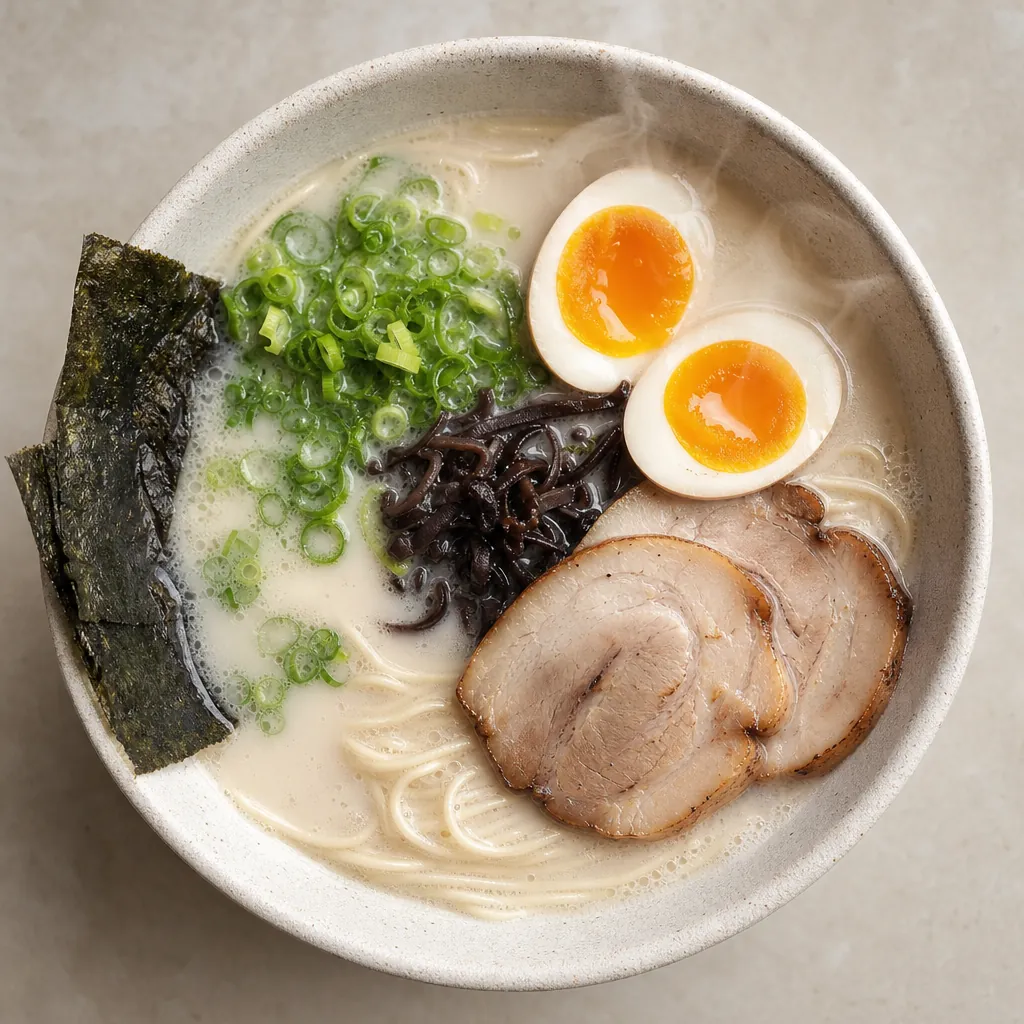
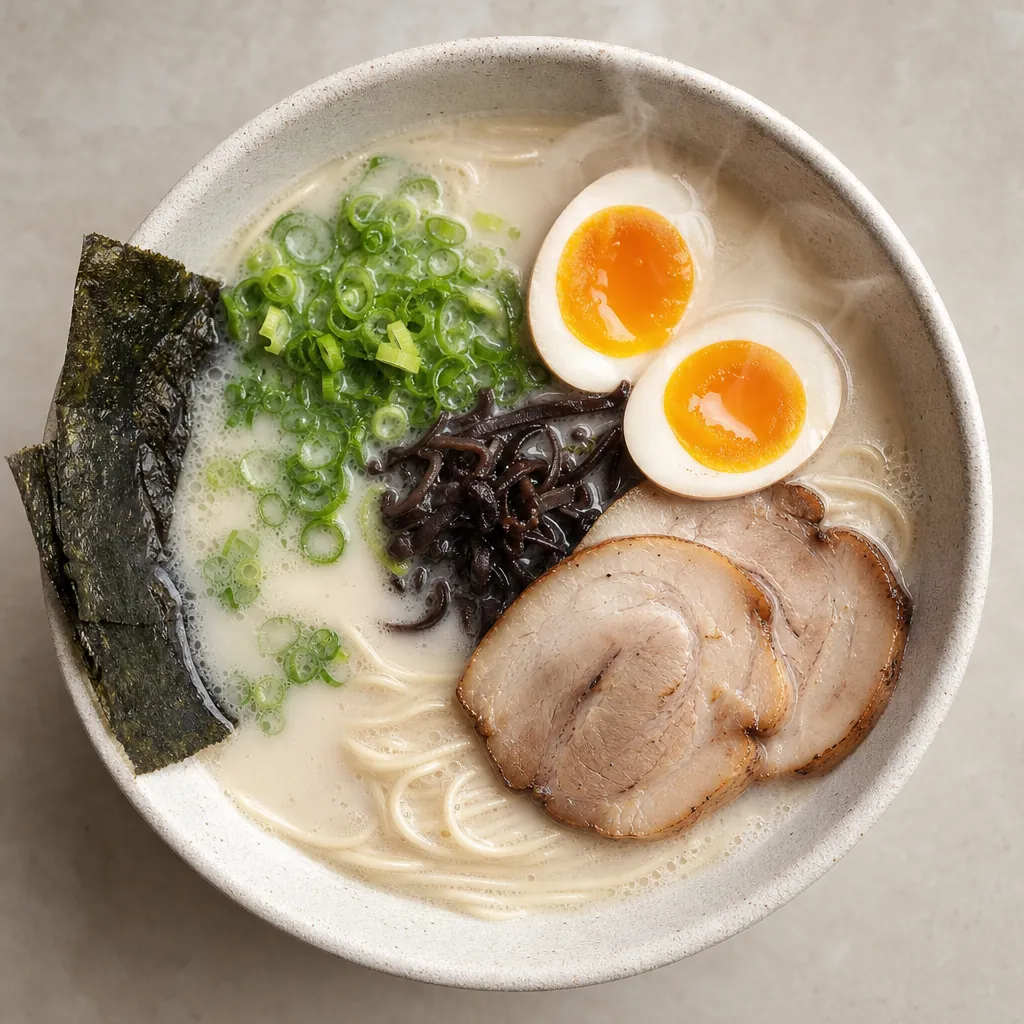
Tonkotsu broth, one of the most popular styles in Japanese cuisine, is made by boiling pork femur and knuckle bones at a rolling boil for 12 hours or more. The aggressive heat breaks down collagen into gelatin, emulsifies fat into the liquid, and produces a broth that is naturally thick, opaque white, and deeply savory. That texture is not added with a thickener. It is the result of extracted bone collagen.
Shoyu broth takes a different path. It uses a clear chicken or dashi base and is finished with a soy-based tare. The result is lighter but complex, with layered umami from kombu seaweed, dried bonito flakes, and fermented soy. Neither of these broths can be replicated by a flavor packet.
“Ramen is not fast food that happened to use noodles. It is a craft food that borrows the format of a noodle soup and uses it to deliver one of the most technically demanding dishes in Japanese culinary tradition.” – Ivan Orkin, American ramen chef and author of Ivan Ramen
In practice, the difference in broth quality is something you detect immediately in the aftertaste. Instant noodle broth leaves a flat, slightly chemical finish because the glutamate is synthetic. Authentic broth lingers because its umami comes from naturally occurring glutamate in dried fish, fermented pastes, and slow-cooked proteins.
Pro tip: When you sit down at Zen Ramen and Sushi, taste the broth before adding anything to it. You will notice it has a full, rounded flavor on its own. That is the result of proper stock building, and it tells you everything about the kitchen’s approach.
Noodle Construction: Wheat, Water, and Alkalinity
Instant noodles and authentic ramen noodles are both made from wheat flour, but the similarity stops there. Real ramen noodles are made with kansui, a solution of potassium carbonate and sodium carbonate. This alkaline ingredient changes the chemistry of the dough at a molecular level.
What Kansui Actually Does
Kansui raises the pH of the noodle dough above 9. This activates the flavonoids in the wheat flour and produces a pale yellow color without any added dye. More importantly, it creates a firmer, chewier noodle that holds its structure in hot broth. A kansui noodle absorbs broth slowly, which means you have a window of several minutes to eat the bowl at its intended texture. Instant noodles, which are pre-cooked by steam and then fried in palm oil to dehydrate them, have no such resilience. They turn soft and mushy within 90 seconds of boiling water contact.
Fresh vs Dried vs Flash-Fried
Authentic ramen noodles at a serious restaurant are either made fresh daily or sourced from a specialty noodle maker. They are never pre-fried. The frying process in instant noodle production adds roughly 15 to 20 grams of fat per serving and creates the characteristic greasy coating that you taste on instant noodles even after cooking. A fresh ramen noodle has no residual oil. Its flavor comes from the wheat and the kansui, which is why it pairs cleanly with broth instead of sitting on top of it.
Noodle thickness and waviness are also engineered decisions in authentic ramen. Thin straight noodles are typical in Hakata-style tonkotsu because they cook fast and pull the thick broth into each strand. Wavy, thicker noodles are used in miso ramen to carry the heavier, paste-based broth. Instant noodles offer one texture: uniform, interchangeable, designed for shelf life rather than flavor pairing.
Tare: The Secret Seasoning Layer Instant Noodles Skip Entirely
This is the element that most people outside the ramen world have never heard of, and it is one of the clearest markers that separates professional ramen from anything you can make from a packet. Tare is a concentrated seasoning sauce that is added to each bowl individually, separate from the broth.
The three main tare types are shio (salt-based), shoyu (soy sauce-based), and miso (fermented soybean paste-based). Each one is a recipe in itself. A shoyu tare might contain multiple types of soy sauce, mirin, sake, and aromatics that have been simmered together and reduced. A miso tare often blends two or three different regional miso varieties to build complexity. These concentrates can take days to develop.
The reason tare matters functionally is that it allows the chef to control the seasoning of each bowl independently of the broth. The base stock can be kept neutral and versatile, and the tare is adjusted by volume to hit the exact salt level and flavor profile for that style. Instant noodles collapse everything into a single packet that cannot be adjusted without degrading the entire flavor system.
Pro tip: If you order different bowls at Zen Ramen and Sushi across multiple visits, pay attention to how a tonkotsu and a shoyu bowl taste structurally different even if both are rich and satisfying. That difference is largely driven by the tare, not just the broth base.
Toppings and Composition: Why Each Element Has a Job
Instant noodles come with a small packet of dehydrated vegetables and sometimes a powder or liquid flavoring labeled as meat. Authentic ramen toppings are not decorative. Each component has a specific purpose in the bowl’s overall flavor architecture.
Chashu Pork
Chashu is pork belly or shoulder that has been braised low and slow in a mixture of soy sauce, mirin, sake, and sugar. It adds fat, protein, and a caramelized sweetness that anchors the savory broth. The texture is deliberately soft so it dissolves slightly into the hot broth rather than sitting on top like a garnish.
Marinated Soft-Boiled Egg (Ajitsuke Tamago)
The ramen egg is soft-boiled to exactly the right point where the white is fully set and the yolk is jammy and custardy, then marinated in a soy and mirin solution for at least four hours. It adds richness and a sweet-salty counterpoint to the broth. This is not a hard-boiled egg thrown in for protein. It is a calculated flavor element.
Aromatics, Oils, and Textural Elements
Nori adds a mineral, oceanic note. Menma (fermented bamboo shoots) adds crunch and a faint sourness. A drizzle of fragrant oil, often sesame, chicken fat, or a chili compound, floats on the surface and delivers an aromatic hit with every spoonful. Scallions add brightness and cut through fat. None of these elements exist in an instant noodle packet in any meaningful form.
Side-by-Side Comparison: Authentic Ramen, Restaurant Ramen, and Instant Noodles
To make the differences concrete, here is a direct comparison across three ramen formats most people encounter:
| Factor | Authentic Restaurant Ramen | Instant Noodles |
|---|---|---|
| Broth preparation time | 6 to 18 hours of active simmering | Under 60 seconds with boiling water |
| Noodle type | Fresh or specialty dried kansui noodles | Pre-fried, palm-oil-coated wheat noodles |
| Seasoning system | Separate tare added per bowl plus seasoned broth | Single flavor packet of salt, MSG, and artificial flavoring |
| Toppings | Chashu pork, marinated egg, nori, menma, aromatic oils | Dehydrated vegetable flakes, occasionally a foil packet of oil |
| Sodium source | Naturally occurring glutamate from bones, kombu, fermented pastes | Synthetic MSG, salt, and TBHQ preservative |
| Skill required | Trained kitchen staff, precise timing, recipe development | Boiling water and three minutes |
| Price per serving | $14 to $22 at a quality restaurant | $0.25 to $1.50 per packet |
What Authentic Ramen Actually Costs to Make and Why
A common question from first-time restaurant ramen customers is why a bowl costs $16 or more when instant noodles cost under a dollar. The answer is ingredient cost, labor, and time, and none of those can be compressed without destroying the product.
Pork bones for a single batch of tonkotsu broth cost real money and must be sourced fresh. A full batch might yield enough broth for 30 to 50 bowls after an 18-hour cook. The chashu requires pork belly, soy sauce, mirin, sake, and several hours of braising. The ramen eggs require individual timing and at least four hours of marination. The tare requires its own ingredients and preparation. A skilled ramen cook is managing all of these components simultaneously, often days in advance.
According to data published by the National Restaurant Association, food costs at Japanese restaurants typically run between 28 and 35 percent of menu price. For a $16 bowl of ramen, that means roughly $4.50 to $5.60 in raw ingredient cost alone, which is still massively more than the 20 to 30 cents it costs to produce an instant noodle packet at scale. The gap in price reflects the gap in what you are actually consuming.
Regional Ramen Styles You Will Find at a Real Japanese Restaurant
One of the strongest arguments against instant noodles claiming the ramen identity is that authentic ramen is a regionally diverse food with distinct local identities across Japan. Instant noodles are a single standardized product with branded flavor variations. They are not the same category.
Tonkotsu (Fukuoka)
Creamy white pork bone broth, thin straight noodles, light tare. This is the style most associated with southern Japan and is the richest, most collagen-heavy bowl available. The broth should coat a spoon like a light cream sauce.
Shoyu (Tokyo)
Shoyu ramen is the original Tokyo style: a clear, brown, soy-seasoned chicken or dashi broth with wavy noodles. It is lighter than tonkotsu but deeply savory, with a cleaner finish. It is a benchmark for technical broth making because there is nowhere to hide imperfections in a clear broth.
Miso (Sapporo)
Miso ramen originates from Hokkaido and uses fermented soybean paste as the primary tare. It is rich, hearty, and often served with corn, butter, and bean sprouts. The miso must be carefully balanced so it does not overwhelm the broth. A single style at a place like Zen Ramen and Sushi represents decades of regional refinement that no instant noodle manufacturer has ever genuinely replicated.
Shio (Hakodate)
Shio is the most delicate style. A salt-based tare preserves the natural flavor of the broth without the color or weight of soy or miso. It demands the highest quality stock because there is nothing to mask or compensate for a weak base. It is the style most likely to reveal a kitchen’s real capability.
Frequently Asked Questions
Is the ramen at a Japanese restaurant actually different from the ramen in a cup or packet?
Yes, completely. The only thing they share is a noodle in broth. Restaurant ramen uses hours-long bone broth, fresh alkaline noodles, house-made tare, and composed toppings. Cup and packet noodles use pre-fried noodles, dehydrated vegetables, and artificial flavor powder. They are different products with the same name.
Why do authentic ramen noodles have a yellow color without food dye?
The yellow color comes from kansui, the alkaline mineral water used to make fresh ramen noodles. Kansui activates natural flavonoids in wheat flour and shifts them toward a yellow hue. It is a chemical reaction, not an additive. Instant noodles sometimes add coloring artificially to mimic this effect.
Is authentic ramen healthier than instant noodles?
In most meaningful ways, yes. Authentic ramen broth contains natural collagen from bones, real protein from chashu and egg, and vegetables that contribute actual nutrients. Instant noodles are high in sodium from synthetic sources, contain preservatives like TBHQ, and offer minimal protein or micronutrients. A bowl of real ramen at a quality restaurant is a complete, nutritionally substantive meal.
What is the difference between Japanese ramen vs instant noodles in terms of umami?
Authentic ramen builds umami from natural sources: glutamate in kombu seaweed, inosinate in dried bonito and pork bones, and guanylate in dried mushrooms. These compounds interact synergistically to create deep, complex savory flavor. Instant noodles use synthetic MSG and flavor enhancers that produce a flatter, one-dimensional hit of saltiness and artificial savory taste.
Can I order ramen at Zen Ramen and Sushi if I have never tried authentic ramen before?
Absolutely, and you should. If you are new to real ramen, a tonkotsu or shoyu bowl is a strong starting point because both styles are approachable and showcase the core elements: rich broth, springy noodles, and composed toppings. Visit Zen Ramen and Sushi and ask the staff to explain what sets each bowl apart. The difference from instant noodles will be immediately clear in the first spoonful.
How long does it take to make authentic ramen from scratch?
A serious ramen kitchen starts broth preparation 12 to 24 hours before service. Tare is often made days in advance to allow flavors to develop. Chashu is braised and then chilled overnight so it can be sliced cleanly. Eggs are marinated for at least four hours. By the time a bowl reaches your table, the kitchen has invested one to two days of active preparation.
Why does the broth at a ramen restaurant taste so much richer than anything from a packet?
Because it is fundamentally made of different things. Long-cooked pork or chicken bones release collagen that becomes gelatin in the broth, giving it body and a silky mouthfeel. Kombu and dried fish add naturally occurring glutamate. Aromatics like ginger, garlic, and scallion are cooked into the stock over hours. A flavor packet is salt and synthetic compounds. The richness you taste in real broth is the result of chemistry that only time and quality ingredients can produce.
Have you tried authentic ramen for the first time recently? Share what surprised you most about the difference from instant noodles, and tell us which style you ordered.
References
- Global instant noodle consumption and market statistics from Statista
- Forbes food and restaurant industry reporting on Japanese cuisine and dining trends
- National Restaurant Association data on restaurant food costs and menu pricing
- USDA National Agricultural Library nutritional data on ramen ingredients and sodium content
- JSTOR academic research on Japanese food culture and the history of ramen as a regional cuisine