Most people have eaten some version of ramen. Very few have eaten the real thing. There is a profound difference between a packet of instant noodles and a bowl of authentic Japanese ramen, and that difference is not just about ingredients. It is about philosophy, technique, and a centuries-long tradition of treating a humble noodle soup as a serious culinary discipline. If a friend brought you here, it is probably because they want you to understand what you are actually ordering the next time you sit down at a proper ramen counter, like the one at Zen Ramen and Sushi. This guide breaks down exactly what separates genuine ramen from every other noodle soup on the planet.
Table of Contents
- Quick Takeaways
- The Broth Is the Whole Point
- The Four Classic Ramen Styles Explained
- Noodles Are Not Interchangeable
- Tare: The Secret Weapon Most Diners Never Notice
- Toppings That Earn Their Place
- How Authentic Ramen Compares to Other Noodle Soups
- Frequently Asked Questions
- References
Quick Takeaways
| Key Insight | Explanation |
|---|---|
| Broth takes priority above everything else | Authentic ramen broth simmers for many hours, sometimes over 12, to extract collagen, fat, and deep umami from bones and aromatics. No shortcut produces the same result. |
| There are four distinct regional broth bases | Shoyu, miso, shio, and tonkotsu are not variations of the same dish. They each have a distinct flavor profile, texture, and regional origin in Japan. |
| Noodles are formulated to match the broth | Thicker, wavier noodles are paired with heavier broths like tonkotsu. Thin, straight noodles suit lighter shoyu or shio broths. This pairing is intentional, not decorative. |
| Tare is what actually seasons a bowl | Tare is a concentrated seasoning added to the broth at the last moment. It is the chef’s signature and the reason two bowls using the same base broth can taste entirely different. |
| Every topping serves a functional purpose | Chashu pork adds richness. A soft-boiled marinated egg adds fat and acid. Nori controls the broth temperature. These are not garnishes – they are structural components. |
| Ramen is distinctly Japanese, despite Chinese origins | While ramen evolved from Chinese wheat noodle traditions, Japan transformed it into a unique culinary identity over the 20th century with regional styles and dedicated craft. |
| Instant ramen shares almost nothing with the real thing | Dehydrated noodles and flavored powder do not replicate the layered fat, protein, and mineral depth of a proper bowl. Calling both “ramen” is one of the biggest misnomers in food culture. |
The Broth Is the Whole Point
Ask any ramen chef what separates their bowl from everyone else’s, and the answer will always come back to the broth. Not the noodles, not the toppings. The broth. In authentic ramen noodle soup, the broth is a long-cooked extraction of collagen, marrow, fat, and aromatic compounds that cannot be rushed or faked. This is the single biggest reason a proper bowl tastes nothing like the noodle soups you encounter in other cuisines.
A common mistake among first-time ramen cooks is treating the broth like a standard stock. Standard stocks are clarified, gentle, and built to be a background flavor. Ramen broth is the foreground. Tonkotsu broth, for example, is boiled at a hard, rolling boil for hours specifically to emulsify the fat and collagen into a rich, opaque, creamy liquid. That technique is the opposite of classical French stock-making, where clarity is the goal.
In practice, the difference is immediate and obvious. Take one sip of a properly made tonkotsu broth and you feel the weight of it coating your mouth. That texture comes from dissolved collagen. No other noodle soup tradition produces that specific mouthfeel through the same method. Vietnamese pho, for comparison, aims for a clear, delicate beef broth with aromatic spice. Korean gomtang is rich but without the emulsified fat characteristic of tonkotsu. Each is excellent in its own right, but none of them are ramen.
The broth in a proper bowl of ramen is not a backdrop for the noodles. It is the entire reason the bowl exists. Everything else is built around it.
Pro tip: When you are evaluating a ramen restaurant for the first time, order the house broth with minimal toppings. If the broth cannot stand on its own, no amount of chashu or soft-boiled egg will save it. At Zen Ramen and Sushi, the broth is always the starting point, not an afterthought.
The Four Classic Ramen Styles Explained
One of the most important things to understand about Japanese cuisine is that ramen is not a single dish. It is a category of dish, and within that category are four foundational styles that differ substantially from each other. Grouping them all under one label is a bit like calling every Italian pasta dish “pasta.” Technically correct, practically useless.
Shoyu Ramen
Shoyu ramen originates in Tokyo and is built on a clear, soy-sauce-seasoned broth that balances savory depth with lightness. According to culinary sources including the Institute of Culinary Education, shoyu ramen’s broth achieves a distinct umami richness while remaining transparent, which is a technical feat. Tokyo-style ramen often incorporates dashi, a broth made from dried smoked bonito flakes and sea kelp, and features slightly curly, moderately wide noodles, as noted by Serious Eats. It is the style most associated with the Japanese capital.
Miso Ramen
Miso ramen comes primarily from Hokkaido, the northernmost main island of Japan, where winters demand a heartier bowl. Fermented soybean paste is blended into the broth, adding a savory, slightly earthy complexity that no other seasoning replicates. This is the boldest of the four main styles and handles rich toppings like corn and butter particularly well.
Shio Ramen
Shio means salt, and shio ramen is the oldest and most delicate of the four styles. The broth is typically pale, sometimes golden, and relies on the purity of its base ingredients rather than heavy seasoning. It is the style that most clearly exposes the quality of the cook’s stock, because there is nowhere to hide. A great shio broth is one of the most refined things in Japanese food.
Tonkotsu Ramen
Tonkotsu comes from Kyushu in southern Japan, particularly the city of Fukuoka. It is made from pork leg or neck bones simmered at a full boil for many hours until the broth turns opaque and rich. The result is creamy, intensely savory, and deeply comforting. It is also the most globally recognizable ramen style, and the one most likely to convert a skeptic into a lifelong fan.
Noodles Are Not Interchangeable
The wheat noodles in authentic ramen are not generic pasta dropped into soup. They are formulated specifically for ramen, with a particular alkalinity achieved through the use of kansui, a water solution containing sodium carbonate and potassium carbonate. That alkalinity is what gives ramen noodles their characteristic springy, slightly firm texture and their faint yellowish color. Without kansui, you have a wheat noodle. With it, you have a ramen noodle. They behave differently, taste different, and interact with broth differently.
The shape and thickness of the noodle is matched deliberately to the broth style. Thinner, straighter noodles work in lighter broths like shio or shoyu because they do not overwhelm the delicate flavors. Thicker, wavier noodles are paired with tonkotsu because they hold up to the heavy, emulsified broth and carry it in their ridges. A chef who treats noodle selection as an afterthought is not making authentic ramen.
Pro tip: If you are eating at a ramen restaurant and the noodles feel identical to spaghetti or generic Asian noodles, that is a warning sign. Proper ramen noodles have a distinct bounce and resistance that sets them apart the moment your fork or chopsticks touch them.
Tare: The Secret Weapon Most Diners Never Notice
Most diners who enjoy a bowl of ramen have no idea that the flavor they are tasting is largely determined by a small amount of concentrated seasoning added to the bowl just before the broth is poured in. That seasoning is called tare, and it is arguably the most chef-specific element in the entire bowl. Two ramen shops can use the same base broth and produce completely different tasting bowls simply because their tare recipes differ.
Tare is typically categorized in the same terms as the four main styles: a shoyu tare uses soy sauce as its base, a shio tare uses salt brine, and a miso tare incorporates fermented soybean paste. But within each category, the specific combination of ingredients, fermentation time, and concentration is entirely up to the chef. Some tare recipes are kept secret for decades. This is the equivalent of a barbecue restaurant’s proprietary dry rub, except it shapes the entire bowl rather than just the surface of a cut of meat.
In practice, this means that the creativity and identity of a ramen chef is expressed most clearly through their tare, not through their noodle selection or topping arrangement. When people say a particular ramen shop has a bowl that tastes like nothing else, the tare is usually why.
Toppings That Earn Their Place
The toppings on a proper bowl of ramen are not decorative. Every element has a functional role in the final eating experience. Understanding this changes how you approach the bowl entirely.
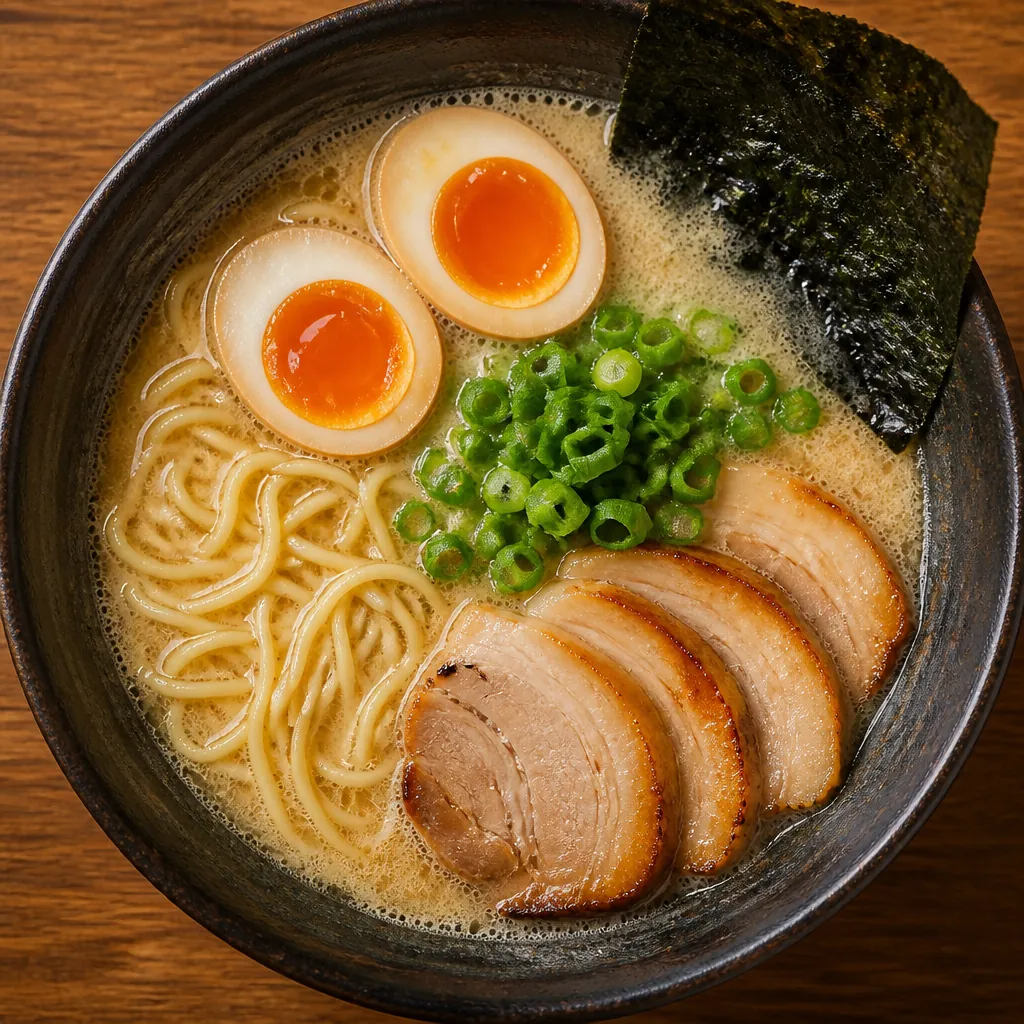
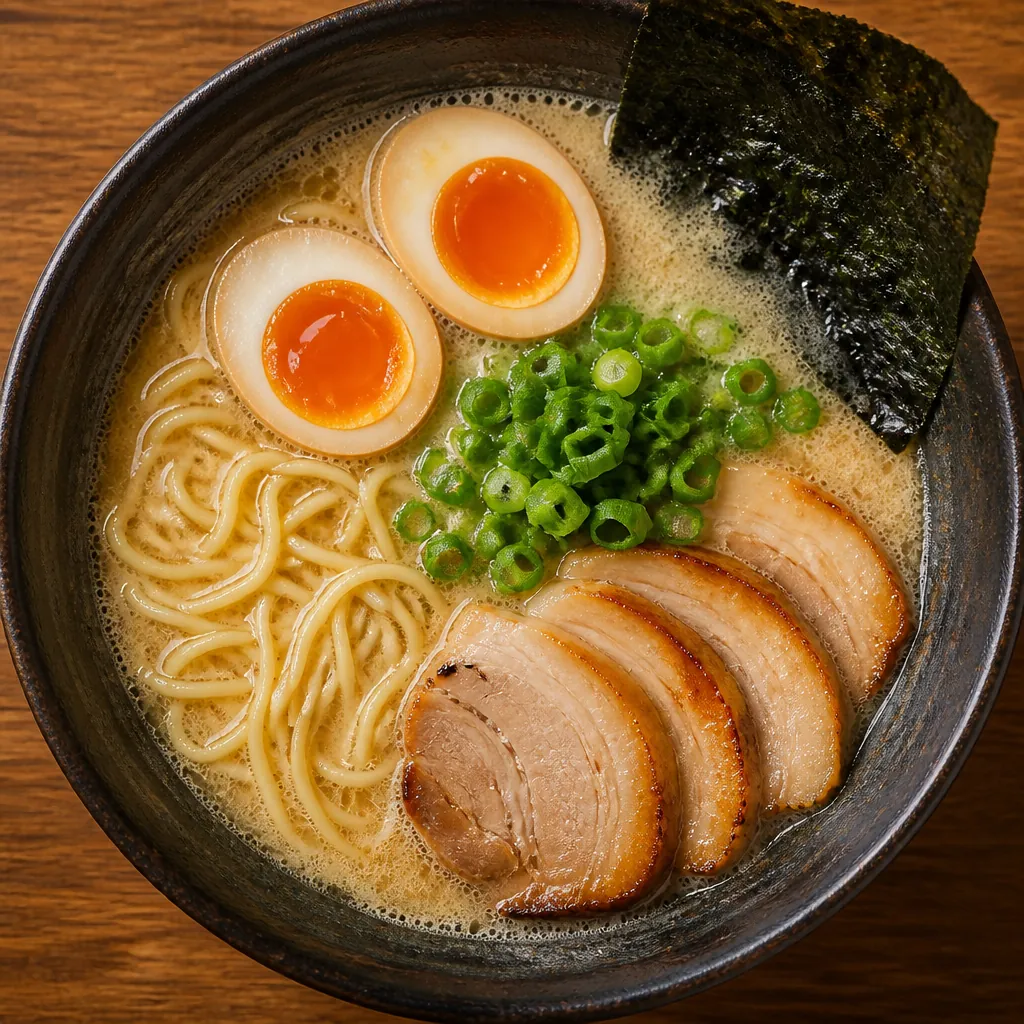
Chashu pork is pork belly that has been braised low and slow in a mixture of soy sauce, sake, mirin, and aromatics until it is tender and deeply flavored. It contributes fat and protein to the bowl, enriching each spoonful of broth as it breaks down. Thin slices placed on hot broth will gently render at the surface, adding another dimension of richness as you eat.
The soft-boiled marinated egg, called ajitsuke tamago, is a precise technical achievement. The yolk must be just set, not hard, not fully liquid, and it is soaked in a soy and mirin marinade that seasons the white and tints it a deep amber. It adds fat, umami, and a textural contrast to the noodles that no other topping replicates. A properly made ajitsuke tamago is a strong signal that a kitchen takes its craft seriously.
Nori, the sheets of dried seaweed placed at the edge of the bowl, serves a practical purpose. It slows heat loss from the bowl’s surface while also gradually softening in the broth and contributing a subtle oceanic minerality. Menma, the fermented bamboo shoots, add a crunchy, slightly fermented counterpoint. Each component works. Nothing is there for show.
How Authentic Ramen Compares to Other Noodle Soups
The global conversation around noodle soups often lumps ramen in with Vietnamese pho, Chinese noodle soups, and Korean noodle dishes as if they are all variations of the same thing. They are not. Each comes from a distinct culinary tradition with different techniques, flavor goals, and cultural meanings. The table below makes those distinctions concrete.
| Noodle Soup | Broth Character | Key Differentiator |
|---|---|---|
| Authentic Japanese Ramen | Ranges from opaque and emulsified (tonkotsu) to clear and umami-forward (shoyu/shio). Always deeply savory and layered. | Tare system: a separate concentrated seasoning is added per bowl. Kansui noodles formulated specifically for ramen. Broth is the centerpiece of the dish. |
| Vietnamese Pho | Clear beef or chicken broth, long-simmered with charred onion, ginger, and warming spices like star anise and cinnamon. Light in body, aromatic in character. | Spice-driven broth aromatics. Rice noodles (not wheat). Heavy reliance on fresh tableside herbs and condiments to personalize each bowl. |
| Chinese Lanzhou Beef Noodle Soup | Clear, beef-based broth seasoned simply. The “five clears” standard demands a transparent, clean-tasting soup. | Hand-pulled noodles stretched to order in multiple widths. Chili oil added for heat and color. Focus is as much on noodle craftsmanship as on the broth. |
The key distinction is structural. Ramen is built on the principle that every component, broth, tare, noodles, and toppings, is developed separately and assembled at the moment of serving. Other noodle soup traditions do not operate on the same modular system. Pho is closer to a single, unified broth served with accompaniments. Ramen is an engineered composition.
That architectural approach is why authentic Japanese ramen rewards repeat visits to a quality restaurant far more than most dishes. The more you understand each component, the more you taste in every bowl. At Zen Ramen and Sushi, that layered craft is exactly what drives the menu, and it is worth exploring across multiple visits to appreciate the full range.
Frequently Asked Questions
Is ramen originally from Japan?
Ramen has roots in Chinese wheat noodle traditions and was brought to Japan, where it was transformed into a distinctly Japanese culinary form over the course of the 20th century. As Wikipedia notes, the global popularity of ramen has sometimes led to the term being misused as a catch-all for any noodle soup, but authentic Japanese ramen is a specific and highly evolved discipline with its own regional styles, techniques, and culture. Japan made it its own in a way that is undeniable.
What is the difference between shoyu and miso ramen?
Shoyu ramen uses a soy sauce-based tare added to a typically clear chicken or pork broth, producing a savory, slightly lighter bowl associated with Tokyo. Miso ramen uses fermented soybean paste in its tare, producing a bolder, earthier, more substantial bowl associated with Hokkaido. The base broth can be similar between the two, but the tare is what defines the flavor identity of each style.
Why does ramen broth taste so much richer than other soups?
Two factors account for most of the difference. First, ramen broth is cooked for a long time at temperatures and intensities that extract collagen from bones, which dissolves into gelatin and gives the broth its characteristic body and mouthfeel. Second, the tare system concentrates flavor independently and adds it at service, meaning the seasoning in a bowl of ramen is far more layered than a soup seasoned at a single stage of cooking.
Can you order ramen if you do not eat pork?
Yes, and this is more common than many people expect. Shio ramen and some shoyu styles are built on chicken or seafood-based broths without pork bones. Some ramen restaurants also offer dedicated vegetarian or seafood-forward bowls. The key is to ask specifically about the broth base, since toppings like chashu pork can be omitted more easily than a pork-based broth can be swapped out. At Zen Ramen and Sushi, the staff can walk you through the broth bases for every bowl on the menu.
What makes a soft-boiled ramen egg different from a regular soft-boiled egg?
The difference is the marinade. An ajitsuke tamago is peeled after soft-boiling and then soaked in a mixture of soy sauce, mirin, and sometimes sake for several hours, often overnight. That marinade penetrates the egg white, seasoning it throughout and turning it a deep amber color. The yolk is typically just set, with a jammy, creamy center. A plain soft-boiled egg has none of that seasoning depth. The ramen egg is a finished, intentional component of the bowl rather than a cooking technique applied to an ingredient.
How is authentic ramen different from instant ramen?
The Institute of Culinary Education notes that traditional Japanese ramen broth presents a full spectrum of flavors that is vastly different from the vaguely flavored powder found in popular instant forms. Instant ramen is dehydrated, pre-fried, and seasoned with a powder designed for shelf stability, not flavor depth. Authentic ramen broth requires hours of cooking, specific bone types, and a tare developed by a chef. The two products share a name but almost nothing else. Treating instant ramen as a representation of authentic Japanese ramen is the same as treating a bouillon cube as a representation of a proper French consommé.
Have you tasted the difference between authentic ramen and a bowl that just goes through the motions? Share what stood out to you, or ask any question you have about what to order on your first visit to Zen Ramen and Sushi.
References
- A comprehensive breakdown of regional ramen varieties and their broth and noodle characteristics from Serious Eats
- An overview of the most common ramen types and what distinguishes each style, from the Institute of Culinary Education
- The history and global evolution of ramen, including its Chinese origins and transformation into a Japanese culinary tradition
- A detailed guide to ramen broth styles, noodle types, and classic toppings from Just One Cookbook
- A practical deep-dive into authentic ramen preparation including tonkotsu and shoyu broth methods and traditional toppings