
You finish a bowl of ramen and immediately want another. You eat a single piece of sushi and feel something click in your brain. There is a specific, almost compulsive satisfaction to eating Japanese food that most people struggle to describe, and the word for it is umami. It is not a marketing term or a vague culinary concept. Umami is the fifth basic taste, as real and measurable as sweet, salty, sour, or bitter. Understanding what it is, where it lives in Japanese cuisine, and why your palate responds to it so powerfully explains everything about why the ramen broth at a great Japanese restaurant is so much more than just broth.
Table of Contents
- What Is Umami, Exactly?
- Quick Takeaways
- The History of Umami: A Japanese Discovery
- The Science Behind the Taste
- How Umami Shapes Japanese Cuisine
- Ramen and Umami: Why the Broth Is Everything
- Sushi and Umami: More Than Raw Fish
- Umami Synergy: Why Combinations Hit Harder
- Comparing Umami Sources in Japanese Cooking
- Frequently Asked Questions
- References
What Is Umami, Exactly?
Umami is a Japanese word that translates directly to “delicious savory taste.” It is one of the five basic tastes, alongside sweet, sour, salty, and bitter. These are primary tastes because they cannot be recreated by mixing the other four together. Umami stands on its own, and your tongue is specifically wired to detect it.
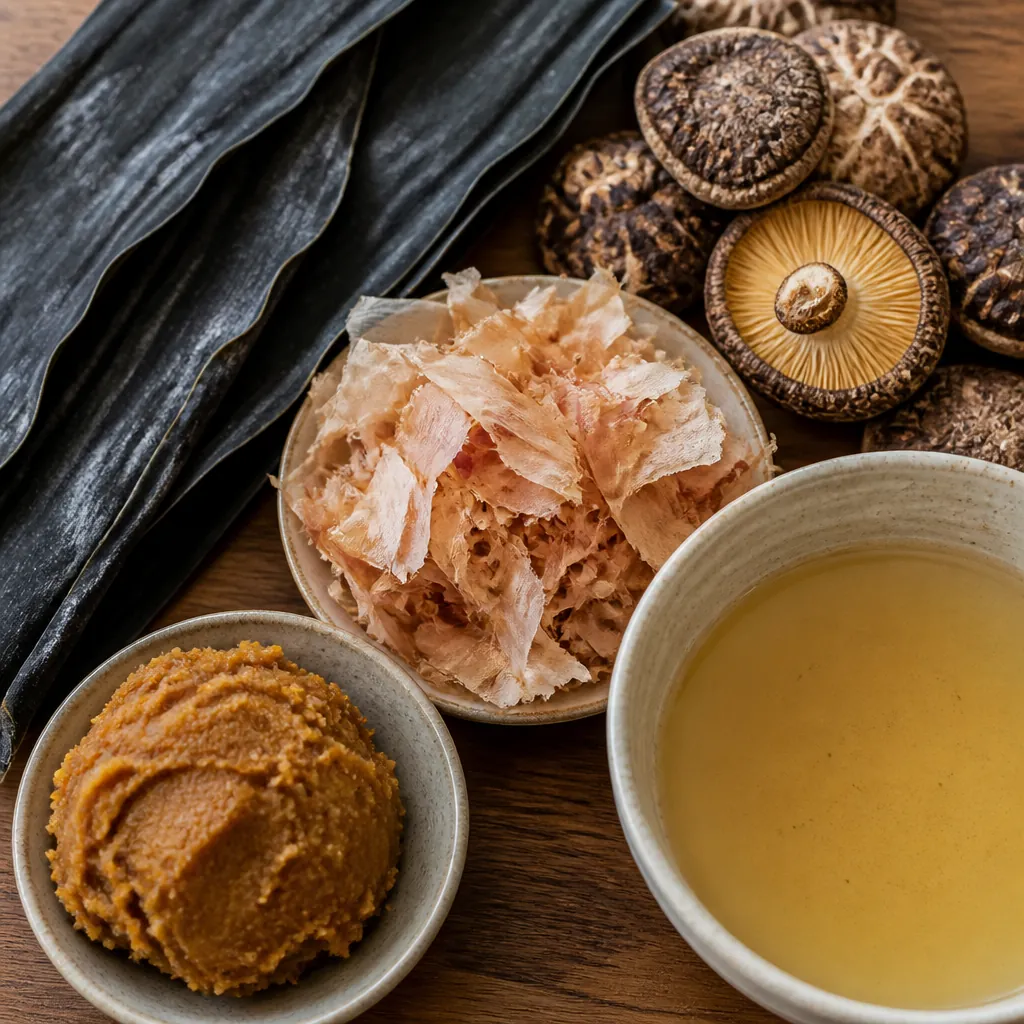
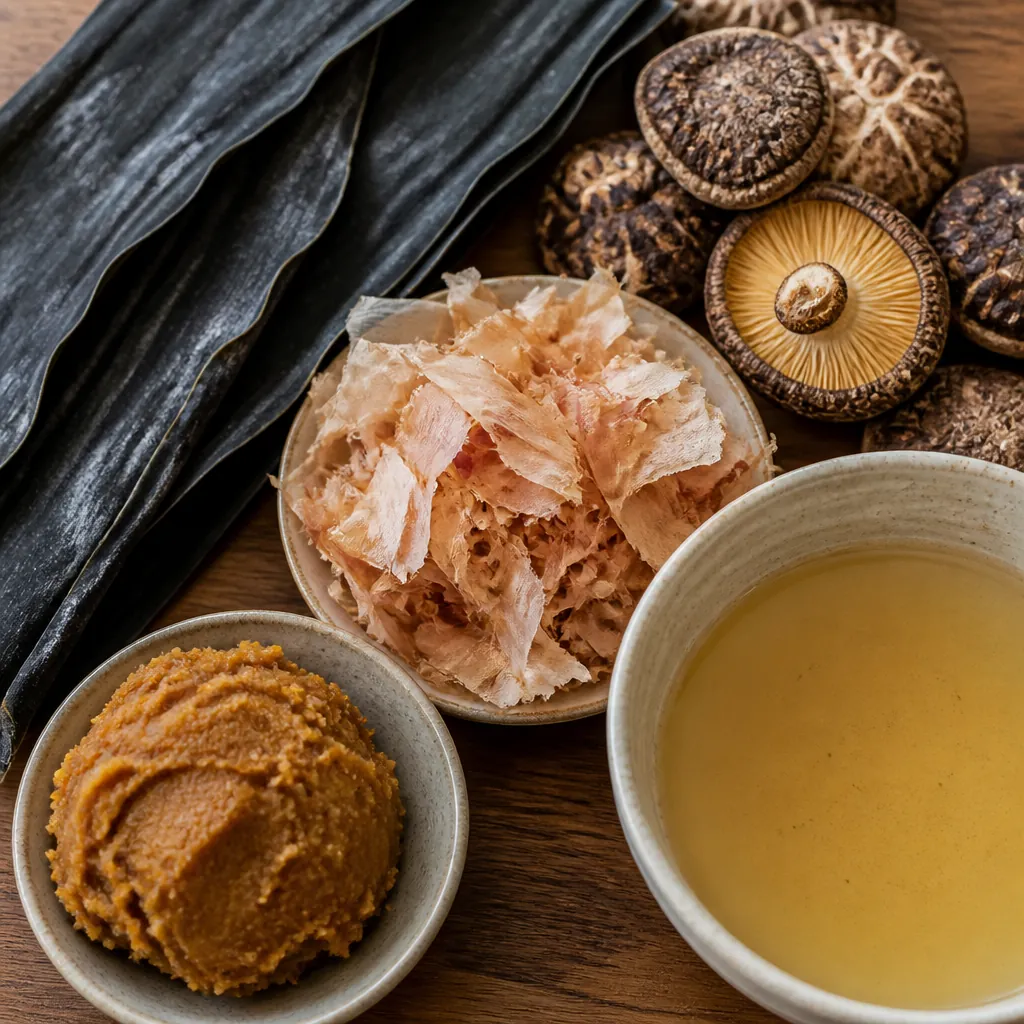
At a chemical level, umami is the taste produced by glutamate, an amino acid, and by certain nucleotides including inosinate and guanylate. These compounds occur naturally in a wide range of foods, but they are especially concentrated in the ingredients that define Japanese cooking: kombu seaweed, katsuobushi (dried bonito flakes), dried shiitake mushrooms, miso, soy sauce, and fresh seafood.
The sensation umami produces is distinct from saltiness, even though many people initially confuse the two. It coats the mouth, creates a lingering savory depth, stimulates saliva production, and makes you want to keep eating. That is not an accident of palatability. It is a specific physiological response to a distinct taste your body is designed to recognize.
Quick Takeaways
| Key Insight | Explanation |
|---|---|
| Umami is the fifth basic taste | It is not a flavor enhancer or a food additive concept. It is a primary taste with dedicated receptors on the human tongue, scientifically confirmed in 2002. |
| Glutamate is the core compound | Umami taste comes from glutamate (an amino acid) and nucleotides like inosinate and guanylate, which occur naturally in kombu, bonito, mushrooms, miso, and soy sauce. |
| Umami synergy multiplies flavor | When glutamate-rich ingredients are combined with inosinate-rich ingredients, the perceived umami intensity increases dramatically beyond what either ingredient delivers alone. |
| Dashi is the delivery system for ramen umami | The broth base in ramen draws its depth from dashi, typically made from kombu and katsuobushi. The combination creates layered umami that a single-ingredient broth cannot match. |
| Sushi rice and nori are umami carriers | The vinegar-seasoned rice and dried seaweed in sushi both contribute glutamate, meaning the umami in a sushi roll is not just from the fish. |
| Fermentation concentrates umami | Miso, soy sauce, and aged fish products become high in free glutamate through fermentation, which is why they add such dramatic depth to Japanese dishes. |
| Umami reduces the need for salt | Because umami amplifies overall flavor perception, Japanese cuisine can achieve intense taste satisfaction with less sodium than many Western counterparts. |
The five basic tastes are not equal in how they affect eating behavior. Sweetness signals calories. Bitterness warns of toxins. Saltiness indicates minerals. Sour signals fermentation. Umami signals protein, which explains why detecting it triggers such a strong appetite response. From an evolutionary standpoint, your instinct to finish that entire bowl of ramen is your body recognizing a high-protein food source and asking for more of it.
The History of Umami: A Japanese Discovery
Umami was not recognized in Western food science until the late twentieth century, but Japanese cooks had been building dishes around it for centuries. The formal identification came in 1908, when Professor Kikunae Ikeda, a chemist at Tokyo Imperial University (now the University of Tokyo), isolated the compound responsible for the distinctive savory taste in kombu dashi broth.
Ikeda noticed that the broth had a flavor quality that did not fit any of the four recognized tastes. He traced it to kombu, the dried kelp that forms the base of Japanese soup stock. After extensive analysis, he identified glutamic acid as the active compound and named the taste it produced umami. His discovery was not immediately embraced outside Japan, but it laid the foundation for over a century of food science research.
Two subsequent discoveries deepened the picture. In 1913, Shintaro Kodama identified inosinate as the umami component in katsuobushi, the dried bonito flakes used alongside kombu in Japanese cooking. Later, guanylate was identified as the umami compound in dried shiitake mushrooms. The three compounds together formed a complete framework for understanding why certain ingredient combinations in Japanese cooking produce such layered, satisfying taste.
Umami is the fifth taste, joining sweet, sour, salty, and bitter. These are unique tastes that cannot be created by mixing other tastes, and are known as the basic, or primary tastes.
The global food community caught up slowly. Umami was internationally recognized as the fifth basic taste in the late twentieth century, following psychophysical, electrophysiological, and biochemical studies that confirmed dedicated receptors for it on the human tongue. Japanese cuisine had simply been building around it all along, without needing the science to tell it why the food tasted so good.
The Science Behind the Taste
Scientists confirmed the existence of dedicated umami taste receptors on the human tongue in 2002. This was a significant finding because it confirmed that umami is not a psychological perception or a secondary effect of other tastes. It is a distinct, hardwired sensory experience. The identified receptors include T1R1 plus T1R3, as well as mGluR4 and mGluR1.
What Glutamate Actually Does in Your Mouth
Glutamate is an amino acid and one of the building blocks of protein. When proteins in food break down, through cooking, fermentation, drying, or aging, free glutamate is released. That free glutamate is what binds to umami receptors and produces the savory depth you taste. This is why slow-cooked broths, aged cheeses, fermented soy products, and dried fish are all strongly umami. The process of breaking down proteins unlocks the glutamate that was always there.
The sensation goes beyond a single moment on the tongue. Umami creates what food scientists describe as a mouth-coating, lingering quality that enhances the perception of the other tastes around it. It also stimulates salivation, which physically prepares the mouth to keep eating. This is a measurable physiological effect, not metaphor.
The Role of Nucleotides: Inosinate and Guanylate
Inosinate and guanylate are nucleotides, compounds that appear in meat, fish, and certain mushrooms. On their own, they produce a mild umami taste. But their real role is in combination with glutamate. The synergism between glutamate and these nucleotides is one of the most important mechanisms in cooking, and Japanese cuisine has been exploiting it intuitively for hundreds of years.
Pro tip: When you taste a ramen broth built on both kombu dashi (glutamate-rich) and katsuobushi (inosinate-rich), you are experiencing umami synergy. Neither ingredient alone would produce the same depth. The combination is not additive. It is multiplicative.
How Umami Shapes Japanese Cuisine
Japanese food is built around a small number of high-umami ingredients that form the backbone of nearly every major dish. Understanding those ingredients explains why Japanese cuisine achieves such consistent depth of flavor across such a wide range of dishes, from light broths to rich braised preparations.
Kombu: The Foundation
Kombu is dried kelp and one of the richest natural sources of glutamate in any cuisine. It is the anchor of dashi, Japan’s fundamental soup stock, and it contributes that clean, mineral-edged umami that forms the base note in miso soup, noodle broths, and simmered dishes. The glutamate in kombu is released when the seaweed is soaked or gently heated in water. Boiling it extracts different compounds that can make the broth bitter, which is why precise temperature control matters.
Katsuobushi and Niboshi: Inosinate Carriers
Katsuobushi, the shaved dried bonito flakes that are a staple of Japanese kitchens, is rich in inosinate. When combined with kombu in a dashi, the glutamate-inosinate synergy produces a broth whose umami intensity exceeds what either ingredient delivers on its own. Niboshi (dried sardines) serves a similar role and produces a slightly earthier, more assertive broth used in some ramen styles.
Miso, Soy Sauce, and Fermented Depth
Fermentation is one of the most efficient ways to concentrate umami. Miso paste and soy sauce are both high in free glutamate because the fermentation process breaks down the proteins in soybean and grain into their amino acid components. This is why a tablespoon of miso or a splash of soy sauce can transform a broth, a marinade, or a dipping sauce. You are not just adding salt. You are adding accumulated glutamate.
Pro tip: The difference between a ramen broth that tastes flat and one that tastes alive often comes down to whether fermented umami ingredients like miso or soy tare have been used in the seasoning layer. Salt seasons. Miso seasons and builds depth at the same time.
Ramen and Umami: Why the Broth Is Everything
Ramen is, at its core, an umami delivery vehicle. The noodles provide texture and substance, the toppings provide contrast and richness, but the broth is why people eat ramen with an almost ritualistic focus. A properly constructed ramen broth layers multiple umami sources to achieve a flavor that holds from the first sip to the last.
Traditional ramen broth construction involves at least two distinct umami streams. The first is the base stock, built from bones (pork, chicken, or both) that release inosinate as they cook. The second is the dashi component, which adds glutamate from kombu or other plant-based sources. The tare, the concentrated seasoning sauce that is added to each bowl individually, then brings fermented umami from soy sauce, miso, or shio (salt-based) preparations.
The Three Major Ramen Styles Through an Umami Lens
Shoyu ramen uses a soy-sauce tare, which adds direct glutamate and the deep brown color associated with Tokyo-style bowls. Miso ramen uses fermented soybean paste as its tare, delivering the highest concentration of fermented umami of any mainstream ramen style. Shio ramen relies on a cleaner, lighter flavor profile where the kombu-dashi layer is often more prominent and the broth is valued for its clarity and delicacy. Each style is a different answer to the same question: how do you build the most satisfying umami experience possible?
The toppings are not incidental to umami either. Nori (dried seaweed) adds glutamate. Corn kernels contribute sweetness that contrasts with umami. A soft-boiled egg, marinated in soy sauce, adds both richness and a fermented glutamate note. Each element is placed deliberately, and the best ramen bowls are designed so that every component adds to or contrasts with the central umami experience.
Sushi and Umami: More Than Raw Fish
Sushi is often described as being about the freshness of fish, and freshness matters enormously. But the sushi umami experience goes well beyond the fish itself. Every component of a piece of sushi contributes to the overall flavor architecture in ways that connect directly to umami.
The fish itself varies widely in glutamate and inosinate content. Fatty fish like salmon, tuna, and yellowtail are naturally higher in the compounds that produce umami, which is one reason they are so broadly popular. Shellfish and cephalopods like scallop and squid also carry strong umami profiles, with squid in particular being notably high in free amino acids.
Rice, Nori, and Soy Sauce
Sushi rice is seasoned with rice vinegar, which affects perceived umami by suppressing bitterness and allowing savory notes to come forward. The nori wrapper in maki and hand rolls contributes direct glutamate. The soy sauce used for dipping is one of the most glutamate-rich condiments in any cuisine, which is why even a brief dip changes the entire flavor of a piece of sushi rather than just adding salt.
Wasabi has a role here too. Its sharpness clears the palate between pieces, resetting the umami receptors so that each piece of sushi is experienced at full intensity. This is the functional reason for wasabi in sushi service, not just tradition.
Umami Synergy: Why Combinations Hit Harder
The single most important concept for understanding why Japanese food tastes the way it does is umami synergy. When glutamate is combined with inosinate or guanylate, the resulting umami taste is significantly more intense than what either compound produces on its own. Research has shown that in human taste perception, the response to a mixture of glutamate and inosinate can be many times larger than the response to glutamate alone.
This synergy is not unique to Japanese cuisine, but Japanese cooking has developed the most sophisticated and consistent application of it. The pairing of kombu (glutamate) with katsuobushi (inosinate) in dashi is the clearest example. The pairing of soy sauce or miso (glutamate) with fish or meat (inosinate) in marinades, soups, and stews is another. Even the combination of nori (glutamate) and fresh fish (inosinate) in a sushi roll follows this principle.
A common mistake in attempting Japanese cooking at home is using only one umami source at a time. A broth built on kombu alone will taste clean but thin. Katsuobushi alone produces a more assertive but one-dimensional flavor. The combination achieves something that neither achieves individually, and that principle runs through Japanese cuisine at every level of complexity.
Comparing Umami Sources in Japanese Cooking
| Umami Source | Primary Compound | Best Used In |
|---|---|---|
| Kombu (dried kelp) | Glutamate | Dashi base, ramen broth, pickling liquid. Provides clean, mineral-edged umami without muddying the broth color. |
| Katsuobushi (dried bonito flakes) | Inosinate | Dashi paired with kombu, ramen tare, finishing garnish. Adds smokiness and depth, synergizes powerfully with glutamate sources. |
| Dried shiitake mushrooms | Guanylate | Vegetarian dashi, ramen broth, simmered dishes. Earthy, intense umami especially suited to miso-based broths and plant-forward preparations. |
| Miso paste | Glutamate (fermented) | Ramen tare, marinades, soups, glazes. Fermented umami with added sweetness and complexity. Layered differently by region and fermentation time. |
| Soy sauce | Glutamate (fermented) | Shoyu ramen tare, sushi dipping sauce, marinades. High in free glutamate and highly concentrated. A small amount changes a dish significantly. |
| Nori (dried seaweed) | Glutamate | Sushi rolls, ramen toppings, onigiri wrapping. Contributes umami while adding textural contrast. Synergizes with the fish or filling. |
Frequently Asked Questions
Is umami the same as MSG?
No, they are not the same thing. Umami is a taste. MSG (monosodium glutamate) is one compound that produces that taste. MSG is the sodium salt of glutamic acid and can trigger umami on its own, but many naturally occurring foods produce umami through combinations of glutamate and nucleotides without any added MSG. Kombu, miso, soy sauce, and fresh fish are all umami-rich without any added MSG.
Why does Japanese ramen taste different from other noodle soups?
The depth in a well-made ramen broth comes from layered umami. Most ramen broths combine an animal-based stock (rich in inosinate) with dashi from kombu or dried fish (rich in glutamate), and then season it with a fermented tare (miso, soy, or shio) that adds another concentrated glutamate layer. This stacking of glutamate and inosinate sources triggers umami synergy, producing a flavor complexity that single-base broths do not achieve.
Does sushi have umami even in vegetarian rolls?
Yes. Sushi rice seasoned with rice vinegar, nori wrappers, pickled vegetables, miso-based sauces, and avocado all carry varying levels of glutamate. A vegetarian roll is lower in inosinate than a fish roll, but it still delivers meaningful umami, especially when soy sauce and wasabi are part of the eating experience.
Why does umami make you want to keep eating?
Umami signals protein to the brain. From an evolutionary standpoint, your palate is designed to recognize and respond positively to protein-rich foods. When umami receptors are activated, they trigger appetite responses that encourage continued eating. The lingering, mouth-coating quality of umami also keeps the sensory experience going after each bite, which sustains the desire to eat rather than letting it plateau quickly.
Is fermented food always high in umami?
Fermented foods are often high in umami because the fermentation process breaks down proteins into free amino acids, which releases glutamate. Miso, soy sauce, fish sauce, and aged cheeses are all examples of this. However, not all fermented foods are high in umami. Yogurt, for example, is produced by bacterial fermentation but its flavor profile is dominated by sourness rather than savory depth. The umami level depends on the protein content of the starting ingredient and the nature of the fermentation process.
What makes one restaurant’s ramen taste deeper than another’s?
The depth of ramen comes from how many umami sources are stacked into the broth and how well the synergy between them is managed. A broth with multiple glutamate and inosinate sources, a fermented tare that adds concentrated glutamate, and toppings that contribute their own umami notes will taste more layered than one relying on a single broth base and salt-only seasoning. The cooking time matters too, because longer extraction times release more free glutamate and inosinate from the base ingredients.
Can you taste umami outside of Japanese food?
Yes. Umami is present in many cuisines, including Italian (Parmesan cheese, tomatoes, anchovies), Chinese (fermented black beans, oyster sauce), and Korean (gochujang, doenjang). What makes Japanese cuisine distinctive is not that it invented umami, but that it developed the most methodical and refined approach to layering it, particularly through the dashi system and the use of fermented condiments as seasoning layers rather than just flavor additions.
If you have eaten at a Japanese restaurant recently and found yourself thinking about a particular dish long after the meal ended, we would genuinely like to hear what it was. Leave a comment or share your experience with a friend who has not yet discovered the depth of a great ramen broth or a well-made omakase.
References
- Umami Information Center: a complete overview of what umami is, its history, and the primary compounds that produce it
- Ajinomoto: key facts about umami taste including receptor science and its role as the fifth basic taste
- National Library of Medicine: peer-reviewed research on umami receptor mechanisms and synergism between glutamate and nucleotides
- byFood: how umami flavor shapes Japanese cuisine and the science of glutamate in traditional ingredients
- Myojo USA: the role of dashi in ramen and how umami synergy works in Japanese broth-making