
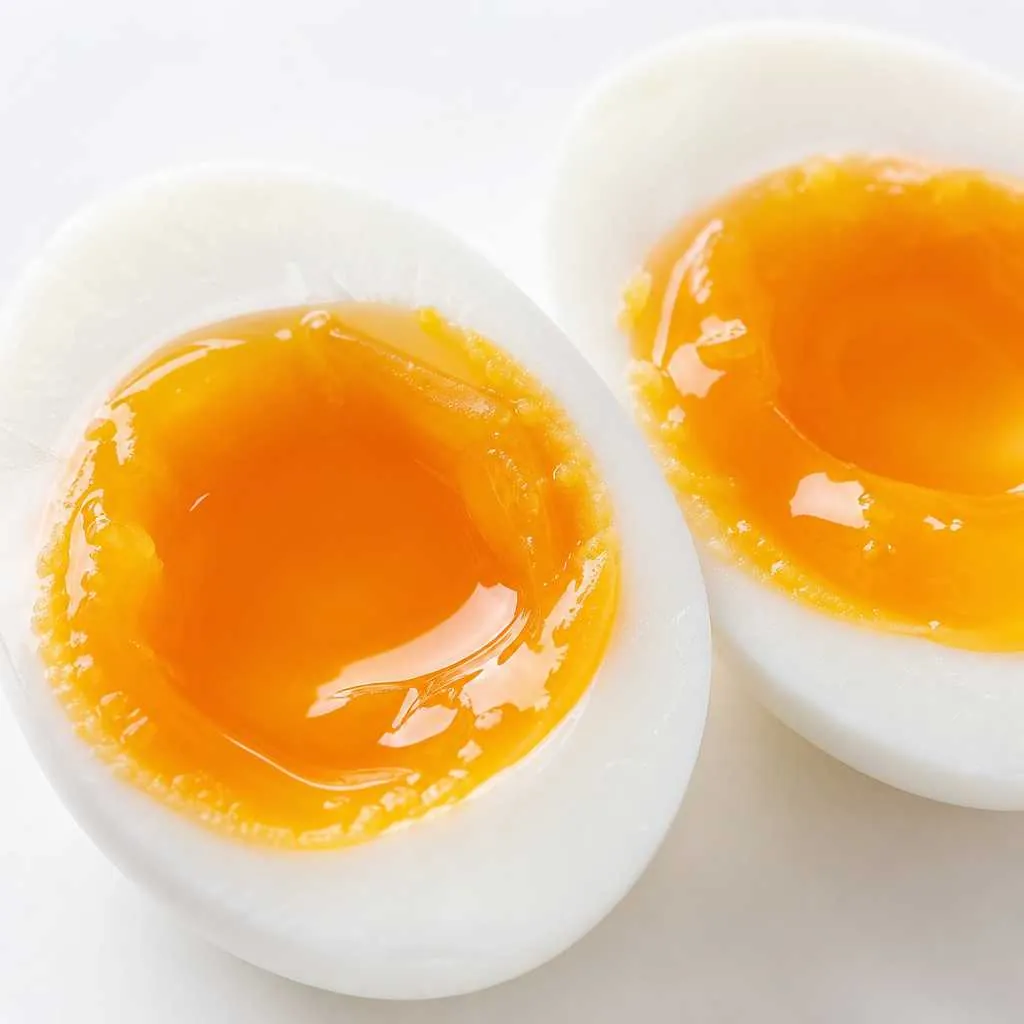
Most people crack open a bowl of ramen, spot that glossy, amber-tinted egg sitting on top, and assume it just soaked in soy sauce overnight. That assumption is wrong, and it explains why so many homemade attempts produce rubbery whites or chalky yolks that taste like nothing. Ramen eggs, known in Japanese as ajitsuke tamago, are the result of precise temperature control, specific timing, and a carefully balanced marinade. Get one variable wrong and the texture collapses entirely. This guide breaks down the actual science so you understand exactly what is happening inside that egg and why it matters.
Table of Contents
- Quick Takeaways
- What Is Ajitsuke Tamago
- The Protein Science of the Perfect Soft Boil
- The Marinade Chemistry Breakdown
- Marination Time and Osmosis
- Comparison of Cooking Methods
- Common Mistakes and How to Fix Them
- How Ramen Eggs Fit Into a Complete Bowl
- Frequently Asked Questions
- References
Quick Takeaways
| Key Insight | Explanation |
|---|---|
| Temperature precision determines yolk texture | Egg yolks begin setting at around 63°C (145°F) and become fully firm above 70°C (158°F). A 6.5-minute boil from room temperature eggs in rolling water targets the jammy, custardy center. |
| Ice bath is not optional | Stopping carryover cooking immediately with an ice bath is what separates a soft yolk from a cooked-through one. Skipping it costs you that signature creamy center. |
| Soy sauce alone produces flat flavor | Classic ajitsuke tamago marinade uses soy sauce, mirin, and sake in a 1:1:1 ratio. The mirin adds sweetness and the sake tempers saltiness while boosting depth. |
| Osmosis governs how deep the marinade penetrates | Salt and sugar molecules in the marinade draw moisture out of the egg white and replace it with flavor compounds. Most flavor penetration happens in the first 4 to 6 hours. |
| Older eggs peel more cleanly | Eggs that are 7 to 10 days old have a higher pH in the white, which reduces adhesion to the inner membrane. Fresh eggs tear and leave pockmarked whites. |
| Marination beyond 24 hours ruins texture | Extended salt exposure denatures the egg white proteins further, producing a rubbery, almost squeaky bite. The sweet spot is 8 to 12 hours in the refrigerator. |
| Scoring or piercing the egg before boiling prevents cracking | A small pin hole at the air pocket end of the egg releases pressure from the expanding air pocket, reducing the chance of shell cracks during boiling by roughly 80 percent. |
What Is Ajitsuke Tamago
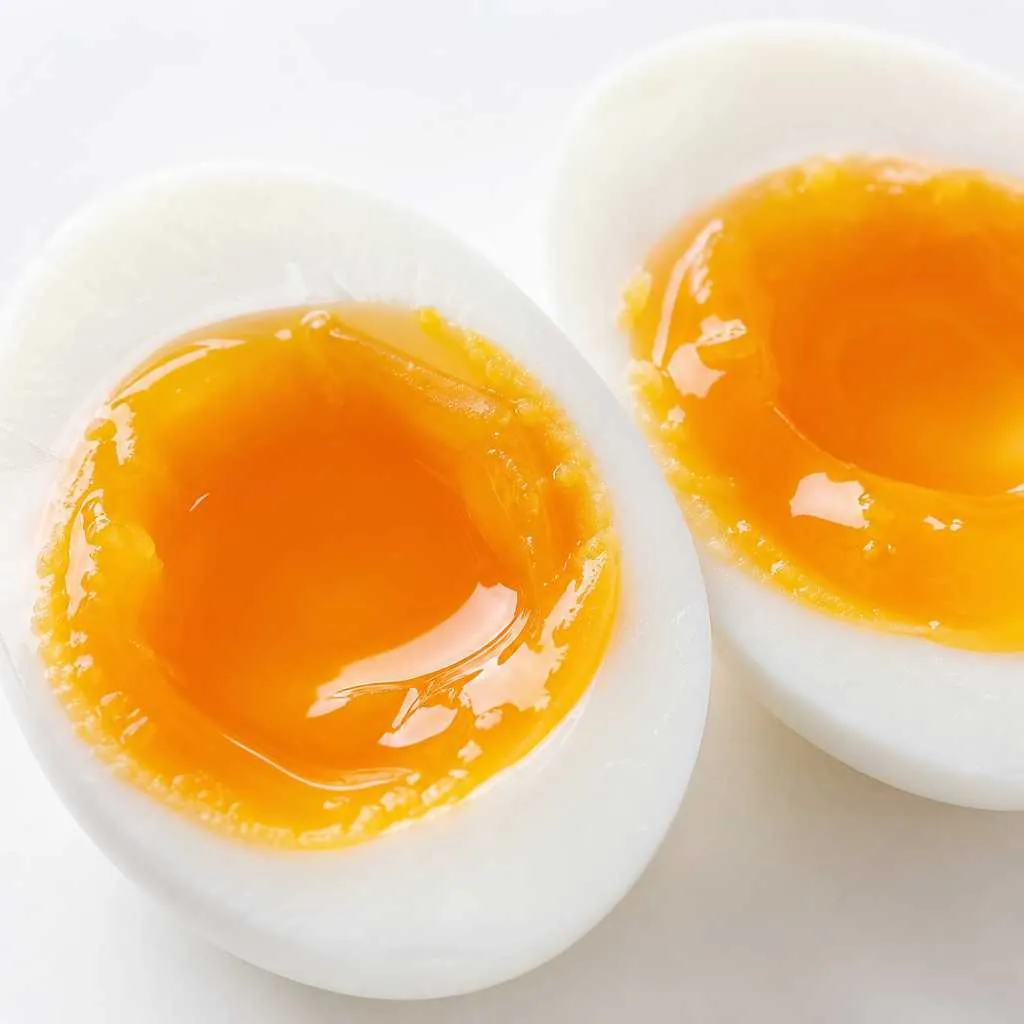
Ajitsuke tamago translates literally to “seasoned egg” in Japanese. The name is functional, not poetic. These are soft-boiled eggs that have been peeled and then submerged in a savory-sweet marinade, typically for 8 to 24 hours, until the white takes on a deep brown hue and the yolk firms to a jammy, custard-like consistency.
They are not the same as onsen tamago, which are slow-cooked whole eggs at low temperature and have a completely different texture profile. Ajitsuke tamago starts with a standard boil and uses post-cook marination for flavor. The distinction matters because the methods are not interchangeable.
At Zen Ramen and Sushi, marinated eggs are treated as a structural component of a well-built bowl, not an afterthought topping. A properly made ajitsuke tamago adds umami depth, visual contrast, and a richness that balances the saltiness of tonkotsu or shoyu broth. When a regular guest or a friend who has been referred to us asks what separates a restaurant bowl from a home attempt, the egg is usually the honest answer.
The Protein Science of the Perfect Soft Boil
Egg whites and yolks contain different proteins that respond to heat at different temperatures. Understanding this separation is what makes precision possible.
Egg White Protein Coagulation
Egg whites are primarily composed of albumin proteins. These proteins begin to denature and coagulate around 60°C (140°F) and are fully set by 65°C (149°F). At a full boil of 100°C (212°F), the white firms rapidly, which is why even a 30-second overrun in cooking time noticeably toughens the texture.
The goal for ajitsuke tamago is a white that is fully set but not rubbery. That means hitting the coagulation window and stopping there. A rolling boil for 6 to 7 minutes achieves this when starting with room-temperature eggs. Cold eggs from the refrigerator require an additional 30 to 45 seconds to account for the temperature differential.
Yolk Protein Behavior and the Jammy Window
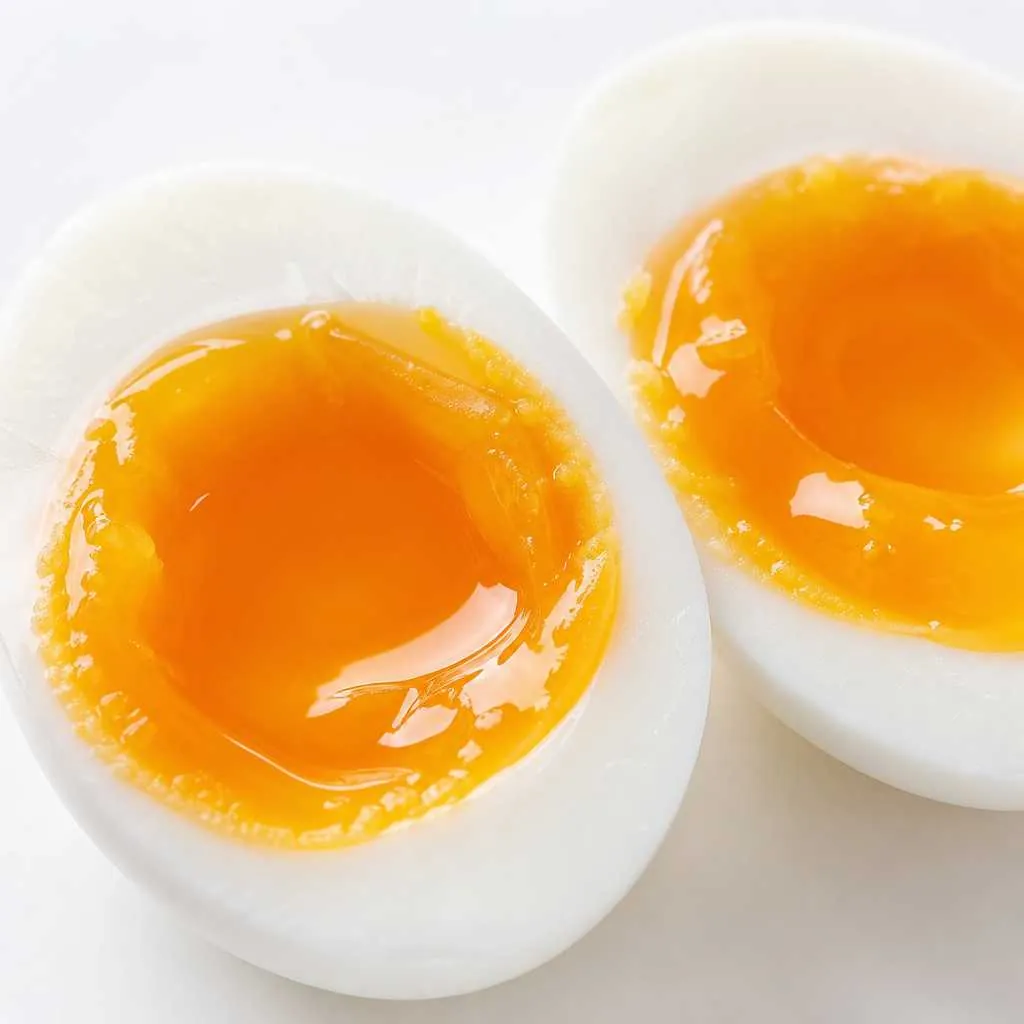
Yolk proteins, dominated by lipoproteins and lipovitellin, begin setting at 63°C (145°F) and become fully firm above 70°C (158°F). The target for a proper ramen egg is an internal yolk temperature between 63°C and 66°C. This produces what professional cooks call the jammy yolk, a texture that holds its shape when cut but flows slightly rather than crumbling.
The green-grey ring that appears around overcooked yolks is a chemical reaction between iron in the yolk and hydrogen sulfide from the white, forming ferrous sulfide. It is harmless but indicates the egg has been cooked well past the target window. In practice, if you see that ring, the egg will not marinate properly either, because the texture of an overcooked yolk resists flavor absorption.
Pro tip: Use a pot with enough water to fully submerge the eggs and bring it to a full rolling boil before adding the eggs. Lowering eggs into already-boiling water gives you a consistent start time, which removes one variable from the timing equation entirely.
The Marinade Chemistry Breakdown
The standard ajitsuke tamago marinade uses three core liquids: soy sauce, mirin, and sake. Each ingredient plays a specific chemical role and removing any one of them changes the outcome in a measurable way.
What Soy Sauce Actually Does
Soy sauce provides sodium chloride and glutamates. The sodium is responsible for the osmotic pressure that drives marinade into the egg white. The glutamates contribute umami, the savory depth that makes a marinated egg taste fundamentally different from a plain boiled one. A good-quality soy sauce contains naturally occurring glutamate concentrations that amplify the flavor of the broth it eventually sits in.
The Role of Mirin and Sake
Mirin is a sweet rice wine with a sugar content around 45 percent. Its sugars caramelize on the egg surface and contribute to the amber color that distinguishes ajitsuke tamago from a plain soy-soaked egg. Sake introduces ethanol, which acts as a solvent, helping dissolve and carry aromatic compounds deeper into the egg white. It also reduces the sharp saltiness that undiluted soy sauce produces.
A common mistake is substituting mirin with simple sugar syrup. The sugar content may be similar, but the absence of the fermented rice flavor compounds changes the aroma profile of the finished egg noticeably. It is not the same ingredient for this application.
“The Maillard reaction and enzymatic browning from soy sauce and sugar mixtures produce hundreds of flavor compounds that cannot be replicated by any single substitute ingredient.” – Harold McGee, On Food and Cooking: The Science and Lore of the Kitchen
Proportions That Work
The most reliable base ratio is 3 parts soy sauce to 2 parts mirin to 1 part sake, with a 1-to-1 ratio of this marinade mixture to water. This dilution prevents the egg white from becoming excessively salty while still allowing full osmotic penetration. Some recipes add a small amount of sugar or a piece of kombu to boost umami without adding more sodium.
Marination Time and Osmosis
Osmosis is the movement of water molecules through a semi-permeable membrane from an area of low solute concentration to an area of high solute concentration. The peeled egg white behaves as a semi-permeable barrier. The marinade, which is high in dissolved salts and sugars, draws water out of the egg and simultaneously allows smaller flavor molecules to migrate inward.
The bulk of this exchange happens quickly. In practice, the first 4 hours account for the majority of flavor penetration into the outer layer of the white. Between 8 and 12 hours, flavor compounds reach the inner white near the yolk. Beyond 24 hours, the salt concentration inside the egg approaches equilibrium with the marinade, but at a cost: the continued presence of sodium denatures surface proteins further, producing that unpleasant rubbery texture.
Temperature during marination also matters. The refrigerator at 4°C (39°F) slows bacterial growth but also slows the osmotic exchange. This is actually beneficial because it allows a more gradual, even penetration of flavor. Room-temperature marination speeds the process but raises food safety concerns beyond 2 hours.
Pro tip: Place the peeled eggs and marinade in a zip-lock bag and press out all the air before sealing. This ensures every surface of the egg contacts the marinade evenly and eliminates the floating problem that occurs in a bowl, where one side of the egg remains unmarinated.
Comparison of Cooking Methods
Not everyone agrees on the best method for achieving the soft-boil baseline before marination. Three approaches dominate professional kitchen discussions: the standard boiling method, the steam method, and the sous vide method. Each has real trade-offs worth knowing.
| Method | Yolk Consistency Control | Practical Considerations for Ajitsuke Tamago |
|---|---|---|
| Standard Boiling | Good with strict timing. A 30-second variance changes the result. Works reliably at 6.5 minutes for room-temp eggs. | Fastest method. Requires accurate timing and immediate ice bath. Most accessible for home cooks and high-volume restaurant kitchens. |
| Steaming | Slightly more forgiving than boiling because heat transfer from steam is less aggressive than boiling water. 7 minutes in a covered steamer basket produces comparable results. | Easier to peel because the steam does not agitate the shell membrane the same way boiling water does. Good for batches where consistent peeling matters. |
| Sous Vide | Highest precision. Setting the water bath to 63°C (145°F) for 45 to 60 minutes produces a custardy, fully controlled yolk. No variance batch to batch. | Requires specialized equipment. Time-intensive for high-volume production. Best for kitchens where consistency at scale is the priority, not home cooks doing a 6-egg batch. |
The standard boiling method is not inferior. For most applications, including a restaurant kitchen running a consistent recipe, it produces excellent results when timing is disciplined. Sous vide adds precision but not necessarily a better-tasting egg in blind taste tests. The data from food science research at Kenji Lopez-Alt’s documented testing consistently shows that the 6.5-minute boil with ice bath produces results indistinguishable from the 63°C sous vide method in texture.
Common Mistakes and How to Fix Them
A common mistake is starting eggs in cold water and then bringing the pot to a boil. This produces inconsistent results because the time eggs spend in sub-boiling temperatures varies depending on your stove and the starting temperature of the eggs. Always start with already-boiling water.
Skipping the Ice Bath
Carryover cooking is real. An egg removed from boiling water continues cooking from residual heat for approximately 1 to 2 minutes. For a target yolk that has only a narrow temperature window, that 2 minutes is enough to overshoot the goal. An ice bath with at least a 1:1 ratio of ice to water arrests cooking within 30 seconds.
Using the Wrong Soy Sauce
Dark soy sauce is thicker and more intensely colored but lower in sodium than regular soy sauce. Using dark soy sauce as a direct substitute will over-color the egg and under-salt the marinade. Use standard Japanese soy sauce (koikuchi shoyu) as the base. Tamari works as a gluten-free alternative without significant flavor loss.
Marinating Uncovered Eggs in a Bowl
Eggs float. If the egg is not fully submerged, the portion above the marinade line will remain pale and unseasoned. This creates an uneven result that is visually obvious when the egg is halved for serving. The zip-lock bag method or using a small container where eggs fit snugly eliminates this problem entirely.
How Ramen Eggs Fit Into a Complete Bowl
Ramen toppings are not decorative. Each component interacts with the broth and with each other. The ajitsuke tamago contributes fat from the yolk, which enriches the mouthfeel of lighter broths like shio or shoyu. In a richer tonkotsu broth, the egg provides a textural counterpoint and a slightly sweet-savory note that cuts through pork fat.
The timing of when you add the egg to the bowl also matters. Placing a cold egg directly from the refrigerator into a hot bowl will lower the broth temperature noticeably. A brief dip in hot water for 30 seconds before plating warms the egg without continuing to cook it, keeping the broth at serving temperature longer.
At Zen Ramen and Sushi, every bowl that includes a marinated egg is built so that the egg is the last topping placed, always halved lengthwise to expose the yolk, always served face-up. This is not aesthetics alone. A cut egg releases its yolk into the broth when the diner stirs, functioning as a natural emulsifier that changes the texture of the broth in the final spoonfuls. That is deliberate design, not garnish logic.
Frequently Asked Questions
How long should I marinate ramen eggs?
The optimal marination window is 8 to 12 hours in the refrigerator. This allows full flavor penetration into the white and gives the yolk enough time to absorb some surface marinade color without the texture becoming rubbery. Marinating beyond 24 hours produces an egg white that is noticeably firmer and saltier than intended.
Can I reuse the ajitsuke tamago marinade?
Yes, but only after boiling it first. After marinating eggs, the liquid contains egg proteins and potential bacterial contamination from the egg surface. Bring the used marinade to a full boil, cool it completely, and you can use it for one additional batch. After two uses, the flavor becomes diluted and the sodium balance shifts enough to affect results.
Why do my ramen eggs have a rubbery white even though the yolk looks right?
This is almost always a marination time issue. If you marinated for more than 16 hours or used an undiluted marinade without adding water, the salt concentration is high enough to continue denaturing the white proteins beyond the soft-boil baseline. Dilute your marinade to a 1:1 ratio with water and keep marination under 12 hours.
Do I need to use sake and mirin, or can I substitute them?
You need both for the full result. Sake can be replaced with dry sherry in a pinch with minimal flavor loss. Mirin replacements are less successful: if you must substitute, use a small amount of honey diluted in water, though the aroma profile will differ. Rice wine vinegar is not a substitute for either ingredient and will over-acidify the marinade.
How do I get clean, smooth peeling on soft-boiled eggs?
Use eggs that are 7 to 10 days past their lay date, bring the water to a full boil before adding the eggs, and transfer immediately to an ice bath. After 5 minutes in the ice bath, peel under running cold water. The cold water gets under the membrane and lubricates the peeling process. Fresh eggs from the same morning are the number one cause of torn, pockmarked whites.
What is the difference between ajitsuke tamago and onsen tamago?
Ajitsuke tamago is a soft-boiled egg cooked in boiling water and then marinated. Onsen tamago is a whole unpeeled egg cooked slowly at 65 to 68°C for 30 to 45 minutes, producing a white that is barely set and a yolk that is creamy but not runny. They are completely different textures and are not interchangeable in a ramen bowl. Onsen tamago sits in its shell until serving, while ajitsuke tamago is always peeled and marinated.
Why does the ajitsuke tamago at restaurants look darker than what I make at home?
Restaurant versions often use a higher ratio of soy sauce in the marinade and may add a small amount of dark soy sauce for color without significantly altering the salt level. Some kitchens also add a piece of kombu or dried bonito flakes to the marinade to deepen both the color and umami without increasing sodium. Marination time also plays a role: a 12-hour marinade will produce a noticeably darker surface than a 6-hour one.
If you have tried making ajitsuke tamago at home or have questions about how we prepare ours at Zen Ramen and Sushi, share your experience in the comments or bring it up next time you visit – we genuinely enjoy talking through what worked and what did not.
We would love your feedback and any insights you would share with others. What perspective would you add?
References
- Food science and protein coagulation research on egg cooking temperatures and texture outcomes
- USDA nutritional data and food safety guidelines for marinated egg preparation and storage
- National Library of Medicine research on osmosis and solute diffusion in protein-based food products
- FDA food safety standards and temperature guidelines for cooked egg products
- Forbes coverage of Japanese culinary traditions and the global growth of authentic ramen culture