
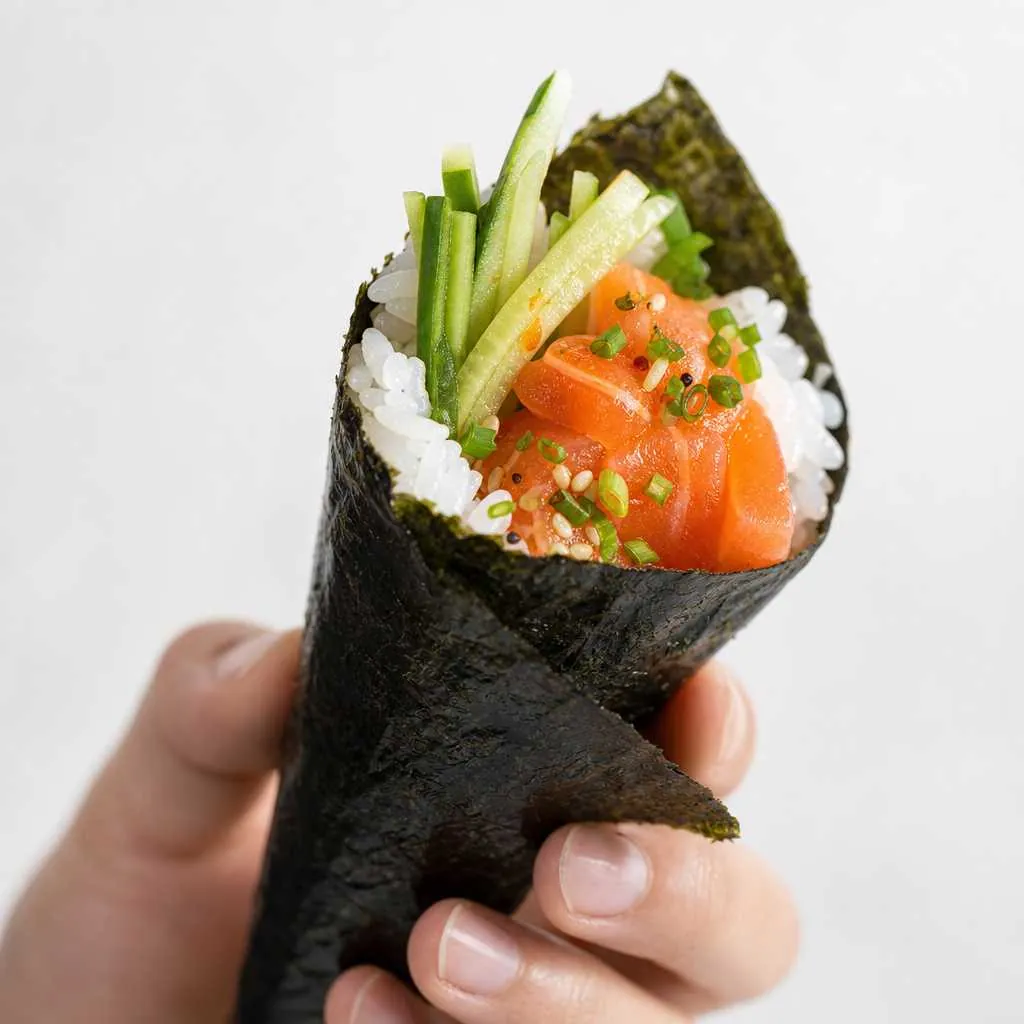
Most people who walk into a Japanese restaurant point at maki rolls on a menu without ever considering whether a temaki might have been the better choice. That decision matters more than it sounds. The difference between a hand roll eaten the moment it is made versus a maki roll that has been resting on a platter for eight minutes is the difference between a sublime bite and a soggy disappointment. Understanding what separates these two sushi types changes how you order, how you eat, and how much you actually enjoy the experience.
Table of Contents
- Quick Takeaways
- What Is Temaki and Why It Demands Your Attention
- What Is Maki and How It Is Built
- The Freshness Principle: Why Temaki Must Be Eaten Immediately
- Comparison of Hand Rolls and Maki: A Side-by-Side Look
- Nori Texture and the Science of Seaweed
- How to Order Fresh Sushi at a Restaurant
- Common Mistakes Diners Make with Hand Rolls and Maki
- Frequently Asked Questions
- References
Quick Takeaways
| Key Insight | Explanation |
|---|---|
| Temaki is a hand-formed cone, not a cut roll | Temaki is shaped by hand into a cone using a sheet of nori, making each piece unique and intentionally individual-sized. |
| Eat temaki within 2 minutes of receiving it | The nori in a temaki begins absorbing moisture from the rice almost immediately, turning crisp seaweed soggy within just a few minutes. |
| Maki is rolled with a bamboo mat and sliced | Maki uses a makisu mat to achieve a tight cylindrical shape, then is cut into bite-sized pieces meant to be shared or plated together. |
| Hand rolls are the best showcase for premium fillings | Because temaki is eaten in one or two bites without slicing, fillings like whole scallops, spicy tuna, or fresh salmon retain their full texture and flavor. |
| Maki is better for social dining and sharing | A single maki roll yields 6 to 8 pieces, making it the practical choice when dining with friends who want to sample multiple sushi types. |
| Rice-to-filling ratio differs significantly | Maki rolls contain more rice relative to filling due to the rolling process. Temaki often carries a higher proportion of filling per bite. |
| Fresh sushi quality depends on how it is served | Restaurants that serve temaki to order, rather than plating it in advance, demonstrate a commitment to the foundational principle of Japanese cuisine: freshness above all else. |
What Is Temaki and Why It Demands Your Attention
Temaki translates literally to “hand roll” in Japanese. A single piece consists of a half-sheet of nori folded into an open cone shape, filled with sushi rice, vegetables, fish, or a combination, and presented upright so the open end faces the diner. There is no bamboo mat involved. No slicing. No plating alongside five identical copies of itself.
The form is entirely personal. Each temaki is made for one person, consumed by one person, and ideally handed directly from the chef to the diner within seconds of being assembled. This is not a ceremonial detail. It is a functional requirement that most casual diners do not realize until they have bitten into a cone of perfectly crisp nori and tasted the difference it makes.
At a restaurant like Zen Ramen and Sushi, where the craft of Japanese cuisine drives every menu decision, the temaki is one of the most telling items you can order. It reveals immediately whether the kitchen respects the timing principles that separate a proper Japanese sushi experience from a generic one.
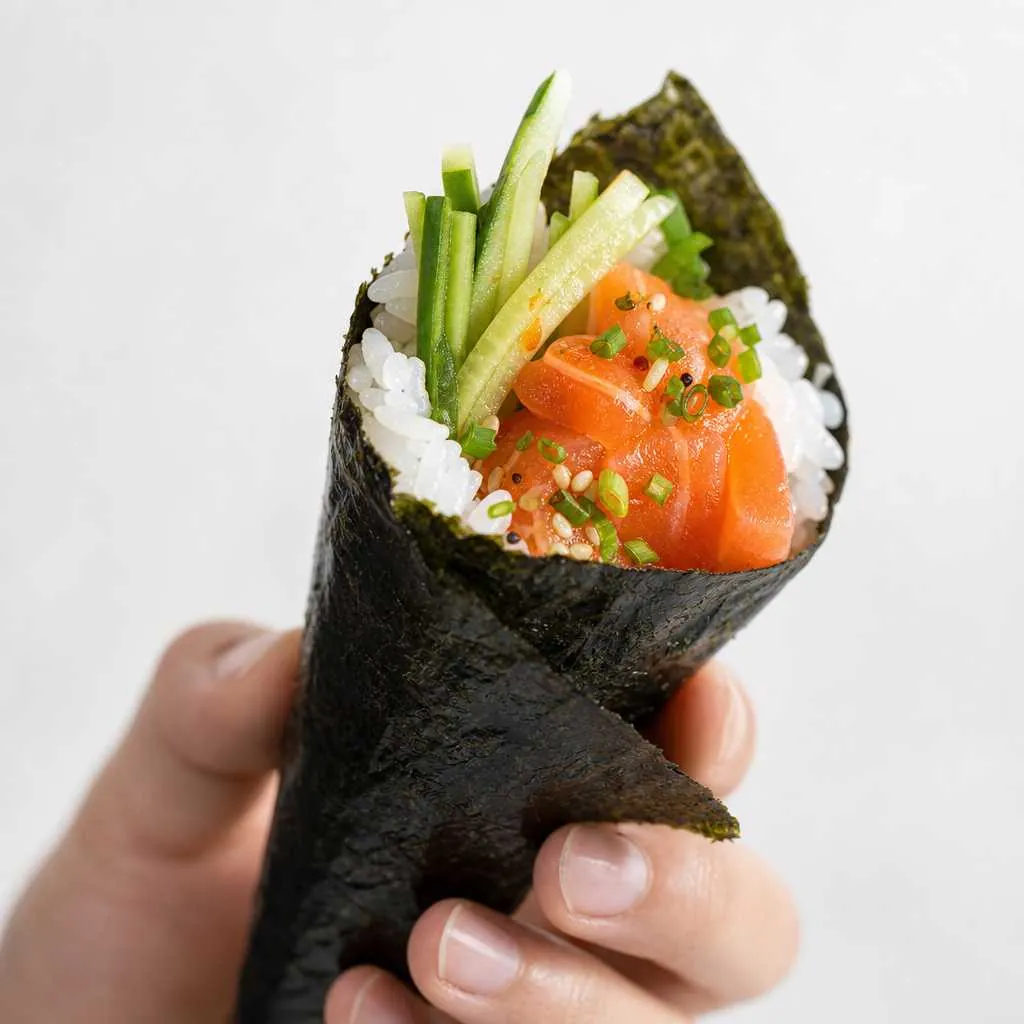
The most common fillings for temaki include spicy tuna, salmon with avocado, yellowtail with scallion, and shrimp tempura with cucumber. Each filling works within the cone format because the open top allows ingredients of varying sizes and textures to be packed generously without the compression that comes from rolling and slicing.
Pro tip: When you order temaki at a sushi counter, pick up the cone immediately and begin eating from the top. Do not set it down on a plate and return to it after eating something else. The texture window is narrow and unforgiving.
What Is Maki and How It Is Built
Maki is what most Western diners picture when they hear the word sushi. A sheet of nori is laid flat on a bamboo rolling mat called a makisu. Sushi rice is spread in an even layer, fillings are arranged across the center, and the mat is used to roll everything into a tight cylinder. That cylinder is then sliced crosswise into six to eight individual pieces.
The result is a shareable, visually consistent product that photographs well and travels reasonably well from kitchen to table. This is precisely why maki became the default format for sushi menus targeting casual diners. It is manageable, portion-controlled, and easy to eat with chopsticks or even fingers without requiring any particular timing.
The Different Styles of Maki You Will Encounter
Maki is not a single thing. Hosomaki is the thinnest style, containing a single filling, typically cucumber, tuna, or pickled radish. Chumaki is mid-sized and holds two or three fillings. Futomaki is thick, often vegetarian, and contains four to five fillings arranged to create a colorful cross-section when sliced. Uramaki, also known as an inside-out roll, places the rice on the outside and nori on the inside, which is the standard format for California rolls and most American-style sushi.
Each maki style has a different rice-to-filling ratio and a different structural integrity. A thin hosomaki with cucumber is a study in restraint. A thick futomaki is a different experience entirely, closer to a composed dish in a single bite. Understanding these differences helps diners order intentionally rather than pointing at random menu items.
Pro tip: If you are ordering maki to share with friends at the table, futomaki and uramaki-style rolls give you more variety per piece and work better as a communal dish than the narrower hosomaki, which is best appreciated as a palate cleanser between richer items.
The Freshness Principle: Why Temaki Must Be Eaten Immediately
The single most important thing to understand about temaki is that freshness is not a preference. It is a structural requirement. Nori, the dried seaweed sheet used to form the cone, has a specific moisture content when it comes off a properly sealed package. It is crisp, slightly brittle, and carries a faint ocean salinity that complements raw fish exceptionally well.
Once nori comes into contact with seasoned sushi rice, moisture transfer begins immediately. Within two to three minutes, the nori softens. Within five to seven minutes, it becomes noticeably chewy. Beyond ten minutes, it is limp, difficult to bite through cleanly, and the texture contrast that makes temaki worth eating has completely disappeared.
“Sushi is a time-sensitive art. The moment you stop respecting time, you stop making sushi.” – Jiro Ono, as documented in culinary studies on Japanese omakase traditions.
This is why authentic Japanese sushi culture treats temaki as a fresh sushi format that must be consumed on contact. It is also why some high-end omakase restaurants in Japan present temaki directly from the chef’s hands, bypassing the serving plate entirely. The plate would cost the diner fifteen seconds and ruin the nori.
Maki rolls tolerate a slightly longer window because the nori is fully enclosed by rice and filling on all sides, which slows but does not eliminate moisture transfer. A well-made maki roll is best within five to ten minutes of preparation but remains acceptable for up to twenty minutes in most conditions. Temaki gives you a fraction of that window.
Comparison of Hand Rolls and Maki: A Side-by-Side Look
Choosing between temaki and maki is not a matter of which one tastes better in the abstract. It depends on what you are trying to get from the meal. Here is a direct comparison across the categories that actually affect your dining experience.
| Category | Temaki (Hand Roll) | Maki (Cut Roll) |
|---|---|---|
| Shape and Form | Open cone, hand-formed, no cutting required | Tight cylinder, bamboo mat-rolled, sliced into 6-8 pieces |
| Serving Size | One piece per order, individual serving | 6-8 pieces per roll, shared or single serving |
| Freshness Window | 2 to 3 minutes maximum before nori softens | 5 to 20 minutes depending on style and fillings |
| Filling Capacity | High, can hold large or bulky ingredients easily | Moderate, limited by the rolling and slicing process |
| Social Dining | Personal format, not designed for sharing | Ideal for sharing and sampling multiple flavors |
| Rice-to-Filling Ratio | Lower rice ratio, more filling-forward per bite | Higher rice ratio, more balanced but denser texture |
| Chef Skill Visibility | Technique is visible in the cone shape and filling placement | Technique is visible in the cross-section and uniformity of slices |
In practice, diners who prefer bold, filling-forward bites with an emphasis on individual ingredients tend to favor temaki. Diners who enjoy variety sampling, shared plates, and a more structured rice-forward experience tend to favor maki. Neither preference is wrong. But knowing which one you are ordering and why produces a better meal.
Nori Texture and the Science of Seaweed
Nori is pressed and dried seaweed, most commonly from the species Pyropia yezonensis or Pyropia tenera. The quality of nori used in a restaurant is one of the clearest indicators of how seriously that establishment takes its sushi. Premium nori is thin, uniform in color, carries a clean ocean flavor, and maintains its crispness for longer when stored properly. Lower-quality nori is thicker, uneven, and begins to taste metallic or overly salty when moisture-softened.
Why Nori Crispness Defines the Temaki Experience
The bite of a temaki is designed around the contrast between crisp nori and soft, seasoned rice. When a diner bites through the cone, the nori should give a clean, audible snap before releasing the fillings. That snap is the entire textural premise of the dish. Without it, what you are eating is effectively a warm rice-and-fish package wrapped in something vaguely seaweed-flavored, which is not what the dish is supposed to be.
This is why restaurants that pre-assemble temaki for display or speed of service are fundamentally misunderstanding the format. The temaki cannot wait. A kitchen that makes temaki to order, one cone at a time, is doing it correctly regardless of how busy the service is.
Nori in Maki Rolls Behaves Differently
In standard maki, the nori sits between the rice and the outer surface. Because it is enclosed, the moisture transfer happens from both sides simultaneously, but the compression of rolling actually helps the roll maintain structural integrity even as the nori softens. This is why a well-made maki roll does not fall apart when picked up, even minutes after slicing. The nori acts as a binding layer rather than a textural element in the way it functions in temaki.
For uramaki, where the nori is inside the roll and rice is on the exterior, the nori softens faster because it is completely surrounded by moisture. This is why inside-out rolls are almost always finished with sesame seeds, tobiko, or thinly sliced cucumber on the outside. Those coatings provide the textural element that the hidden nori can no longer deliver.
How to Order Fresh Sushi at a Restaurant
Ordering fresh sushi is a skill that improves your dining experience more than any single ingredient upgrade. The most important principle is sequence. At a restaurant like Zen Ramen and Sushi, you can build a meal that maximizes freshness by thinking about what is made to order versus what is assembled in advance.
Start with lighter items that showcase individual fish quality: simple hosomaki, nigiri, or sashimi. These allow you to evaluate the freshness of the fish itself before moving to rolls with multiple components that might mask a less-than-perfect piece of protein.
Ordering Temaki for Maximum Impact
Order temaki near the end of your meal, not at the beginning. This is not instinctive for most diners, but it is the correct approach for two reasons. First, you will already understand the kitchen’s fish quality from earlier dishes, so you can choose your temaki filling with more confidence. Second, the kitchen will have established its rhythm by then, and the temaki you receive will be made by someone who has been in full service mode, not warming up.
Communicate clearly to your server that you plan to eat the temaki immediately and that you do not want it to wait in the pass. Any good sushi kitchen will understand this request and respect it. A kitchen that does not understand this request is telling you something important about how it approaches the craft.
Pairing Maki Rolls with Your Group’s Preferences
If you are dining with a group at Zen Ramen and Sushi, maki rolls are the natural choice for the shared portion of the table. Order two or three varieties with different flavor profiles: one clean and simple, such as a tuna or cucumber roll, one richer with sauce or tempura elements, and one with a vegetable-forward option for dietary variety. This gives everyone at the table a range without overwhelming the kitchen with individual requests.
Common Mistakes Diners Make with Hand Rolls and Maki
A common mistake is leaving a temaki sitting on a plate while finishing another dish. It seems like reasonable table management until you pick up the cone and bite into soft, chewy nori. The mistake is not about negligence. It is about not knowing the two-minute rule that every serious sushi diner follows.
Another common mistake is over-dipping temaki in soy sauce. The cone format does not allow for controlled dipping the way nigiri or maki does. Drenching the rim of the nori cone in soy sauce accelerates moisture absorption and collapses the texture faster than anything else. A small amount of soy sauce applied to the filling directly with a brush or minimal dipping is sufficient.
With maki, the most frequent error is eating all pieces from a single roll before trying anything else on the table. Maki rolls are designed to be interleaved with other dishes, not consumed in sequence like courses. The balance of flavors across a sushi meal comes from alternating between rolls, nigiri, and other items rather than finishing each item completely before moving on.
A mistake specific to groups is ordering one type of maki in large quantity thinking it will satisfy everyone equally. Different fillings produce dramatically different experiences. A spicy tuna roll and a shrimp tempura roll may both be maki, but they occupy completely different flavor registers. Order variety, not volume.
Pro tip: At Zen Ramen and Sushi, tell your server you are new to the temaki format if it is your first time. Any kitchen that takes its Japanese cuisine seriously will walk you through the timing without making it feel like a lecture.
Frequently Asked Questions
What is the difference between temaki and maki?
Temaki is a hand-formed cone of nori filled with rice, fish, and vegetables, eaten as a single serving immediately after preparation. Maki is a bamboo mat-rolled cylinder of nori, rice, and fillings that is sliced into 6 to 8 pieces and can be shared. The key operational difference is timing: temaki must be eaten within 2 to 3 minutes of assembly, while maki has a longer but still limited window of optimal quality.
Why does temaki get soggy so quickly?
Seasoned sushi rice contains vinegar, sugar, and salt, all of which contribute moisture. When rice comes into direct contact with nori, that moisture transfers through the seaweed sheet almost immediately. Within 2 to 3 minutes, the nori loses its crispness. This is a physical reality of the ingredients involved, not a restaurant quality issue. The only solution is to eat temaki the moment it is placed in front of you.
Is temaki or maki better for someone new to sushi?
For someone trying sushi for the first time, maki is the more accessible format. It arrives pre-sliced into manageable pieces, it is easy to eat with chopsticks or fingers, and the higher rice ratio creates a milder flavor experience. Temaki is excellent for someone already comfortable with sushi who wants a more filling-forward and texturally engaging experience. Start with maki and progress to temaki once you understand the timing requirement.
Can you make temaki at home?
Yes, and it is one of the more practical ways to serve sushi at home because you do not need specialized rolling skills. The key requirements are sushi-grade fish from a trusted fishmonger, properly seasoned sushi rice cooled to room temperature, and nori stored in a sealed container until the moment of use. Assemble each cone individually just before eating it. Assembling all cones in advance defeats the entire purpose of the format and produces a mediocre result.
What fillings work best in a temaki hand roll?
Fillings with a mix of textures perform best in temaki because the cone format showcases individual ingredients without the compression of rolling. Spicy tuna with cucumber, salmon with avocado and tobiko, yellowtail with scallion and ponzu, and shrimp tempura with spicy mayo are all well-suited to the hand roll format. Avoid overly wet fillings like heavily sauced proteins without any structural element, as they accelerate nori softening and make the cone difficult to hold.
How do you eat temaki properly?
Hold the temaki in one hand with the pointed end down and the open end facing you. Start eating from the open top, taking bites that include nori, rice, and filling in each mouthful. Do not bite just the filling out of the top. Do not set the cone down between bites. Do not dip the entire cone in soy sauce. Eat it continuously from top to bottom within two to three minutes of receiving it. That is the entire method.
Are hand rolls available at Zen Ramen and Sushi?
Zen Ramen and Sushi specializes in authentic Japanese cuisine including fresh sushi preparations, and hand rolls represent one of the most direct expressions of Japanese sushi craft. Visiting the restaurant and asking about the current temaki options is the best way to find out what is available fresh that day, as premium fresh sushi offerings often reflect the best fish the kitchen has sourced for that service.
What is your experience with hand rolls, and do you have a favorite temaki filling you always come back to? Share it in the comments below.
References
- Statista: Global sushi market data and Japanese cuisine consumption trends
- Forbes: Food and restaurant industry coverage including Japanese dining culture
- U.S. Food and Drug Administration: Fish and sushi-grade seafood handling and safety guidelines
- Penn State Extension: Food science resources on moisture transfer in dried seaweed and rice-based products
- USDA National Agricultural Library: Nutritional composition of seaweed, rice, and fish used in Japanese sushi preparations