
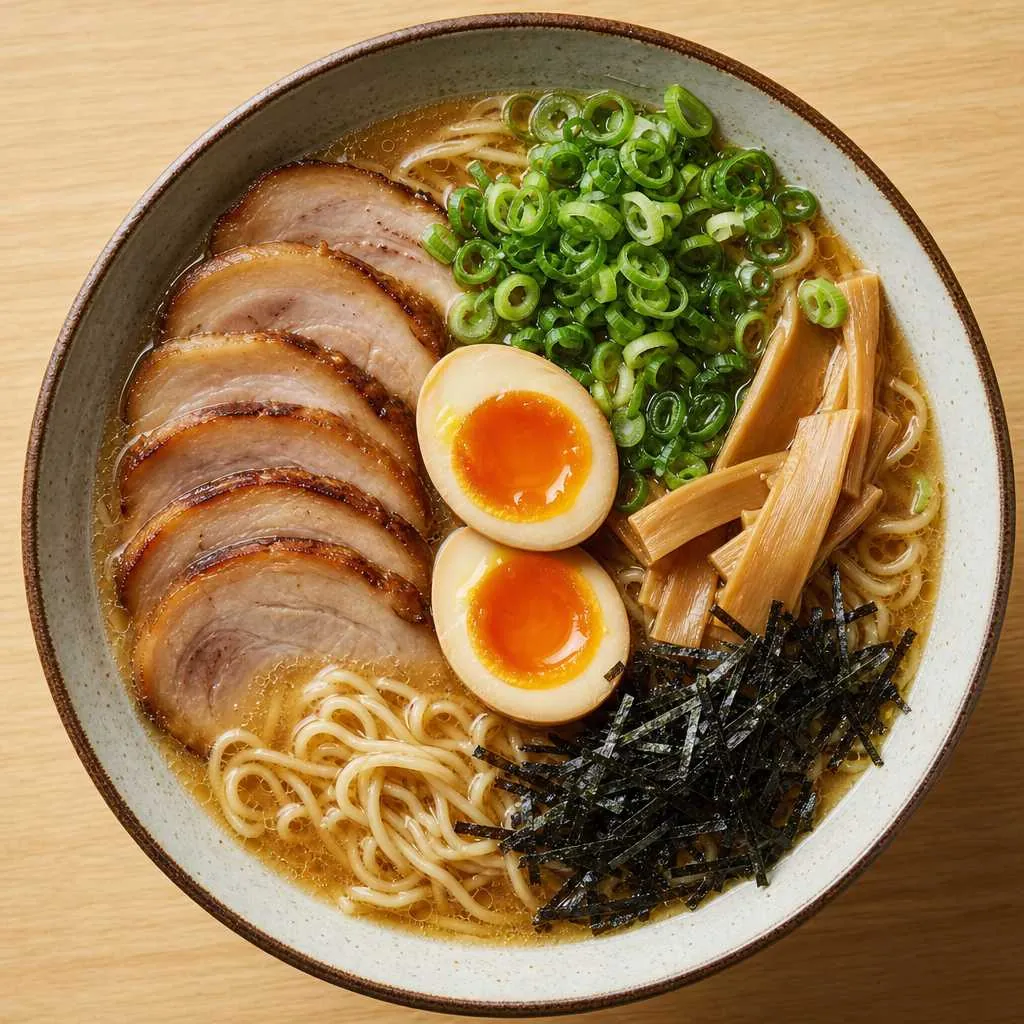
Most people ordering ramen point at a picture on the menu and hope for the best. They know they want noodles and broth, but the toppings sitting on top remain a mystery. What exactly is that perfectly sliced pork? Why does the egg look like it was dipped in something? What are those pale bamboo strips doing in the bowl? Understanding ramen toppings transforms the eating experience from passive consumption to genuine appreciation. This guide breaks down every major garnish you will encounter, from chashu pork to menma, with precise explanations of what each one is, how it is made, and why it belongs in your bowl.
Table of Contents
- Quick Takeaways
- What Is Chashu Pork and Why It Defines a Bowl
- The Ramen Egg: Ajitsuke Tamago Explained
- Menma: The Fermented Bamboo Topping You Keep Overlooking
- Nori and Its Role as a Functional Ramen Garnish
- Green Onions, Narutomaki, and the Supporting Cast
- Comparing the Three Core Ramen Toppings
- How to Eat Ramen Toppings in the Right Order
- Frequently Asked Questions
- References
Quick Takeaways
| Key Insight | Explanation |
|---|---|
| Chashu is braised, not grilled | Authentic chashu pork is slow-braised in soy sauce, mirin, sake, and sugar until tender, giving it a melt-in-mouth texture that grilled pork cannot replicate. |
| The ramen egg yolk should be jammy, not fully set | A properly made ajitsuke tamago has a custardy, semi-liquid yolk achieved by cooking the egg for exactly 6 to 7 minutes before marinating in a tare solution. |
| Menma is fermented, not simply pickled | Menma comes from lactobacillus fermentation of bamboo shoots, which produces its distinctive earthy, slightly sour flavor that plain pickled bamboo does not have. |
| Nori softens intentionally in the broth | Many diners remove nori thinking it is soggy, but the correct technique is to eat it while it still holds shape, then drag it through broth to pick up flavor. |
| Green onions are not just decoration | Thinly sliced green onions cut through the richness of tonkotsu and miso broths, providing brightness that resets the palate between bites. |
| Narutomaki signals a specific regional style | The pink-swirled fish cake is historically associated with Tokyo-style shoyu ramen and its presence in a bowl communicates something intentional about the chef’s regional reference. |
| Toppings interact with broth temperature | Cold toppings added directly from refrigeration lower the broth temperature significantly, which is why quality ramen kitchens bring toppings to room temperature before plating. |
What Is Chashu Pork and Why It Defines a Bowl
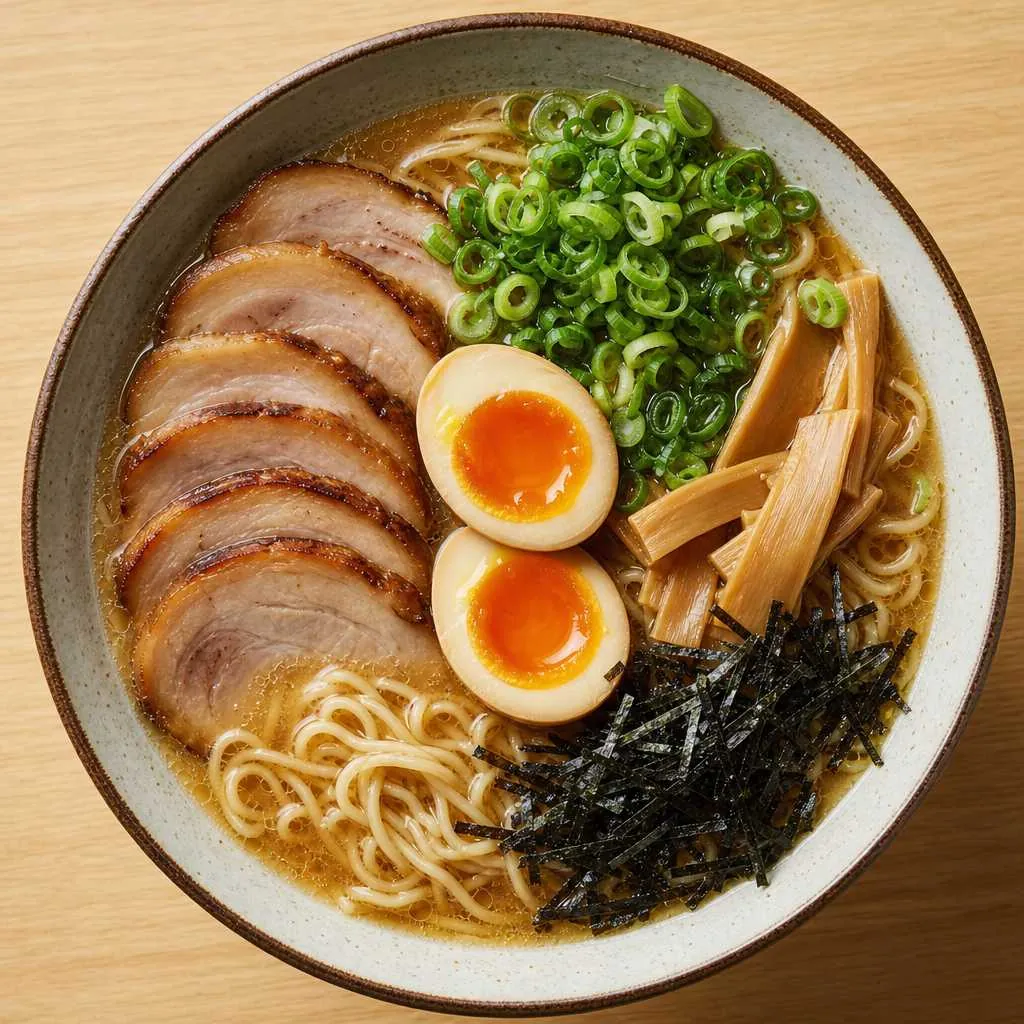
Chashu pork is the single topping that most diners notice first and remember longest. It sits on the surface of the bowl, often fanned in two or three slices, with a caramelized exterior and a color that ranges from deep mahogany to burnished amber. The name comes from the Chinese cha siu, which refers to Cantonese-style roasted pork. Japanese ramen kitchens adapted the technique substantially, replacing the roasting process with a slow braise that produces an entirely different result.
How Chashu Is Actually Made
The standard method involves rolling pork belly into a tight cylinder, tying it with kitchen twine, and searing the exterior until browned on all sides. The pork then braises in a mixture of soy sauce, mirin, sake, and sugar for two to three hours at low heat. In practice, the most important variable is the rest period. Chashu sliced immediately after cooking falls apart and loses its clean edge. Rested overnight in the refrigerator, it firms up enough to slice cleanly and develops deeper flavor as the braising liquid continues to penetrate the meat.
Some kitchens use pork shoulder instead of belly for a leaner result. Both are valid, but pork belly chashu produces the iconic fat-to-meat ratio that dissolves against the warmth of the broth. At Zen Ramen and Sushi, the chashu preparation follows this traditional approach, which is what separates it from faster, less considered versions you might encounter elsewhere.
Pro tip: When your chashu arrives at the table, eat at least one slice while it is still sitting on top of the hot broth. The residual heat will have started melting the fat layer, making the texture significantly more silky than it would be eaten cold or at room temperature.
Chashu Variations Across Ramen Styles
Tonkotsu ramen from Fukuoka typically features thinner chashu slices because the broth is already intensely rich and the pork is meant to complement rather than compete. Tokyo shoyu ramen often uses chunkier cuts because the broth is lighter and can support a more substantial piece of pork. Understanding this helps you read a bowl correctly before you take the first bite.
The Ramen Egg: Ajitsuke Tamago Explained
The ramen egg, called ajitsuke tamago or marinated seasoned egg, is one of the most technically demanding items in a ramen kitchen despite its small size. A common mistake is treating it as an afterthought, a soft-boiled egg dropped into the bowl because customers expect protein options. The reality is that a properly executed ajitsuke tamago requires precise timing, an active marination window, and careful temperature management.
The egg is cooked for six to seven minutes in boiling water, then transferred immediately into an ice bath to stop the cooking process. The shell is peeled while the egg is still cool, and the egg is submerged in a tare marinade, typically a mixture of soy sauce, mirin, sake, and sometimes a touch of dashi. The marination period matters enormously. At twelve hours, the outer white takes on flavor but the interior remains bland. At twenty-four to thirty-six hours, the soy mixture penetrates deeper and the yolk surface begins to darken to a warm golden brown.
“The ajitsuke tamago is the one item that tells you the most about how much a kitchen cares. You cannot fake the yolk texture or the depth of the marinade. Both require time and precision.” – Kenji Lopez-Alt, culinary writer and author of The Food Lab
Why the Yolk Texture Is Non-Negotiable
A fully hard-cooked yolk in a ramen egg is a failure of execution, not a preference. The jammy, semi-set yolk is not an aesthetic choice. It produces a creamier mouthfeel that integrates with the broth when the egg is cut and the yolk disperses slightly. A chalky, dry yolk does the opposite. It sits as a separate, dense mass that fights the broth rather than becoming part of it.
The white should be fully set but not rubbery. If the white tears unevenly when you bite into it, the egg was either overcooked or peeled too roughly, creating micro-tears that allow uneven marination.
Pro tip: Cut the ramen egg in half lengthwise immediately when it arrives. This exposes the yolk to the hot broth, which softens the jammy center slightly and releases the marinade flavors into the surrounding soup. Do not leave the egg whole and eat it last. It will have cooled and stiffened by then.
Menma: The Fermented Bamboo Topping You Keep Overlooking
Menma sits quietly in most bowls, a small cluster of pale golden strips that most diners eat without thinking about. It is one of the oldest traditional ramen toppings and also one of the least understood. Menma comes from machiku bamboo shoots, specifically from Taiwan, which are harvested, dried, and then subjected to lacto-fermentation before being rehydrated and seasoned for use in ramen.
The fermentation process is what gives menma its characteristic flavor, a mild earthiness with a faint sour edge and a hint of umami that plain bamboo completely lacks. The texture should be firm but yielding, with a slight chew that provides textural contrast against soft noodles and tender chashu. Menma that is too soft has been over-soaked or over-cooked. Menma that is too hard has not been adequately rehydrated.
How Menma Is Seasoned Before It Reaches Your Bowl
Once rehydrated, menma is typically sauteed or simmered in a seasoning liquid containing sesame oil, soy sauce, and sometimes a small amount of sugar. This secondary seasoning layer adds another dimension beyond the fermented base flavor. The fat from the sesame oil coats each strip, which helps the flavor carry through the broth rather than being diluted by it.
Some ramen restaurants season their menma aggressively, making it a prominent flavor element. Others keep it mild so it functions as a textural element without competing with the broth. Neither approach is wrong. The key is intention. At Zen Ramen and Sushi, menma is included because it belongs there as part of a complete traditional bowl, not because it fills space in the container.
Nori and Its Role as a Functional Ramen Garnish
A sheet of toasted nori pressed against the inner edge of a ramen bowl looks decorative. It is not. Nori brings concentrated ocean flavor from glutamates in the seaweed, which amplifies the umami already present in the broth. This is not a small contribution. Seaweed is one of the most umami-dense foods in the Japanese kitchen, and even a single sheet adds measurable flavor depth to the bowl.
The timing of when you eat the nori changes the experience significantly. In the first minute after the bowl arrives, the nori is crisp and carries its full toasted character. Eaten at this stage, it provides a crunch-and-brine contrast to the soft noodles. Left longer, the nori softens and becomes a vehicle for carrying broth and other flavors. Both states have value, which is why experienced ramen eaters often eat half the nori early and drag the remaining piece through the broth intentionally before finishing it.
Traditional ramen garnishes like nori are often used as broth-transport tools in Japanese eating culture. Wrapping a small amount of noodles in a softened sheet of nori and eating them together is an accepted and genuinely excellent technique that concentrates flavor in a single bite.
Green Onions, Narutomaki, and the Supporting Cast
Green onions, called negi in Japanese, appear in nearly every bowl of ramen regardless of regional style. Their function is chemical as much as culinary. The sulfur compounds in green onions interact with the fat molecules in rich broths, cutting through heaviness and refreshing the palate. This is why heavier tonkotsu and miso broths tend to carry more green onion than lighter shio broths. The topping load is calibrated to the broth weight.
The cut matters. Finely sliced green onions disperse through the broth quickly and blend into the overall flavor profile. Larger diagonal cuts maintain their texture longer and deliver sharper bursts of onion flavor when eaten. Some kitchens use both cuts in a single bowl to create two distinct moments of green onion flavor at different points during the meal.
What Narutomaki Tells You About a Bowl
Narutomaki is the white fish cake with the pink swirl in the center. It takes its name from the Naruto whirlpools in the Tokushima Prefecture strait, which the swirl pattern visually references. It is made from surimi, a paste of white fish, shaped and steamed with a pink-dyed inner spiral.
Its flavor is mild and slightly sweet, more textural than flavorful. The reason it appears in some bowls and not others is regional signaling. Narutomaki is traditional in Tokyo-style shoyu ramen and became widely associated with ramen’s postwar popularization in Japan. Seeing it in a bowl communicates a deliberate connection to that classical style. Its absence in tonkotsu or modern tare-forward bowls is equally deliberate.
Sesame Seeds, Corn, and Butter as Regional Markers
White sesame seeds scattered across a bowl are standard in many tonkotsu preparations. They release nutty oil as they absorb broth, adding a secondary fat element. Corn kernels and a pat of butter are signatures of Hokkaido miso ramen, where the cold northern climate influenced a preference for richer, more calorie-dense preparations. These are not optional extras. They are part of the bowl’s regional identity. Ordering Hokkaido-style miso ramen and removing the butter misses the point entirely.
Comparing the Three Core Ramen Toppings
Understanding how the three primary toppings differ in function, preparation, and flavor impact helps you appreciate why a complete traditional bowl includes all three rather than just one or two.
| Topping | Primary Function in the Bowl | What a Poor Version Looks Like |
|---|---|---|
| Chashu Pork | Protein anchor and fat contributor. Braised collagen from the pork belly dissolves into the broth as you eat, enriching each spoonful taken near the slices. | Dry, grey, or shredded pork that was cooked ahead, refrigerated, and reheated without care. No sear marks, no lacquered exterior, no visible fat layer. |
| Ajitsuke Tamago | Richness counterpoint and broth enhancer. When halved, the jammy yolk blends into the surrounding broth, adding creaminess without making the soup heavier. | Hard-cooked yolk, rubbery white, pale exterior with no marinade penetration, or an egg that is still cold from refrigeration when it hits the bowl. |
| Menma | Textural contrast and umami bridge. The fermented bamboo flavor is in the same earthy, savory register as the broth, so it reinforces rather than disrupts the soup’s base note. | Mushy strips with no chew, or hard fibrous pieces that have not been properly rehydrated. Bland flavor indicating the secondary seasoning step was skipped. |
How to Eat Ramen Toppings in the Right Order
There is no single mandatory sequence for eating ramen, but there is a logic to how toppings interact with broth temperature and how each element changes as the bowl cools. The common mistake is to eat all toppings first and then deal with the noodles, which leaves the noodles sitting in cooling broth until they become bloated and soft.
The most functional approach starts with the nori while it is still crisp. Take a few sips of broth in its purest state before the toppings begin dissolving into it. Cut or halve the ramen egg within the first minute so the yolk can begin integrating with the surrounding broth. Eat noodles in rotation with bites of chashu, menma, and green onion. This distributes the toppings across the entire eating experience rather than front-loading them.
Ramen is fundamentally a time-sensitive dish. Naomichi Yasuma, founder of the Ramen Museum in Yokohama, has noted publicly that ramen should ideally be eaten within eight to ten minutes of arrival to experience the broth at its intended temperature and the noodles at their intended texture. This is not rigidity. It is respect for the preparation that went into the bowl.
At Zen Ramen and Sushi, the complete ramen offering includes all the traditional toppings discussed here, prepared using techniques that prioritize authenticity over shortcuts. If you have been a regular or are visiting for the first time based on a friend’s recommendation, paying attention to each topping individually before eating them together will significantly deepen what you get from the experience. The full menu at Zen Ramen and Sushi reflects a commitment to these preparations across every bowl offered.
Pro tip: Ask your server which broth style a specific bowl uses before ordering, then use that information to predict which toppings will appear and how they will interact. A miso-based bowl will carry toppings differently than a shio-based one, and knowing that ahead of time sharpens your awareness of what you are tasting.
Frequently Asked Questions
What is the difference between chashu pork and regular roasted pork in ramen?
Chashu pork is braised low and slow in a soy-mirin-sake mixture, which produces a tender, lacquered result with deeply penetrated flavor. Regular roasted pork is cooked with dry heat, which creates a firmer texture and a different fat rendering process. The braising liquid in chashu also becomes part of the bowl’s flavor profile when used as an additional seasoning element by some kitchens. They are not interchangeable, and the braised version is the authentic standard in Japanese ramen tradition.
How can I tell if a ramen egg is properly made before I cut it?
A properly made ajitsuke tamago has a uniformly tinted, amber-brown exterior from the soy marinade. The white should be firm but not rubbery to a light touch. Once cut, the cross-section reveals a yolk that is set on the outer layer but still viscous and deeply golden at the center. If the yolk is pale yellow throughout or fully solid, the egg was either overcooked or not marinated long enough for the marinade to affect the yolk surface color.
Is menma the same as the bamboo shoots in Chinese food?
No. Menma is specifically made from machiku bamboo, which is harvested young and then dried and lacto-fermented before use. Chinese bamboo shoots used in stir-fries are typically water-packed or fresh, without the fermentation step. The fermentation gives menma a distinctive earthy, mildly sour flavor that canned or fresh bamboo shoots do not have. They come from different bamboo species and undergo fundamentally different preservation processes.
Why does ramen from different regions have different toppings?
Regional ramen styles developed in response to local ingredients, climate, and culinary culture. Hokkaido’s cold climate drove preference for richer, fat-forward preparations with butter and corn. Fukuoka’s coastal access influenced a tonkotsu tradition that relies on pork bone rather than seafood-based dashi. Tokyo’s postwar food culture standardized a shoyu-based style with narutomaki and nori as signatures. Toppings were always part of the regional identity, not additions made after the fact, so each region’s garnishes reflect what was locally available and culturally relevant at the time the style developed.
Should ramen toppings be eaten separately or mixed into the broth?
Both approaches have merit and the choice should be intentional. Eating toppings separately lets you experience their individual flavor profiles cleanly, which helps you understand the bowl’s composition. Mixing them into the broth, particularly the ramen egg and chashu fat, actively enriches each subsequent spoonful. The most effective approach for a complete tasting experience is to begin with separate tastes and then allow toppings to integrate naturally as you work through the bowl. Avoid stirring everything together immediately, which collapses the flavor complexity into a single uniform note.
What are traditional ramen garnishes beyond the three main toppings?
Beyond chashu, ajitsuke tamago, and menma, traditional ramen garnishes include toasted nori sheets, thinly sliced negi green onions, narutomaki fish cake, sesame seeds, a sheet of mayu black garlic oil in Kumamoto-style bowls, moyashi bean sprouts particularly in miso ramen, and kakuni braised pork belly chunks in some regional variations. Butter and corn are specific to Hokkaido miso ramen and are not universal. Kikurage wood ear mushrooms appear frequently in Hakata-style tonkotsu. Each garnish reflects a specific regional or stylistic tradition rather than being arbitrary decoration.
Have you noticed how differently a bowl tastes when you pay attention to each topping individually? Share your experience or your favorite ramen topping combination with us.
References
- Statista: Global statistics and market data on food culture, restaurant industry trends, and Japanese cuisine consumption worldwide
- Forbes: Food industry coverage including restaurant culture, culinary trends, and the business of authentic cuisine experiences
- ScienceDirect: Peer-reviewed research on fermentation science, lacto-fermentation processes, and the chemistry of umami in fermented foods
- JSTOR: Academic journals covering Japanese food history, culinary anthropology, and the regional development of ramen as a cultural artifact
- U.S. Food and Drug Administration: Food safety guidelines relevant to egg preparation temperatures, marination practices, and safe handling of pork products